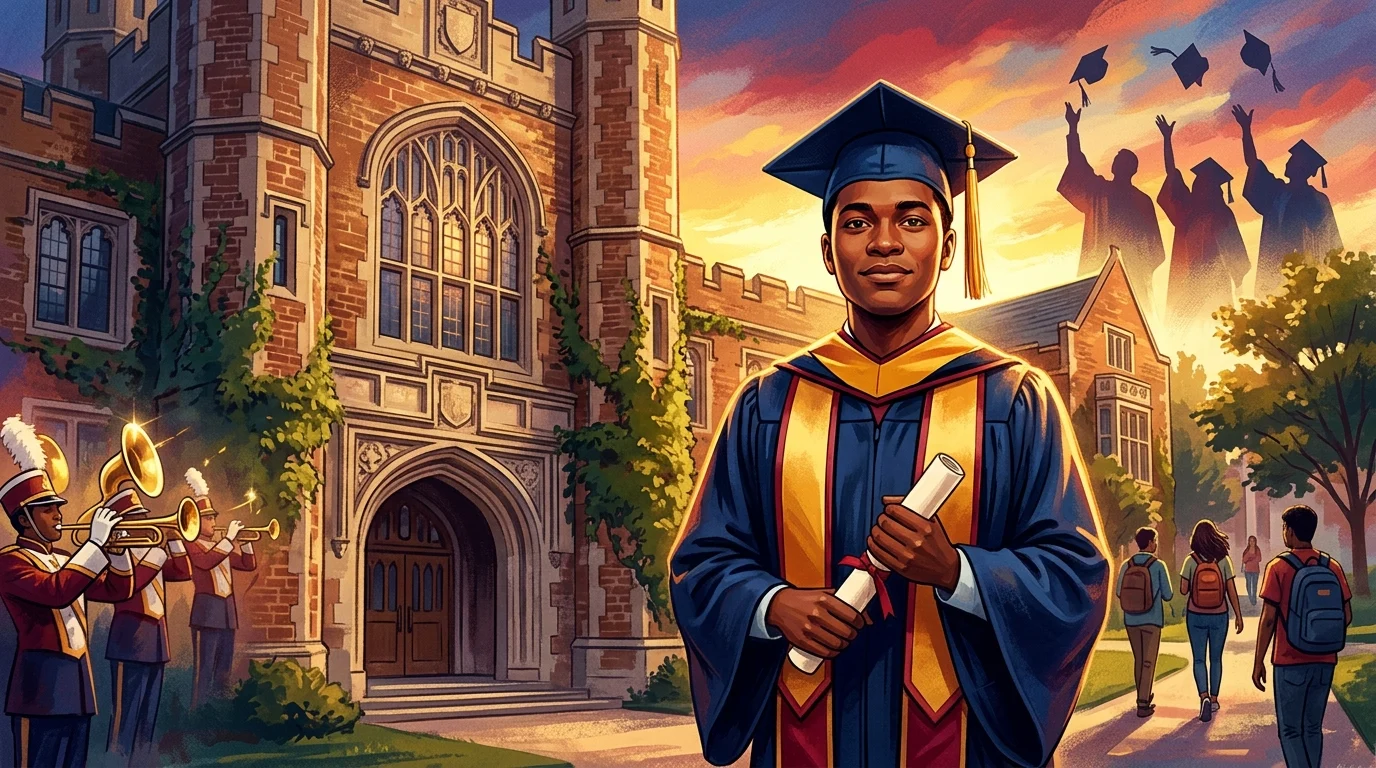
Quick Ans: HBCU meaning is one of the most searched questions about American education. In news articles, college guides, and social media, HBCU stands for “Historically Black Colleges and Universities.” This four-letter abbreviation represents more than 100 institutions of higher learning in the United States. It appears in academic discussions, cultural conversations, and political discourse across every major platform.
Understanding educational acronyms helps you follow conversations about college and culture. New abbreviations appear constantly, and some become cultural touchstones. HBCU is a perfect example. It has moved from niche academic terminology into mainstream vocabulary. Knowing how to use it correctly helps you understand discussions about education, history, and Black culture in America.
What Does This Acronym Actually Mean?
This acronym stands for “Historically Black Colleges and Universities.” People use it to describe institutions of higher education that were established before 1964 with the primary mission of educating Black Americans.
The term belongs to academic, cultural, and historical communication. It fits perfectly in news articles, college guides, and social media discussions. It also works in formal writing and professional contexts. The tone is respectful and informative.
Sometimes people write it in all uppercase. Other times they type it in lowercase. Both versions mean the same thing. The choice usually depends on the person’s typing style or the platform’s conventions.
The acronym carries no profanity or offensive language. It is safe to use in any setting, from casual chats to academic papers.
Where Did This Term Come From?
The origin traces back to the Higher Education Act of 1965. The term was formally defined by the U.S. government to describe institutions founded before 1964 with the mission of educating Black students.
The history behind these institutions goes back much further. The first such college, Cheyney University, was founded in 1837 in Pennsylvania. Lincoln University followed in 1854. These schools provided education to Black Americans when other institutions denied them access.
After the Civil War, dozens more were established across the South. The Freedmen’s Bureau and various churches helped found these schools. They became centers of learning, community, and resistance.
The term gained legal weight through federal legislation. The Higher Education Act of 1965 defined them officially. This designation opened doors to federal funding and recognition.
Today, there are over 100 such institutions in the United States. They include public and private schools, large universities, and small liberal arts colleges. Each has its own history and character.
How Many HBCUs Exist Today?
There are currently 101 HBCUs in the United States. They are located in 19 states, the District of Columbia, and the U.S. Virgin Islands. Most are in the South and along the East Coast.
These institutions vary widely in size and focus. Some are large public universities with tens of thousands of students. Others are small private colleges with just a few hundred.
Some well-known examples include Howard University, Spelman College, Morehouse College, Tuskegee University, and Florida A&M University. Each has its own traditions, strengths, and alumni networks.
The schools serve students of all races, but their mission remains rooted in Black education and culture. They are open to anyone who wants to attend.
What Makes These Schools Special?
These institutions are more than just colleges. They are cultural landmarks, community centers, and engines of opportunity.
And they have a strong track record of producing Black graduates in fields where they are underrepresented. Also they award a significant share of bachelor’s degrees earned by Black students in the United States.
They also have unique campus cultures. Homecoming celebrations, marching bands, Greek life, and traditions like “the yard” create a distinct experience. These elements have influenced American music, fashion, and popular culture.
The schools also have strong alumni networks. Graduates often give back to their alma maters and support current students. This creates a cycle of mentorship and success.
They have also played a role in American history. Many were centers of the Civil Rights Movement. Students and faculty organized protests, sit-ins, and voter registration drives. Their legacy extends far beyond the classroom.
How People Use This Term Today
This term appears in several different situations. Its flexibility is one reason it is so common.
The most common usage is in educational discussions. A sentence like “She applied to several HBCUs” describes a student’s college search. The tone is practical and informative.
Another common usage is in cultural conversations. A post like “HBCU homecoming is unmatched” celebrates the unique experience of these schools. The tone is proud and enthusiastic.
The term also appears in political discourse. A statement like “We must protect HBCU funding” advocates for these institutions. The tone is serious and urgent.
It can also appear in celebrity news. When a famous person mentions attending one, fans celebrate the connection. The tone is admiring and supportive.
In everyday conversation, the term is used to describe a specific type of college. A person might say “I went to an HBCU” to explain their background. The tone is direct and proud.
How It Spread on Social Media
This term is everywhere on social media. It appears in TikTok videos, Instagram posts, X threads, and Facebook discussions. The acronym fits the proud and celebratory nature of these platforms.
On TikTok, it often appears in videos about college life, homecoming, and Black excellence. A caption like “HBCU vibes” resonates with viewers who love the culture.
On Instagram, it shows up in bios, captions, and story text. Students and alumni use it to show school pride. A bio that says “Howard University | HBCU” signals pride and connection.
On X, it is standard vocabulary for discussions about education, politics, and culture. A tweet like “HBCUs produce leaders” spreads the message in a short, shareable format.
Compared to Similar Terms
Several other terms overlap with this acronym in meaning. Understanding the differences helps you choose the right one.
PWI stands for “Predominantly White Institution.” It describes colleges where white students make up the majority. It is often used as a contrast.
MSI stands for “Minority Serving Institution.” It describes colleges that serve a high percentage of minority students. This is a broader category that includes HBCUs.
TCU stands for “Tribal Colleges and Universities.” It describes institutions that serve Native American students. It is a separate category with a similar mission.
HSI stands for “Hispanic Serving Institution.” It describes colleges that serve a high percentage of Hispanic students. It is another separate category.
When Not to Use This Term
This acronym does not belong in every conversation. Its specific meaning makes it inappropriate for some contexts.
Avoid using it to describe any college with a majority Black student body. The term has a specific legal and historical definition. Not every school with Black students qualifies.
Be careful when using it in casual conversation about any college. The term carries history and weight. Using it incorrectly can cause confusion or offense.
In academic writing, use the full term on first reference. Then use the acronym. This is standard practice in formal writing.
Other Meanings of This Acronym
While “Historically Black Colleges and Universities” is the dominant meaning, this acronym carries other definitions in specific contexts. Knowing these alternatives helps avoid misunderstandings.
In some business contexts, it can stand for “Home-Based Care Unit” or similar terms. These usages appear in healthcare documents.
In technology, it is sometimes used as an abbreviation for “High Bandwidth Channel Unit” or similar hardware terms. These usages are rare and usually defined within technical documents.
In some meme contexts, it is humorously defined as “Happy Black College University” or similar phrases. This is not a real definition but a playful variation.
Why It Became So Popular
This term grew alongside the rise of conversations about education and race in America. As more people discussed college access and equity, they needed language to describe these specific institutions.
The term also gained prominence through celebrity alumni. When famous actors, musicians, and politicians mention their alma maters, the term spreads to new audiences.
Social media accelerated its spread. Short captions and celebratory posts spread the term to millions. Today it appears in news articles, college guides, and everyday conversation. The acronym has become a symbol of Black excellence and educational achievement.
FAQs
What does HBCU stand for?
It stands for “Historically Black Colleges and Universities.” It describes institutions established before 1964 with the mission of educating Black Americans.
How many HBCUs are there?
There are currently 101 such institutions in the United States. They are located in 19 states, the District of Columbia, and the U.S. Virgin Islands.
Who can attend an HBCU?
Anyone can attend. These schools are open to students of all races and backgrounds. Their mission is rooted in Black education, but their doors are open to all.
What is the difference between an HBCU and a PWI?
An HBCU is a Historically Black College or University. A PWI is a Predominantly White Institution. The terms describe different historical missions and student demographics.
Are HBCUs still relevant today?
Yes. They continue to produce a significant share of Black graduates. They also preserve unique cultural traditions and provide supportive environments for students.
Conclusion
The HBCU meaning question is clear and important. It stands for “Historically Black Colleges and Universities” and represents over 100 institutions with a rich history and mission. You can use the term in academic discussions, cultural conversations, and everyday speech. It is a respectful and informative acronym that fits any setting. When you see this term in a news article or social media post, you now know exactly what it means. Use it with awareness, and your understanding of American education will be deeper and more complete.
Discover More:-
- Pushing P Meaning: What This Viral Slang Phrase Stands For 2026
- What Does GTS Mean? Texting & Slang Explained 2026










10 thoughts on “HBCU Meaning: What Does HBCU Stand For? 2026”