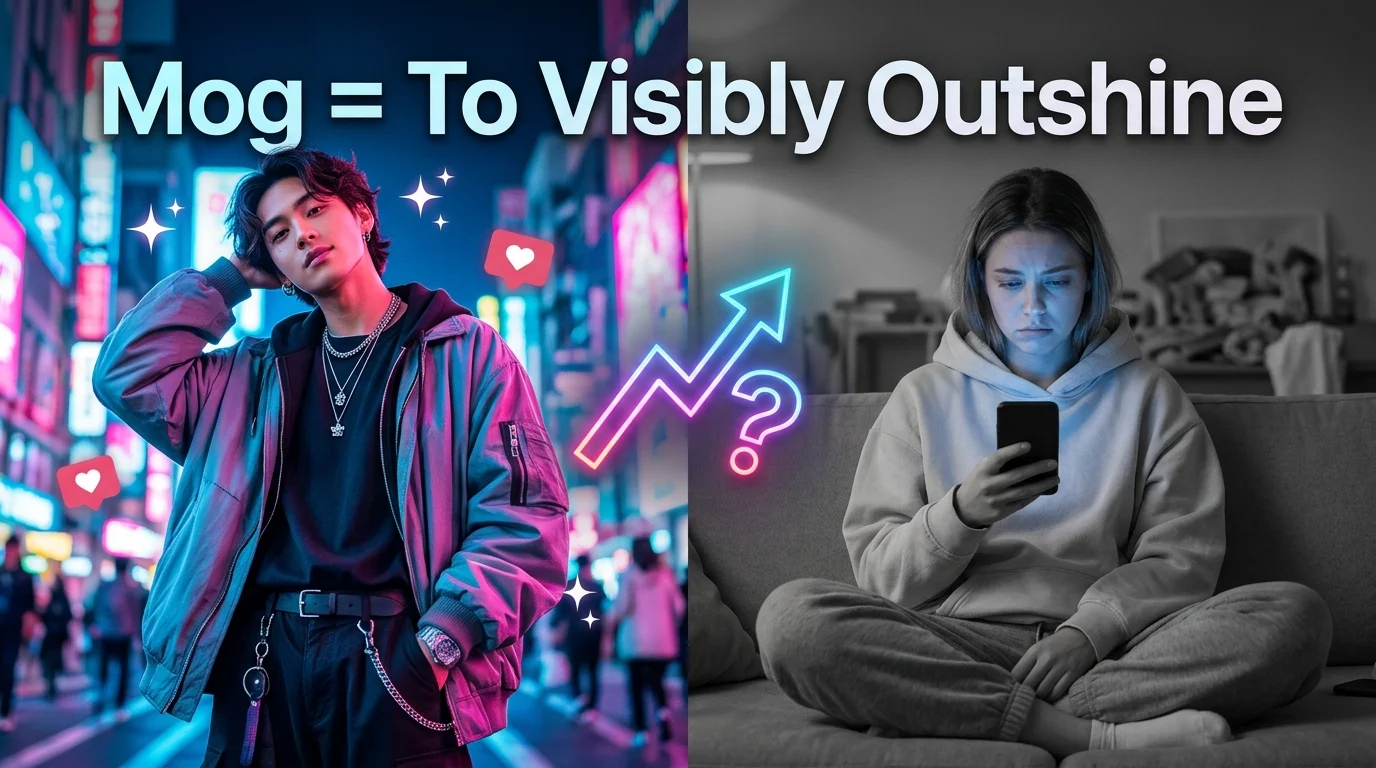
Quick Ans: Mog meaning is one of the most searched questions about modern internet vocabulary and generational slang. In contemporary contexts, mog is a verb meaning to outshine, outclass, or appear superior to someone else especially in physical appearance or social presence. The term originated in online male dominated communities but has since exploded into mainstream social media, used both earnestly and ironically by Gen Z and Gen Alpha. Understanding this term helps you navigate modern internet culture, interpret viral comparisons, and recognize how language from niche subcultures can reshape everyday communication.
Understanding modern terminology helps you follow social trends and interpret online discussions. New slang terms appear constantly, and some become cultural touchstones. Mog is a perfect example. It has moved from obscure internet forums into TikTok, Instagram, and even official government accounts. Knowing how to use it correctly helps you understand references in viral memes and social debates.
What Does Mog Mean?
Mog is a slang verb that describes one person visibly outshining, outclassing, or appearing superior to another most commonly in terms of physical attractiveness, but increasingly in any domain of performance or presence . The term is derived from the acronym AMOG, which stands for “Alpha Male of the Group,” a phrase used in early 2000s internet forums to describe the dominant male in a social setting .
The term belongs primarily to casual and internet communication. It fits perfectly in discussions about appearance comparisons, social dynamics, and competitive banter. It also appears in news reports when describing viral moments or generational language shifts.
Sometimes people confuse it with “outperform” or “beat.” Other times they use it correctly to describe a striking visual comparison in a photograph. All versions relate to the same general concept. The distinction usually depends on whether the usage is sincere, ironic, or self deprecating.
The concept carries significant cultural weight. It connects to modern understanding of social media comparison culture, self image, and the rapid spread of subculture slang into mainstream vocabulary. Understanding the meaning helps you follow viral trends and interpret online commentary.
Where Did the Term Come From?
The mog origin traces back to internet forums in the early 2000s and entered wider usage around 2016 . The term combines the concept of social dominance with the idea of visual comparison. The concept was popularized through bodybuilding forums, “looksmaxxing” communities, and eventually mainstream social media platforms.
The concept itself is newer than most slang. Claims of “alpha” status and social hierarchy have been debated in online spaces for decades. As social media made appearance comparison constant and visible, communities created the term to address what they saw as a specific class of competitive display.
The term gained prominence in the early 2020s as TikTok and Instagram algorithms amplified visual comparison content. Some commentators adopted mog language because they emphasize the visible, immediate nature of superiority. This distinction matters because someone can be quietly skilled without visibly “mogging” anyone.
The concept spread through meme culture, influencer content, and ironic adoption. Fields like online comedy, fashion commentary, and even political communication incorporated mog concepts into their frameworks. The term became a symbol of internet native communication, competitive aesthetics, and generational shifts in understanding social status.
Mog in Psychological Contexts and Media
The term has appeared in countless news articles and cultural commentary across every medium. Understanding these appearances helps you see how the concept evolved.
Psychological and sociological commentary discussing mog dates back to early analyses of “manosphere” communities and has expanded significantly. The field has noted concerns about comparison culture and self worth, including updated discussions about body image and social media pressure . The term became a standard reference point in discussions of online male subcultures.
Educational institutions increasingly reference mog and similar slang when discussing digital literacy and media awareness. Teachers distinguish mog from genuine achievement and maintain discussions about online behavior, respectful communication, and critical consumption of influencer content.
News media frequently use mog when reporting viral trends and generational language shifts. Headlines like “‘Mogging’ is suddenly everywhere” are common in cultural reporting . The term spread through journalism as a concise way to describe a pervasive online phenomenon.
Legal and political professionals have even encountered mog in official communications. The White House social media account posted “Mogged.” as a caption in June 2026, demonstrating how thoroughly the term has penetrated mainstream institutions . The term serves practical purposes in modern communication, providing a shorthand reference to visible dominance or superiority.
The Science Behind Mog
Modern linguistics and psychology offer explanations for why people use and maintain mog. Understanding these theories helps separate logical concepts from emotional reactions.
Behavioral trait. Linguists believe mog is used to signal competitive comparison and social ranking. The emphasis on visible superiority and immediate judgment discourages neutral usage. This can protect social groups from ambiguity but also lead to exclusion or hurt feelings .
Social order. Some researchers emphasize the role of group norms in mog. The goal is not just comparison but maintenance of perceived hierarchies. This aligns with online communities’ interest in status and recognition.
Tradition and convention. Some observers believe mog usage persists because of its origins in competitive male spaces. The person is held responsible for either asserting dominance or accepting a lower position. This reflects societal expectations about confidence and self presentation.
Gradual evolution. Many mog usages include potential for change. Language commentators often recommend updating awareness, adapting to ironic usage, and recognizing context. This acknowledges that judgments of superiority can shift from serious to playful over time .
Regional variation. Different online communities have varying preferences for mog. Platform culture can shape individual usage by clearly defining local norms of banter and comparison. Over time, these factors can become internalized and change communicative recommendations.
Mog vs Outshine vs Outperform
These terms are often confused. Understanding the differences helps you use them correctly.
Mog refers to visibly outshining someone, especially in appearance or presence, with an implication of hierarchical superiority. The term is used primarily in casual and internet contexts and emphasizes visible, often aesthetic dominance. This distinction can matter because mog may imply a competitive ranking that “outshine” does not .
Outshine stands for being more impressive or successful than someone else. The term is used across formal and casual contexts and emphasizes achievement or performance. The exact definition varies by context.
Outperform stands for doing better than expected or better than a competitor in measurable terms. The term is used when addressing results, metrics, or professional benchmarks. The choice between mog, outshine, and outperform often reflects strategic differences in tone and context.
In casual conversation, people sometimes use these terms interchangeably. A friend might say “outshine” when they actually mean mog or another comparison concept. This is common but technically imprecise. The distinction usually depends on the specific context and whether aesthetic comparison is involved.
Mog in Modern Culture
The concept has moved beyond internet forums. Today it appears in media, brand campaigns, and everyday language.
Mog in the news. Cultural reporting frequently mentions mog and its rapid mainstream adoption. The term has become shorthand for visible superiority in media coverage .
Mog in self improvement campaigns. Organizations use the term in discussions about appearance standards and competitive self improvement. The goal is often to critique or satirize these pressures rather than endorse them.
Mog in education. Universities and schools discuss mog as part of media literacy and linguistics courses. The term appears in textbooks, case studies, and research on digital communication.
Mog in online discussions. People discuss mog usage and behavioral commentary on social media and forums. The term appears in conversations about aesthetics, confidence, and social media dynamics.
In business and marketing. Mog dynamics can affect brand positioning and social media strategy. The term appears in discussions about viral content and audience engagement.
When to Use the Term Mog
The term works in several different situations. Its flexibility makes it valuable in casual and cultural contexts.
The most common usage is in appearance comparisons. A speaker or commenter might reference mog when describing a photograph or video. The tone is often playful or exaggerated.
Another common usage is in self deprecating humor. A writer might say “I got mogged” to describe feeling outclassed. The tone is humble and ironic.
The term also appears in ironic cultural commentary. A speaker might discuss “mogging” a historical figure or a fictional character. The tone is absurdist and humorous .
The word can also be used in competitive banter. Someone might say “She mogged the competition” when discussing a sports or performance event. The tone is enthusiastic and supportive.
How to Use Mog in a Sentence
Using the term correctly helps you communicate clearly. Here are some examples.
As a verb: “He completely mogged everyone at the party with that outfit.” This is a common usage. It describes a visible comparison.
In a self-deprecating context: “I opened Instagram and immediately got mogged by my entire feed.” This usage draws on the term’s passive construction.
In news reporting: “The term ‘mogging’ has spread from niche forums to mainstream platforms.” This is a journalistic usage.
In education: “The course explores how slang like ‘mog’ reflects online social dynamics.” This is an educational usage.
Past tense: “She mogged the competition with that performance.” The verb form is flexible and widely used in both active and passive constructions.
FAQs
What does mog mean?
Mog is a slang verb meaning to outshine, outclass, or appear superior to someone, especially in physical appearance or social presence. It is a term referring to a specific competitive comparison that often implies aesthetic or status based dominance .
Is mog the same as outshine?
Mog and outshine are similar but not identical. Mog emphasizes visible, often aesthetic superiority with a competitive ranking implication, while outshine focuses on being more impressive or successful. The exact definitions and usage vary by context. Some people use mog, others use outshine or outperform.
What happens in mogging behavior?
Mogging experiences vary by person and context. It can include visual comparison, social ranking, and playful or hurtful comments about appearance or presence. The behavior typically requires a comparative context or public platform.
Can mog become a common term?
In many contexts, yes. Because mog focuses on comparison and dominance, some usages expand to broader populations with changing platform norms. Examples include brands using it in marketing and individuals adopting it in self description over time.
Can mogging be emotionally healthy?
Validation varies by situation. Some individuals feel amused or motivated by playful mogging, while others experience insecurity or frustration. The evidence depends on the specific person, the context, and the quality of social feedback .
Conclusion
The mog meaning is clear and culturally significant. It refers to visibly outshining or outclassing someone, often in appearance or social presence, and is associated with competitive comparison and internet native humor. You can use it in casual conversations, cultural commentary, and online communication. It is a term that connects modern reasoning to evolving social practices. When you see mog in a viral post or hear the term in conversation, you now know exactly what it means. Use it with precision, and your understanding of this important concept will deepen.
Discover More:
- Esquire Meaning: What It Really Means & Examples 2026
- NTM Meaning: What It Really Means & Examples 2026