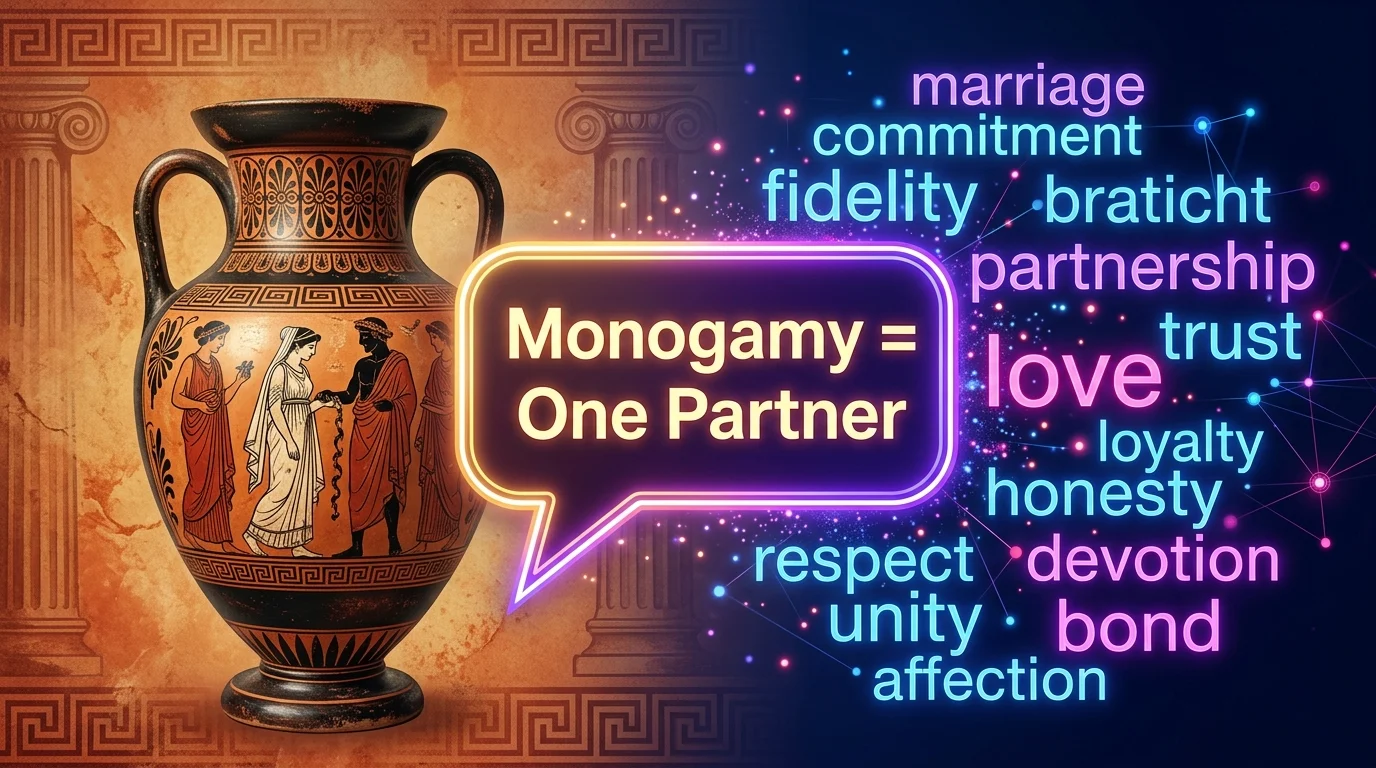
Quick Ans: Monogamy meaning is one of the most searched questions about relationships and human behavior. In Greek, monogamy (monos gamos) means “single marriage” or “one union.” It refers to the practice of having only one partner at a time. This enduring concept has fascinated philosophers, psychologists, and couples for centuries. It appears in cultural traditions, religious teachings, and everyday conversations about love. Understanding this term helps you grasp why committed relationships like marriage and long term partnerships are both practical and meaningful.
Understanding relationship terms helps you follow cultural discussions and interpret human behavior. New questions about love and commitment appear constantly, and some become cultural touchstones. Monogamy is a perfect example. It has moved from ancient Greek philosophy into mainstream relationship science and social debate. Knowing how to use it correctly helps you express yourself and understand references in media.
What Does Monogamy Mean?
Monogamy is a relationship structure where a person has only one romantic or sexual partner at a time. The term comes from Greek and literally means “single marriage.” It refers to a committed union where exclusivity is expected and honored.
The term belongs to both casual and academic communication. It fits perfectly in discussions about relationships, psychology, and sociology. It also works in everyday conversation when describing marriages or committed partnerships. The tone can be personal, serious, or educational.
Sometimes people confuse it with fidelity. Other times they use it correctly to describe exclusive partnerships. Both versions relate to commitment. The distinction usually depends on whether the focus is on the structure or the behavior.
The concept carries deep cultural significance. It connects to ancient traditions of family, loyalty, and social organization. Understanding the meaning helps you appreciate its role in stories and relationships.
Where Did the Term Come From?
The monogamy origin traces back to ancient Greek vocabulary. The word is a combination of “monos” (single) and “gamos” (marriage). Together they describe the practice of marrying only one person.
The concept itself is older than the English usage. Ancient civilizations practiced various forms of marriage. The Greeks formalized the term to distinguish one partner unions from polygamy. The Romans adopted similar ideals and spread them through law and culture.
The term entered English in the 17th century as a word for single marriage. Religious traditions popularized the concept across Europe and beyond. The idea became central to Western marriage customs and legal frameworks.
The concept spread through philosophy and social science. Writers explored the meaning of commitment and exclusivity.
Monogamy in Literature and Film
Monogamy has appeared in countless stories across every medium. Understanding these appearances helps you see how the concept evolved.
Jane Austen’s “Pride and Prejudice” (1813) portrayed courtship and marriage as the central social institution. The novel became a template for romantic monogamy in literature. It is one of the most celebrated literary treatments of the theme.
Leo Tolstoy’s “Anna Karenina” (1878) examined the tensions between passion and commitment. The story explored the consequences of breaking marital bonds. It became a cultural touchstone for discussions about fidelity and society.
“Romeo and Juliet” (1597) by William Shakespeare depicted young lovers choosing each other above all else. The tragedy became a global symbol of exclusive devotion. The term “star crossed lovers” spread through entertainment journalism worldwide.
“When Harry Met Sally” (1989) explored whether friendship and romance can coexist. The film popularized modern discussions about partnership and commitment in entertainment vocabulary.
“Marriage Story” (2019) portrayed the dissolution of a monogamous union. The film blurred the line between love and legal obligation in storytelling.
The Psychology Behind Monogamy
Modern psychology offers explanations for why people choose and value exclusive partnerships. Understanding these theories helps separate biology from culture.
Pair bonding. Some scientists believe monogamy is rooted in neurochemistry. Oxytocin and vasopressin create attachment between partners. This can make long term commitment feel rewarding and secure.
Attachment theory. This is a psychological framework where early bonds shape adult relationships. It can involve combining security, trust, and emotional closeness. The pattern is usually established in childhood and can influence partner choice.
Social norms. Some theorists believe monogamy reflects cultural expectations. The community rewards stable partnerships and shared responsibility. This aligns with the human tendency to organize around family units.
Security and stability. Some people find monogamy provides emotional and financial predictability. These unions are usually practical rather than restrictive. Many societies build legal systems around them for this reason.
Cultural identity. Some communities define themselves through monogamous traditions. These values can feel like encountering a shared heritage. They are usually embraced rather than rejected.
Monogamy vs Polygamy
These two terms are often confused. Understanding the difference helps you use them correctly.
Monogamy is a structure where one person has one partner. It is often the legally and socially recognized norm. It may be religious or secular. The commitment is usually exclusive in nature.
Polygamy is a structure where one person has multiple spouses. The term is used in anthropology and legal studies. The practice retains multiple partners simultaneously. Examples include polygyny and polyandry.
In casual conversation, people use monogamy to describe any exclusive relationship. A friend might say “Monogamy works for me” meaning one committed partner. This is a personal, non technical usage.
Monogamy in Modern Culture
The concept has moved far beyond philosophy. Today it appears in memes, social media, and everyday language.
Monogamy memes. People post jokes about relationship loyalty and dating struggles. The caption “monogamy is my brand” is common on Twitter and Reddit. The humor comes from the shared experience.
Monogamy accounts. On social media, pages that celebrate committed relationships are sometimes called monogamy accounts. They share advice and stories to express values and lifestyle.
Monogamy week. This was a viral social media trend where people celebrated their partners and anniversaries. It spread across TikTok and Instagram.
In business. The term “monogamy brand loyalty” describes customers like Apple loyalists or Starbucks regulars. It is used in marketing and consumer strategy.
In technology. “Monogamy” is sometimes used for platform exclusivity, such as sticking to one ecosystem like iOS or Android. These raise discussions about consumer behavior and innovation.
When to Use the Word Monogamy
The term works in several different situations. Its flexibility is one reason it became so popular.
The most common usage is describing a relationship with one partner. A comment like “They practice monogamy” is educational and descriptive. The tone is usually neutral and respectful.
Another common usage is in psychology or counseling contexts. A story about a couple setting boundaries uses the term to explain the process. The tone is analytical and supportive.
The term also appears in cultural discussions. A teacher might ask about a student’s “monogamy example” to understand relationship structures. The tone is academic and exploratory.
The word can also be used metaphorically. A writer might call a single minded focus a “monogamy of purpose.” The tone is analytical and critical.
How to Use Monogamy in a Sentence
Using the term correctly helps you communicate clearly. Here are some examples.
As a noun: “Monogamy is the practice of having one partner at a time.” This is the most common usage. It describes a relationship structure.
In a psychological context: “According to researchers, monogamy supports long term pair bonding.” This usage draws on the term’s academic origins.
In culture: “The couple chose monogamy as their relationship framework.” This is a personal usage.
In business: “The brand inspires a kind of monogamy among its customers.” This is a metaphorical usage.
Plural form: “Different cultures define monogamy in different ways.” The plural is monogamies.
FAQs
What does monogamy mean?
Monogamy is a relationship structure where a person has only one romantic or sexual partner at a time. The Greek word literally means “single marriage.” It can also describe a committed union with exclusivity.
Is monogamy real?
Monogamy is a real relationship practice. It is created through commitment and is widely practiced around the world. In everyday usage, the term describes marriages and exclusive partnerships, which are very real.
What happens if you use monogamy?
In relationships, choosing monogamy creates a committed bond with one partner. From psychology, it may support emotional security. In everyday life, it usually means you agreed to exclusivity for love or stability.
What is the difference between monogamy and polygamy?
Monogamy involves one partner at a time. Polygamy involves multiple spouses simultaneously. The terms are often confused but have different meanings.
Can monogamy be a bad thing?
In most contexts, monogamy is healthy and fulfilling. However, in incompatible relationships, a poorly matched monogamous arrangement can cause unhappiness. Many people find meaning in committed partnerships.
Conclusion
The monogamy meaning is clear and fascinating. It refers to the practice of having one partner at a time, derived from Greek words meaning “single marriage.” You can use it in relationship discussions, psychological analysis, and everyday conversation. It is a term that connects ancient traditions to modern love. When you see monogamy in a story or hear the word in conversation, you now know exactly what it means. Use it with curiosity, and your understanding of this enduring concept will deepen.
Discover More:
- HBCU Meaning: What Does HBCU Stand For? 2026
- Poison Tree Tattoo Meaning: Symbolism & Hidden Messages 2026











3 thoughts on “Monogamy Meaning: What It Really Means in a Relationship 2026”