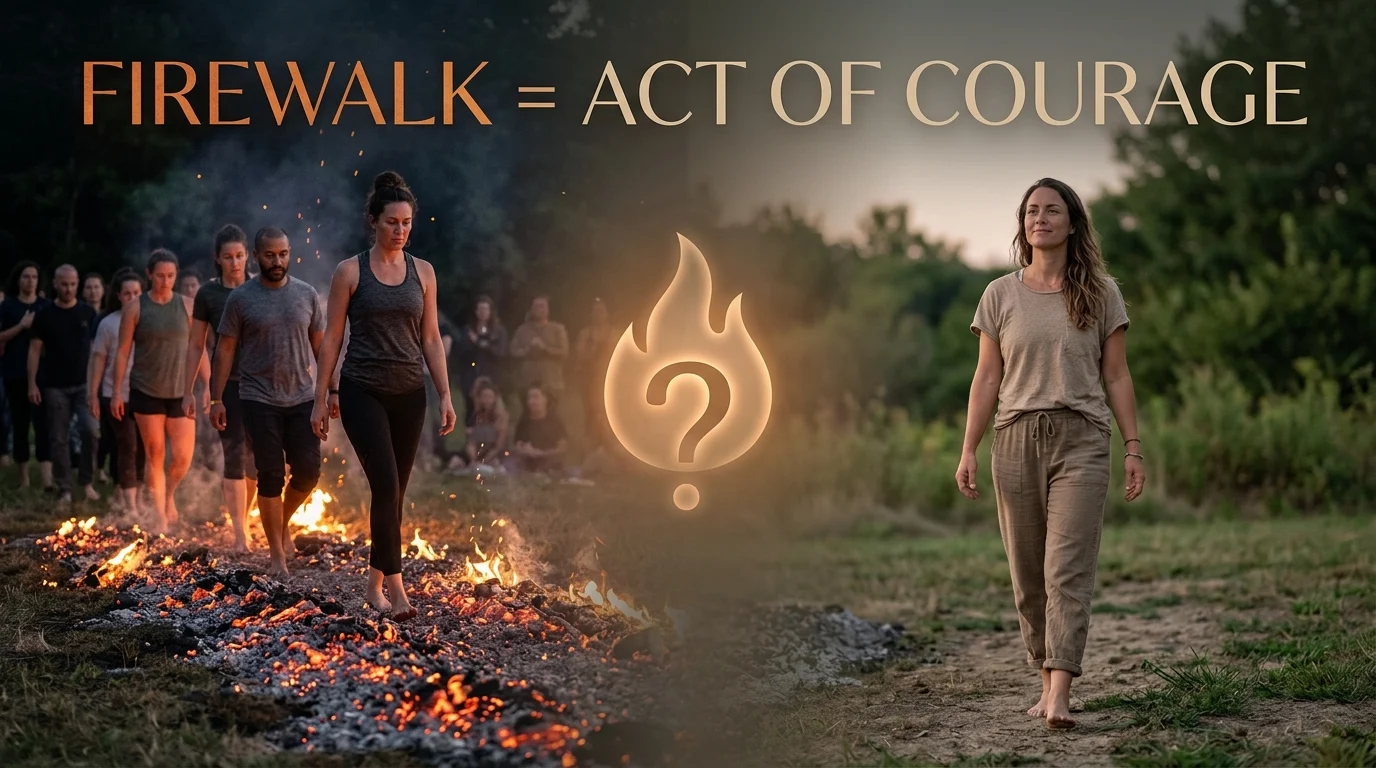
Quick Ans: Firewalk meaning is one of the most searched questions about modern terminology and contemporary cultural vocabulary. In contemporary contexts, firewalk refers to the act of walking barefoot over a bed of hot embers, coals, or stones, often as a ritual, spiritual practice, or motivational exercise. This term has become a standard concept in self-help circles, cultural anthropology, and personal development discussions. Understanding this term helps you grasp why people participate in firewalking and why precise language matters in modern cultural communication.
Understanding modern terminology helps you follow social trends and interpret cultural discussions. New questions about word meanings appear constantly, and some become cultural touchstones. Firewalk is a perfect example. It has moved from ancient rituals into mainstream self-help and corporate events. Knowing how to use it correctly helps you understand references in motivational seminars and cultural anthropology.
What Does Firewalk Mean?
Firewalk is a noun and verb that describes the act of walking barefoot across a bed of hot embers, coals, or heated stones. The term is derived from the Old English “fȳr” (fire) combined with “wealcan” (to roll or walk), creating a word for traversing heated ground.
The term belongs to both casual and serious communication. It fits perfectly in discussions about spiritual practices, motivational techniques, and cultural traditions. It also appears in news reports when describing daredevil stunts or therapeutic retreats. The tone can be inspirational, historical, or scientific.
Sometimes people confuse it with “firewalking” as a metaphor for courage. Other times they use it correctly to describe an actual physical feat. All versions relate to the same general concept. The distinction usually depends on the specific context and the exact phrasing.
The concept carries significant cultural and psychological weight. It connects to ancient rituals, modern self-help movements, and evolving attitudes toward fear and transformation. Understanding the meaning helps you follow personal development discussions and interpret cultural practices.
Where Did the Term Come From?
The Firewalk origin traces back to ancient civilizations across multiple continents. The term combines “fȳr” (fire) with “wealcan” (to walk). The concept was popularized through religious ceremonies, healing rituals, and eventually motivational seminars.
The concept itself is older than the English compound word. Firewalking has been documented throughout history in various forms across Greece, India, Japan, China, and the Pacific Islands. As cultures developed spiritual and healing practices, societies created the term to describe what they saw as a specific ritual act.
The term gained prominence in the 1900s as motivational speakers and self-help experts adopted firewalking as a metaphor for overcoming fear. Some commentators adopted firewalk language because they emphasize the transformative power of facing danger. This distinction matters because someone can technically walk on hot coals without experiencing spiritual transformation while still performing the physical act.
The concept spread through anthropology texts, self-help books, and pop culture. Fields like psychology, spirituality, and corporate training incorporated firewalk concepts into their frameworks. The term became a symbol of modern personal empowerment, fear conquest, and generational shifts in self-improvement culture.
Firewalk in Cultural Contexts and Media
The term has appeared in countless documentaries and news reports across every medium. Understanding these appearances helps you see how the concept evolved.
Anthropological literature discussing Firewalk dates back to the early 1800s and has been revised numerous times. The field has enacted significant changes in recent years, including updated cultural sensitivity guidelines and research standards. The term became a standard part of anthropological vocabulary.
Educational institutions increasingly reference Firewalk and modern psychological dynamics. Schools distinguish Firewalk from other rituals and maintain specific procedures for cultural studies, psychology training, and personal development education.
News media frequently uses Firewalk when reporting motivational trends and cultural innovations. Headlines like “Firewalk ceremony draws thousands at wellness retreat” are common in lifestyle news. The term spread through journalism as a concise way to describe transformative experiences.
Motivational speakers use Firewalk in seminars, corporate events, and retreats. The term serves practical purposes in personal development, providing a standardized reference to fear-conquering exercises.
The Science Behind Firewalk
Modern physics and psychology offer explanations for why people can firewalk and why they choose to. Understanding these theories helps separate scientific facts from emotional rationalizations.
Thermal conductivity. Physicists believe Firewalk is possible due to the low heat capacity and poor thermal conductivity of embers. The emphasis on ash insulation, brief contact time, and walking speed prevents burns. This can protect participants from injury but also lead to complacency.
Psychological transformation. Some researchers emphasize the role of belief and mindset in Firewalk. The goal is not just physical endurance but emotional breakthrough. This aligns with society’s interest in overcoming fear.
Tradition and ritual. Some advocates believe Firewalk persists because of cultural tradition and spiritual convention. The person is held responsible for following established ceremonial norms. This reflects societal expectations about rites of passage and faith.
Gradual desensitization. Many Firewalk experiences include potential for gradual change. Practitioners often recommend preparation, mental rehearsal, and guided reflection. This recognizes that fears can be overcome gradually rather than suddenly.
Regional variation. Different regions have varying preferences for Firewalk. Culture can shape individual participation by clearly defining local customs. Over time, these factors can become internalized and change personal development recommendations.
Firewalk vs Firewalking vs Fire Walker
These terms are often confused. Understanding the differences helps you use them correctly.
Firewalk refers to the act or event of walking over hot embers. The term is used across many contexts and emphasizes the physical and ritual action. This distinction can matter because Firewalk may imply a single event without proper context.
Firewalking refers to the ongoing practice or activity of firewalking. The term is used when describing the phenomenon in general. The exact definition varies by context.
Fire Walker refers to a person who performs firewalks. The term is used when addressing or describing a participant or practitioner. The choice between Firewalk, Firewalking, and Fire Walker often reflects grammatical differences rather than substantive ones.
In casual conversation, people sometimes use these terms interchangeably. A friend might say “He’s a firewalking person” when they actually mean Fire Walker or another term. This is common but technically imprecise. The distinction usually depends on the specific context and grammatical evaluation.
Firewalk in Modern Culture
The concept has moved beyond ancient rituals. Today it appears in media, motivational campaigns, and everyday language.
Firewalk in news. Lifestyle news reports frequently mention Firewalk and personal development trends. The term has become shorthand for fear-conquering in media coverage.
Firewalk in motivational campaigns. Organizations use the term in awareness efforts about overcoming fear and limiting beliefs. The goal is to inspire the public and improve mental resilience.
Firewalk in education. Universities and schools teach Firewalk concepts as part of anthropology, psychology, and cultural studies courses. The term appears in textbooks, case studies, and research.
Firewalk in online discussions. People discuss Firewalk experiences and transformation advice on social media and forums. The term appears in conversations about self-help, spirituality, and courage.
In business and employment. Firewalk dynamics can affect team building, leadership training, and corporate culture. The term appears in discussions about professional development and branding.
When to Use the Term Firewalk
The term works in several different situations. Its precision makes it valuable in cultural and motivational contexts.
The most common usage is in self-help settings. A coach, speaker, or retreat leader might reference Firewalk. The tone is inspirational and precise.
Another common usage is in cultural discussions. A writer might describe “a Firewalk ceremony” to describe a traditional ritual. The tone is respectful and neutral.
The term also appears in educational discussions. A speaker might discuss “Firewalk physics” or “Firewalk psychology.” The tone is educational and analytical.
The word can also be used in casual conversation. Someone might say “She did a Firewalk” when discussing a friend’s personal challenge. The tone is conversational and impressed.
How to Use Firewalk in a Sentence
Using the term correctly helps you communicate clearly. Here are some examples.
As a noun: “The Firewalk was the highlight of the retreat.” This is the most common usage. It describes a specific event.
In a cultural context: “Firewalk rituals have been practiced for centuries.” This usage draws on the term’s historical origins.
In news reporting: “Experts note that Firewalk safety varies by region.” This is a journalistic usage.
In education: “The course explores how Firewalk evolved from ancient rituals.” This is an educational usage.
Plural form: “Firewalks were once performed as acts of faith.” The plural is common, and the term is widely used in both singular and plural forms.
FAQs
What does Firewalk mean?
Firewalk describes the act of walking barefoot over hot embers, coals, or stones, often as a ritual or motivational exercise. It is a term referring to a specific cultural or personal development practice that can imply courage or spiritual transformation.
Is Firewalk the same as walking on fire?
Firewalk and walking on fire are similar but not identical. Firewalk emphasizes the ritual or motivational context while walking on fire focuses on the physical act. The exact definitions and usage vary by context. Some people use Firewalk, others use firewalking or fire walking.
What happens in Firewalk?
Firewalk experiences vary by person and context. It can include preparation, mental focus, and physical movement across hot coals without warning. The activity typically requires guidance or cultural convention.
Can Firewalk become a common practice?
In many contexts, yes. Because Firewalk focuses on personal transformation, some usages expand to broader populations with changing customs. Examples include corporate retreats that use it routinely and individuals who adopt it in personal challenges over time.
Can Firewalk be emotionally healthy?
Validation varies by situation. Some Firewalk participants feel empowered when they have clear preparation and open recognition from peers, while others experience fear or discomfort. The evidence depends on the specific person, the context, and the quality of social feedback.
Conclusion
The Firewalk meaning is clear and culturally significant. It refers to the act of walking barefoot over hot embers, coals, or stones, often as a ritual or motivational exercise. You can use it in cultural discussions, personal development conversations, and historical contexts. It is a term that connects modern self-improvement to ancient practices. When you see Firewalk in a news article or hear the term in conversation, you now know exactly what it means. Use it with precision, and your understanding of this important concept will deepen.
Discover More: