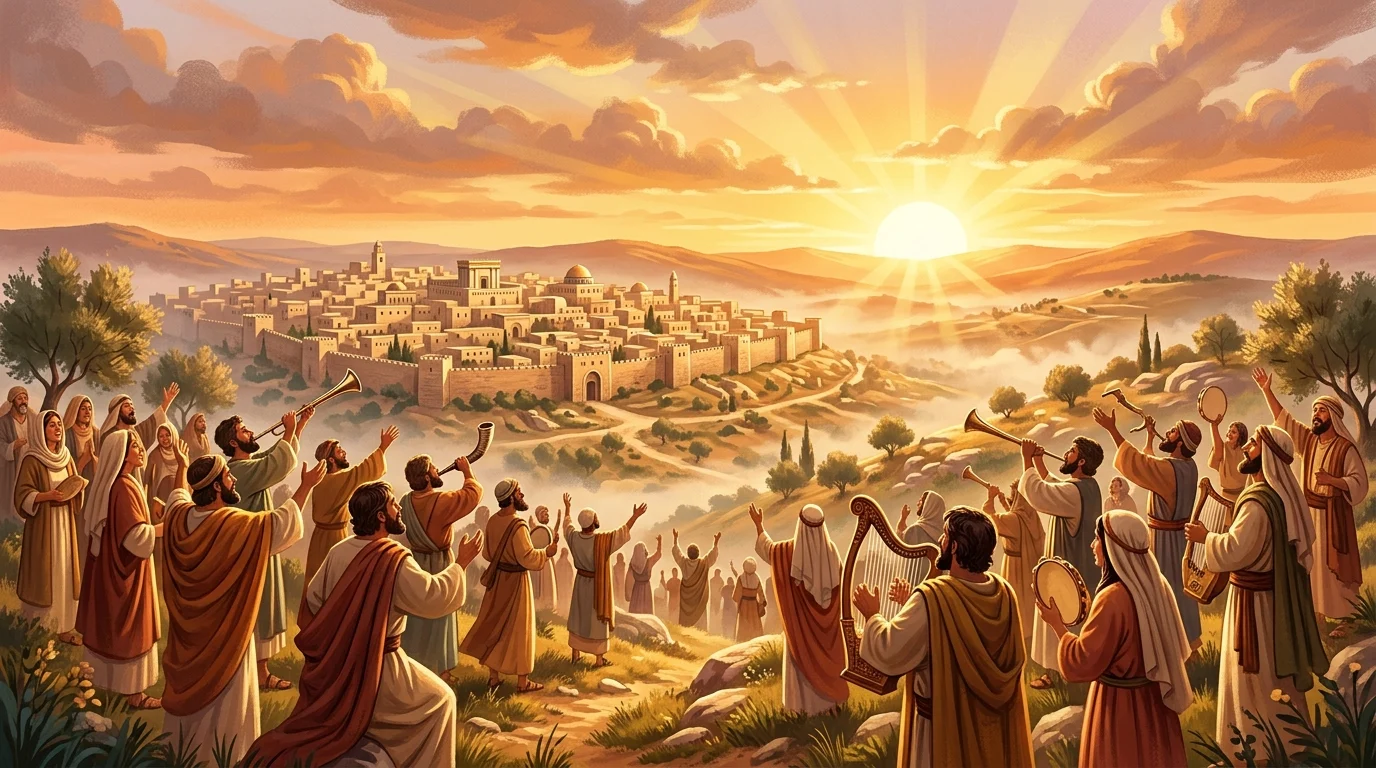
Quick Ans: Hallelujah meaning is one of the most searched questions about biblical words and Christian worship. In Hebrew, Hallelujah (הַלְלוּיָהּ) means “Praise the Lord” or “Praise Yah.” This ancient word of praise appears throughout the Psalms and the Book of Revelation. It has become one of the most recognized religious words in the world. Understanding its meaning helps you worship with deeper understanding and connect with the biblical roots of praise.
Understanding biblical words helps you follow religious discussions and enrich your faith. New questions about Hebrew terms appear constantly, and some become important touchstones. Hallelujah is a perfect example. It has moved from ancient temple worship into mainstream music, film, and everyday speech. Knowing how to use it correctly helps you express praise and understand Scripture more deeply.
What Does Hallelujah Mean?
Hallelujah is a Hebrew word that means “Praise the Lord” or “Praise Yah.” It is a compound word made of two parts: “hallelu” and “Yah.”
Hallelu is the imperative form of the Hebrew verb halal, which means “to praise,” “to boast,” or “to shine.” It is a command directed at a group of people—it means “you all praise.”
Yah is a shortened form of Yahweh, the personal name of God revealed to Moses at the burning bush. Yahweh is the covenant name of the God of Israel.
Together, Hallelujah means “Praise Yah” or “Praise the Lord.” It is not a statement about God—it is a command to praise Him. When you say Hallelujah, you are telling yourself and others to praise God.
The word belongs to both casual and formal religious communication. It fits perfectly in worship services, prayers, Bible studies, and personal devotion. It also appears in music, film, and everyday speech. The tone is joyful and reverent.
Where Did Hallelujah Come From?
The hallelujah origin traces back to the Hebrew Bible, specifically the Book of Psalms. The word appears 24 times in the Psalms, mostly at the beginning or end of individual psalms.
The Psalms are divided into five books, and the word Hallelujah appears at the close of several of these books. Psalms 146 through 150 all begin and end with “Hallelujah.” These are known as the “Hallelujah Psalms.” They are pure praise—no requests, no complaints, just adoration of God.
The word also appears in the Book of Revelation in the New Testament. In Revelation 19, a great multitude in heaven shouts “Hallelujah!” four times in a row. This is the only place in the New Testament where the Hebrew word is preserved untranslated.
Over time, Hallelujah moved from Hebrew worship into Greek and Latin liturgy. The early Church adopted the word as a universal expression of praise. It passed into English and almost every other language without translation. The sound stayed the same even as the meaning traveled across cultures.
Hallelujah in the Old Testament
The word appears frequently in the Old Testament, especially in the Psalms. Understanding these appearances helps you see how central praise is to biblical faith.
Psalm 146 begins with “Praise the Lord, O my soul! I will praise the Lord as long as I live.” In Hebrew, this is “Hallelujah.” The psalmist commands himself to praise God.
Psalm 147 opens with “Hallelujah! How good it is to sing praises to our God.” The psalm celebrates God’s care for Jerusalem and His provision for His people.
Psalm 148 calls all creation to praise the Lord—angels, sun, moon, stars, mountains, trees, animals, and people. It begins and ends with “Hallelujah.”
Psalm 149 calls God’s people to praise Him with dancing, tambourines, and harps. It begins with “Hallelujah” and celebrates God’s victory over His enemies.
Psalm 150 is the final psalm and pure praise. It begins and ends with “Hallelujah” and calls for every instrument and every breath to praise the Lord.
These psalms show that Hallelujah is not just a word—it is a command to worship. It calls the whole community to praise God together.
Hallelujah in the New Testament
The word appears only four times in the New Testament, all in one chapter. But its appearance is powerful and significant.
Revelation 19 describes the final victory of God over evil. A great multitude in heaven shouts “Hallelujah!” because God has judged the great escort and avenged the blood of His servants. The word appears four times in this chapter, each time as a thunderous declaration of praise.
The fact that Hallelujah appears in Revelation is significant. It shows that the word is not just for ancient Israel—it is for the whole Church. It is the song of heaven itself. When believers say Hallelujah, they join the heavenly chorus in praising God.
The Greek text of Revelation preserves the Hebrew word untranslated. This shows that even in the Greek-speaking early Church, Hallelujah was a special word that transcended language.
How Hallelujah Became a Universal Word
The journey of Hallelujah from Hebrew to English and beyond is remarkable. Unlike most Hebrew words, Hallelujah was never translated—it was transliterated. The sound was preserved across languages.
In the Greek Old Testament (the Septuagint), the Hebrew word was written as Allelouia.
In Latin, it became Alleluia.
In English, it became Hallelujah (with an H) or Alleluia (without the H). Both forms are correct.
The word passed into almost every language without change.
In Spanish, it is “Aleluya.”
In French, it is “Alléluia.”
In German, it is “Halleluja.”
In Swahili, it is “Haleluya.” The sound is universal.
This universality reflects the word’s meaning. Praise is not limited to one language or one culture. Hallelujah belongs to all people, all nations, and all tongues. It is a foretaste of the heavenly worship described in Revelation, where every family and language praises God together.
Hallelujah in Worship and Music
Hallelujah is one of the most common words in Christian worship. It appears in hymns, choruses, and contemporary worship songs. It is sung, shouted, whispered, and prayed.
Handel’s Messiah features the famous “Hallelujah Chorus,” which begins with the word “Hallelujah.” The chorus is based on Revelation 19 and has become one of the most recognized pieces of classical music in the world.
Leonard Cohen’s “Hallelujah” is a secular song that uses the word in a different way. It explores love, loss, and brokenness. The song has been covered by hundreds of artists and has become a cultural phenomenon. While its theology is complex, it shows how the word resonates beyond religious settings.
In charismatic and Pentecostal worship, “Hallelujah” is often repeated as a spontaneous expression of praise. The word becomes a vehicle for joy and gratitude.
In liturgical churches, “Alleluia” (the Latin form) is sung before the Gospel reading. During Lent, it is often omitted as a sign of penitence. Its return at Easter is a moment of great celebration.
Hallelujah vs Alleluia
Many people wonder about the difference between Hallelujah and Alleluia. They are the same word in different languages.
Hallelujah is the Hebrew form with the “H” sound. It is used in many English Bibles and worship songs.
Alleluia is the Greek and Latin form without the “H.” It is used in Catholic, Anglican, and Orthodox liturgy.
Both words mean “Praise the Lord.” The choice between them usually depends on tradition or preference. Some churches use both forms interchangeably.
The important thing is not the spelling but the meaning. Whether you say Hallelujah or Alleluia, you are commanding yourself and others to praise God.
The Deeper Meaning of Praise
The word Hallelujah is more than a sound—it is a theology of praise. Understanding its depth helps you worship with greater intention.
Praise is a command, not a suggestion. Hallelujah is an imperative. It tells you to praise God. Praise is not optional for believers—it is a duty and a privilege.
Praise is communal. Hallelu is plural. It means “you all praise.” Praise is not just personal—it is something we do together as the body of Christ.
Praise is rooted in who God is. The “Yah” in Hallelujah is the covenant name of God. We praise Him not for what He gives but for who He is. His character is the foundation of our praise.
Praise is eternal. In Revelation, the saints in heaven never stop saying Hallelujah. Praise is not temporary—it is the eternal occupation of God’s people.
Hallelujah in Everyday Speech
Hallelujah has moved beyond religious settings into everyday speech. People use it to express joy, relief, or celebration.
A student might say “Hallelujah, I passed my exam!” A worker might say “Hallelujah, it’s Friday!” A person receiving good news might shout “Hallelujah!”
In these contexts, the word is used as an exclamation of happiness. It carries the same energy as “Praise God” or “Thank God.” The religious meaning is still present, but it is often softened.
Some people use Hallelujah playfully or ironically. A caption like “Hallelujah, my package finally arrived” uses the word humorously. The tone is light and self-aware.
Even in secular contexts, the word retains its power. It is a word of joy, relief, and gratitude. It expresses something deep in the human spirit.
FAQs
What does Hallelujah literally mean?
Hallelujah literally means “Praise Yah” or “Praise the Lord.” It is a compound Hebrew word: “hallelu” (you all praise) and “Yah” (a short form of Yahweh, God’s name).
Is Hallelujah a Hebrew word?
Yes. Hallelujah is a Hebrew word that appears in the Old Testament Psalms. It was transliterated into Greek, Latin, and English without being translated.
What is the difference between Hallelujah and Alleluia?
They are the same word. Hallelujah is the Hebrew form with the “H” sound. Alleluia is the Greek and Latin form without the “H.”
Why do we say Hallelujah in worship?
Hallelujah is a command to praise God. It appears throughout the Psalms and in Revelation 19. It is the song of heaven and the calling of God’s people.
Does Hallelujah appear in the New Testament?
Yes, but only in Revelation 19, where it appears four times. It is the only Hebrew word preserved untranslated in the Greek New Testament.
Conclusion
The hallelujah meaning is clear and powerful. It stands for “Praise the Lord” and serves as a command to worship God. You can use it in worship services, prayers, Bible studies, and everyday conversation. It is a joyful word that connects believers to the ancient praise of Israel and the eternal worship of heaven. When you see Hallelujah in Scripture or hear it in song, you now know exactly what it means. Use it with reverence, and your praise will rise like incense before the throne of God.
Discover More:-
- HBCU Meaning: What Does HBCU Stand For? 2026
- Poison Tree Tattoo Meaning: Symbolism & Hidden Messages 2026











2 thoughts on “Hallelujah Meaning: The Complete Guide to This Powerful Word of Praise 2026”