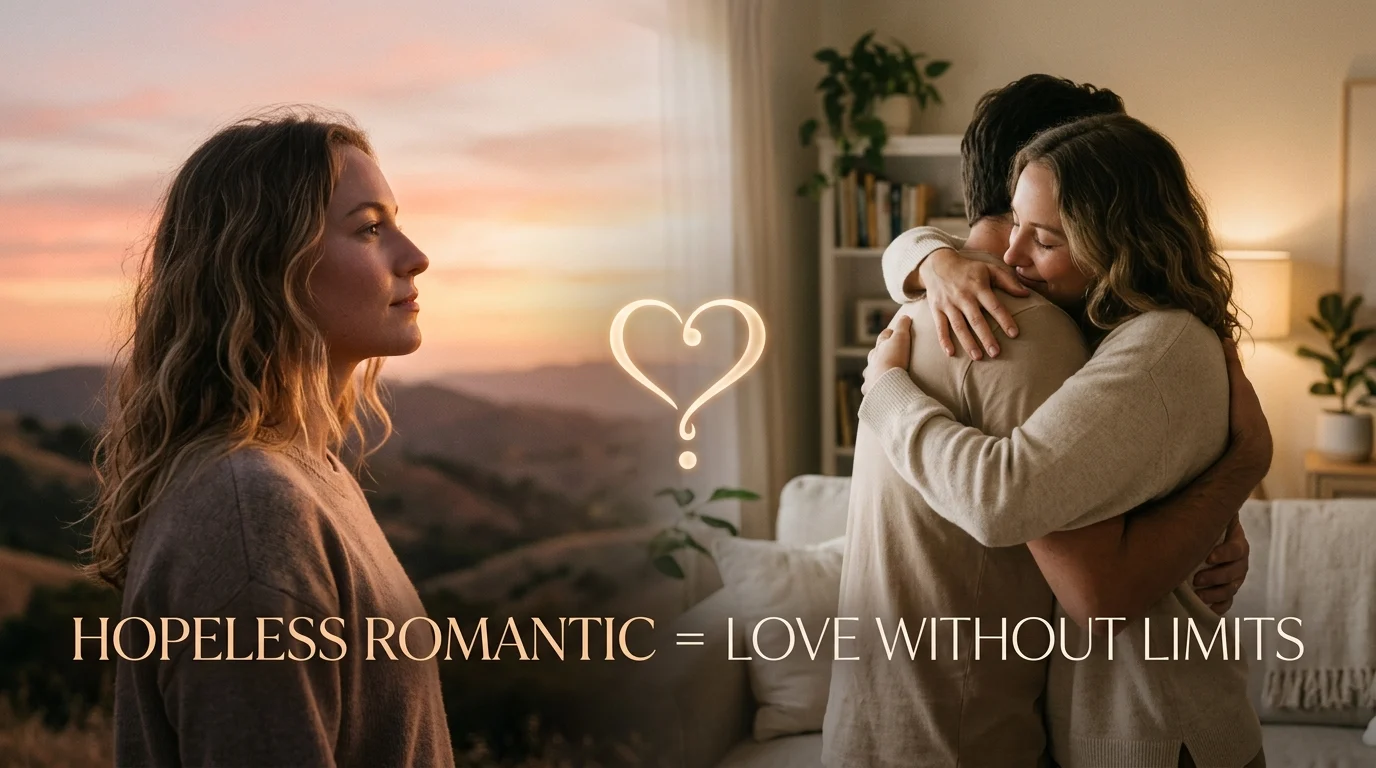
Quick Ans: Hopeless romantic meaning is one of the most searched questions about modern relationships and emotional language. In contemporary contexts, a hopeless romantic refers to a person who holds idealistic, sentimental, and often unrealistic views about love, maintaining faith in grand romance despite past disappointments or evidence to the contrary. This term has become a standard concept in dating discussions, pop culture analysis, and conversations about emotional vulnerability. Understanding this term helps you grasp why some people approach love with unwavering optimism and why precise language matters when discussing relationship patterns in modern life.
Understanding modern relationship terminology helps you follow social trends and interpret personal discussions. New questions about emotional archetypes appear constantly, and some become cultural touchstones. “Hopeless romantic” is a perfect example. It has moved from literary descriptions into mainstream dating discourse and everyday conversation. Knowing how to use it correctly helps you understand references in romantic discussions and social debates about love.
What Does Hopeless Romantic Mean?
A hopeless romantic is a noun phrase that describes a person with sentimental and idealistic views on love, especially in spite of experience, evidence, or warnings otherwise . The term combines “hopeless” suggesting an incurable or incorrigible quality with “romantic,” referring to someone with lofty, sentimental views on life and love. Together, the phrase describes someone who persistently believes in grand romance even when reality suggests otherwise.
The term belongs to both casual and serious communication. It fits perfectly in discussions about relationship patterns, emotional vulnerability, and dating psychology. It also appears in cultural commentary when describing characters or public figures who pursue love with reckless optimism. Sometimes people use it self-deprecatingly to describe their own dating tendencies. Other times they use it critically to describe someone blinded by romantic ideals. All versions relate to the same general concept. The distinction usually depends on the specific context and the speaker’s tone.
The concept carries significant emotional and cultural weight. It connects to changing attitudes toward vulnerability, modern dating practices, and evolving conversations about healthy relationships. Understanding the meaning helps you follow psychological discussions and interpret cultural portrayals of love.
Where Did the Term Come From?
The hopeless romantic origin traces back to nineteenth-century literature. Early pairings of “hopeless” and “romantic” appeared in Marie Price La Touche’s 1855 novel Lady Willoughby, where a mother warned her son against a “hopeless, romantic attachment” that could ruin his prospects . The particular phrase “hopeless romantic” appeared as early as 1926 in a short story collection called Georgian Stories, describing a character named George as “a hopeless romantic” who was “very much in love” despite the relationship not being in his best interest .
The concept itself is older than the exact phrase. Claims of foolish or impractical love have been documented throughout history in various forms. As literary culture and romantic philosophy became more common, societies created the term to address what they saw as a specific character type someone who chases love for love’s sake, even when it’s impractical, unwise, or unseemly .
The term gained prominence in the 1920s and 1930s as it spread through literature and literary magazines. Some commentators adopted the phrase because it captured the contradiction between passionate devotion and practical wisdom. This distinction matters because someone can be deeply loving without being hopeless, while still achieving relationship success.
The concept spread through novels, films, and eventually pop culture. Fields like psychology, dating advice, and relationship counseling incorporated hopeless romantic concepts into their frameworks. The term became a symbol of modern romantic idealism, emotional vulnerability, and generational shifts in how people approach love .
Hopeless Romantic in Culture and Media
The term has appeared in countless literary works and cultural productions across every medium. Understanding these appearances helps you see how the concept evolved.
Romantic literature discussing hopeless romantics dates back to the nineteenth century and has been revised numerous times. The archetype has undergone significant changes in recent years, including updated portrayals in romantic comedies and updated critiques of unhealthy patterns. The term became a standard part of relationship vocabulary.
Popular culture increasingly references hopeless romantic archetypes and modern dating dynamics. Films distinguish hopeless romantics from cynical pragmatists and maintain specific tropes for character development, romantic tension, and audience identification. Characters like Ted Mosby from How I Met Your Mother and Charlotte from Sex and the City became cultural touchstones for the archetype .
News media frequently use “hopeless romantic” when reporting on dating trends and relationship psychology. Headlines like “Are hopeless romantics a dying breed?” are common in lifestyle coverage. The term spread through journalism as a concise way to describe people who prioritize love above practical considerations.
Mental health professionals use the term in discussions of attachment styles and relationship patterns. The phrase serves practical purposes in therapeutic contexts, providing a standardized reference to a pattern of idealization and emotional investment that can become unhealthy if left unchecked .
The Science Behind Hopeless Romantics
Modern psychology and relationship science offer explanations for why people become hopeless romantics. Understanding these theories helps separate emotional patterns from personality traits.
Idealization and attachment. Psychologists believe hopeless romantic tendencies often stem from anxious attachment styles or fear of abandonment. The emphasis on finding “the one” and achieving a perfect love can serve as a coping mechanism for deeper insecurities . This can protect individuals from confronting painful realities but also lead to repeated disappointment.
Media influence. Some researchers emphasize the role of romantic films and novels in shaping expectations. One study found that young people who watched more romantic films were more likely to believe in romantic ideals . The goal is not just love but the replication of cinematic narratives. This aligns with cultural interest in grand gestures and dramatic declarations.
Optimism and relationship satisfaction. Some research suggests that romantic beliefs can actually benefit relationships. A study published in the Journal of Social and Personal Relationships found that people with strong romantic beliefs had higher expectations, but they were also more likely to see their partner as meeting those expectations . This recognizes that idealism can sometimes function as a self-fulfilling prophecy rather than a setup for failure.
Gradual awareness. Many hopeless romantics develop greater self-awareness over time. Therapists often recommend updating standards, recognizing warning signs, and practicing boundaries. This recognizes that romantic patterns can evolve gradually rather than changing overnight.
Regional and cultural variation. Different cultures have varying attitudes toward hopeless romanticism. Some societies celebrate grand romantic gestures while others view them as impractical or immature. Over time, these cultural factors can become internalized and shape individual approaches to love.
Hopeless Romantic vs Hopeful Romantic vs Realist
These terms are often confused. Understanding the differences helps you use them correctly.
Hopeless romantic refers to a person with idealistic and sentimental views on love who persists in romantic pursuits despite evidence or experience suggesting caution . The term is used across many contexts and emphasizes emotional optimism combined with a tendency to ignore red flags. This distinction can matter because “hopeless” may imply a level of foolishness that the person does not actually possess.
Hopeful romantic stands for a person who believes in love and maintains optimism but stays grounded in reality. The term is used when describing someone who has learned from past relationships without becoming cynical. The exact definition varies by context, but hopeful romantics are often portrayed as having healthier boundaries.
Realist stands for a person who approaches love with practical considerations and emotional caution. The term is used when describing someone who prioritizes compatibility and communication over grand passion. The choice between hopeless romantic, hopeful romantic, and realist often reflects different approaches to emotional vulnerability rather than judgments about correctness.
In casual conversation, people sometimes use these terms interchangeably. A friend might say “I’m such a hopeless romantic” when they actually mean they enjoy romantic gestures. This is common but technically imprecise. The distinction usually depends on the specific context and the person’s self-awareness.
Hopeless Romantic in Modern Culture
The concept has moved beyond literary descriptions. Today it appears in media, dating apps, and everyday language.
Hopeless romance in the news. Lifestyle and relationship news reports frequently mention hopeless romantics and dating trends. The term has become shorthand for someone who prioritizes love over practicality in media coverage.
Hopeless romance in marketing campaigns. Organizations use the term in campaigns about self-care and emotional health. The goal is to help people recognize patterns and improve relationship standards.
Hopeless romance in education. Universities and workshops teach concepts related to romantic idealism as part of psychology, communication, and relationship courses. The term appears in textbooks, case studies, and research.
Hopeless romance in online discussions. People discuss their own hopeless romantic tendencies and seek advice on social media and forums. The term appears in conversations about dating struggles, attachment styles, and personal growth.
In business and employment. Romantic idealism can affect workplace dynamics, particularly when personal relationships intersect with professional environments. The term appears in discussions about emotional intelligence and boundary-setting.
When to Use the Term Hopeless Romantic
The term works in several different situations. Its evocative nature makes it valuable in emotional and relational contexts.
The most common usage is in dating and relationship settings. A person might describe themselves or a partner as a hopeless romantic. The tone is often affectionate or self-aware.
Another common usage is in cultural commentary. A writer might reference “the hopeless romantic archetype” when analyzing a film or novel. The tone is analytical and observant.
The term also appears in psychological discussions. A therapist might discuss “hopeless romantic patterns” or “romantic idealism.” The tone is clinical and educational.
The phrase can also be used in casual conversation. Someone might say “He’s such a hopeless romantic” when discussing a friend’s dating behavior. The tone is conversational and often teasing.
How to Use Hopeless Romantic in a Sentence
Using the term correctly helps you communicate clearly. Here are some examples.
As a noun: “She’s a hopeless romantic who still believes in soulmates.” This is the most common usage. It describes a specific type of person.
In a cultural context: “The film portrays the hopeless romantic as both endearing and foolish.” This usage draws on the term’s literary origins.
In psychological discussion: “Hopeless romantics often struggle with boundary-setting in relationships.” This is a clinical usage.
In self-description: “I’m a hopeless romantic, but I’m learning to be more realistic.” This is a reflective usage.
Plural form: “Hopeless romantics tend to fall in love quickly.” The plural is common, and the term is widely used in both singular and plural forms.
FAQs
What does hopeless romance mean?
A hopeless romantic describes a person with sentimental and idealistic views on love, especially one who persists in romantic optimism despite past disappointments or evidence suggesting caution. It is a term referring to a specific emotional archetype that can imply both endearing vulnerability and potential naivety.
Is hopeless romantic the same as hopeful romantic?
Hopeless romantic and hopeful romantic are similar but not identical. Hopeless romantic emphasizes the incurable or excessive nature of romantic idealism, while hopeful romantic suggests optimism that remains grounded in reality. The exact definitions and usage vary by context. Some people embrace the “hopeless” label proudly, others prefer “hopeful.”
What happens to hopeless romantics?
Experiences vary by person and context. Some hopeless romantics find fulfilling relationships by learning to balance idealism with realistic expectations. Others struggle with repeated disappointment when partners fail to match their expectations. The outcome typically depends on self-awareness and willingness to grow.
Can hopeless romance become a healthy trait?
In many contexts, yes. Because hopeless romanticism focuses on hope and emotional openness, some aspects can contribute to healthy relationships when combined with boundaries and self-awareness. Examples include people who maintain optimism after breakups and those who express affection generously.
Is being a hopeless romantic emotionally healthy?
Validation varies by situation. Some hopeless romantics feel fulfilled by their capacity for love and emotional expression, while others experience distress from repeated disappointment and ignoring red flags. The evidence depends on the specific person, their relationship history, and the quality of their self-reflection.
Conclusion
The hopeless romantic meaning is clear and culturally significant. It refers to a person with idealistic and sentimental views on love, often associated with grand gestures and persistent optimism despite experience. You can use it in dating discussions, cultural commentary, and psychological conversations. It is a term that connects modern emotional patterns to evolving social practices. When you see hopeless romance in a personal essay or hear the phrase in conversation, you now know exactly what it means. Use it with precision, and your understanding of this important concept will deepen.
Discover More:
- Pushing P Meaning: What This Viral Slang Phrase Stands For 2026
- Coquette Meaning: This Flirty and Feminine Word Stands For 2026








1 thought on “Hopeless Romantic Meaning: What It Really Means & Examples 2026”