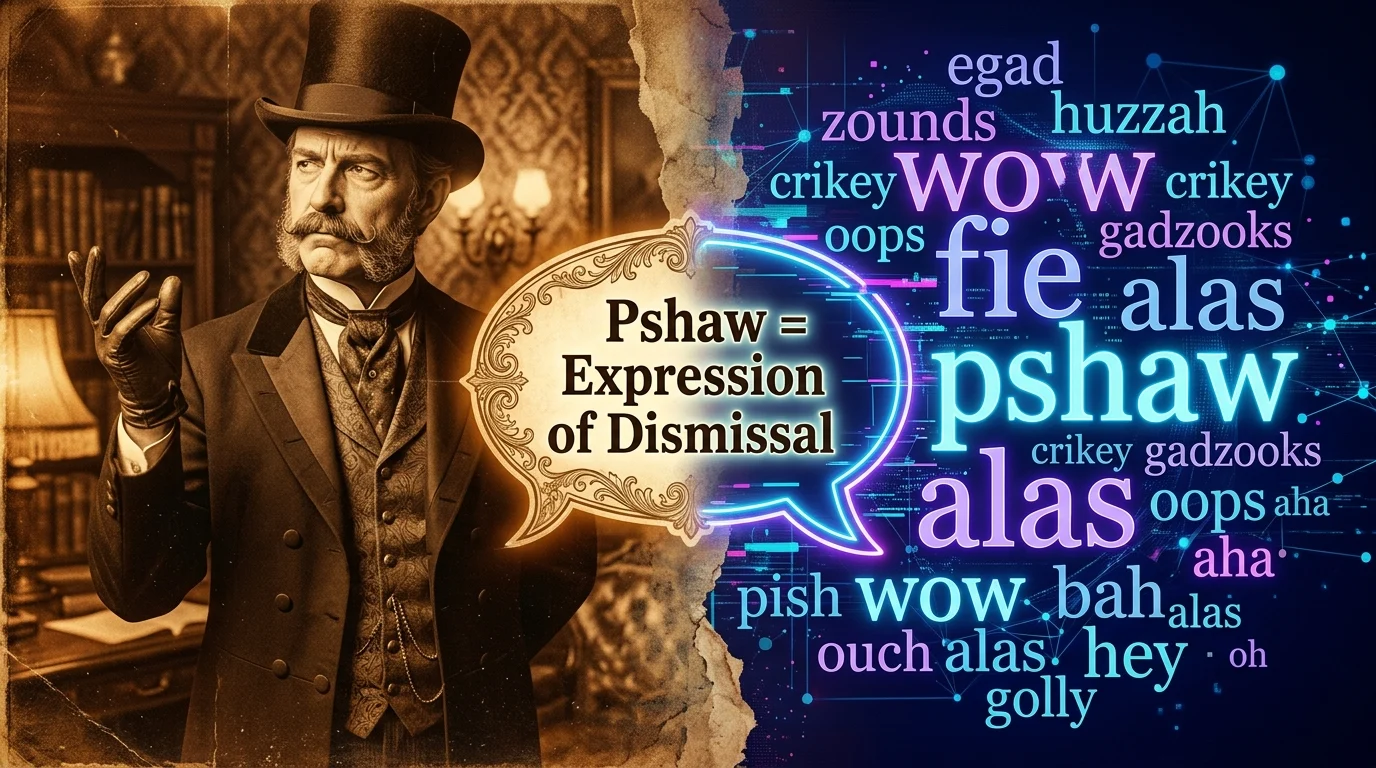
Quick Ans: Pshaw meaning is one of the most searched questions about archaic interjections and expressions of disdain. The word “pshaw” is an exclamation used to express dismissal, contempt, or disbelief. It represents a sound of scorn or impatience, often uttered when someone finds something trivial or unbelievable. This curious interjection has fascinated language enthusiasts for centuries. It appears in classic literature, historical dialogue, and discussions of archaic English. Understanding this term helps you grasp why expressions like “pshaw” were once common in everyday speech and why they still intrigue linguists today.
Understanding linguistic terms helps you follow cultural discussions and interpret language. New questions about word origins appear constantly, and some become cultural touchstones. Pshaw is a perfect example. It has moved from everyday conversation into literary archives and linguistic study. Knowing how to use it correctly helps you express yourself and understand references in classic literature and period dramas.
What Does Pshaw Mean?
A pshaw is an interjection used to express contempt, disdain, or dismissal. The term represents a vocal sound of scorn or impatience. It refers to an exclamation uttered when someone considers something trivial, unbelievable, or unworthy of serious attention.
The term belongs to both casual and academic communication. It fits perfectly in discussions about linguistics, archaic language, and literature. It also works in everyday conversation when describing expressions of disbelief or dismissal. The tone can be dismissive, playful, or educational.
Sometimes people confuse it with other interjections. Other times they use it correctly to express scorn. Both versions relate to emotional expression. The distinction usually depends on whether the sound conveys contempt or simple surprise.
The concept carries deep cultural significance. It connects to traditions of verbal expression, emotional communication, and social interaction. Understanding the meaning helps you appreciate its role in stories and historical dialogue.
Where Did the Term Come From?
The pshaw origin traces back to the 17th century. The word is an imitation of a natural sound of contempt or impatience. It represents a vocal exhalation expressing dismissal.
The concept itself is older than its written usage. Ancient languages used similar sounds to express scorn. The Greeks and Romans had interjections for disbelief. These expressions served social and emotional purposes.
The term entered English in the 1600s as a written representation of a dismissive sound. Writers like Shakespeare and his contemporaries used similar interjections. The word became popular in literature and drama.
The concept spread through literature and linguistics. Writers explored the idea of expressing emotion through sound. The pshaw became a symbol of linguistic creativity, emotional expression, and social communication.
Pshaws in Literature and Film
The pshaw has appeared in countless stories across every medium. Understanding these appearances helps you see how the concept evolved.
William Shakespeare’s plays featured similar interjections like “pshaw” and “fie.” These expressions conveyed contempt and dismissal. They became famous examples of Elizabethan verbal expression. It is one of the most celebrated literary treatments of the theme.
Jane Austen’s novels (1813) featured characters using “pshaw” to express disdain. These interjections served social and satirical purposes. The stories became a cultural touchstone for the power of language.
Charles Dickens (1838) used “pshaw” in dialogue to show character personality. The expression described Victorian attitudes and emotions. The term spread through literary journalism worldwide.
Mark Twain (1884) employed “pshaw” in his works to capture colloquial speech. The interjection blended humor and realism. The author popularized the term in American literature.
Period dramas (2000s) describe characters using “pshaw” to convey historical authenticity. The genre blurs the line between entertainment and education.
The Psychology Behind Pshaws
Modern psychology offers explanations for why people create and enjoy interjections. Understanding these theories helps separate linguistics from cognition.
Emotional release. Some scientists believe interjections like “pshaw” are created because the brain seeks emotional outlets. Expressing contempt through sound releases tension. This can make communication faster and more expressive.
Social signaling. This is a cognitive process where the speaker signals dismissal to others. It can involve combining verbal, emotional, or social elements. The signal is usually understood and can be powerful.
Language play. Some theorists believe interjections represent a form of verbal play. The speaker acts on emotion and the listener can interpret. This aligns with the human tendency to experiment with language.
Memory and recall. Some people find interjections easier to remember than full phrases. These expressions are usually catchy rather than forgettable. Many writers use them for this reason.
Cultural identity. Some communities create interjections to describe unique reactions. These words can feel like encountering a new cultural concept. They are usually embraced rather than rejected.
Pshaw vs Other Interjections
These two terms are often confused. Understanding the difference helps you use them correctly.
A pshaw is an interjection expressing contempt or dismissal. It is often a sound with a combined emotional meaning. It may be playful or serious. The expression is usually brief in pronunciation.
Other interjections are words like “wow” or “alas” expressing different emotions. The term is used in grammar and vocabulary lessons. The interjection retains its emotional function. Examples include “oh” and “hey.”
In casual conversation, people use pshaw to describe any expression of dismissal. A friend might say “Pshaw is my favorite interjection” meaning a word expressing scorn. This is a playful, non-technical usage.
Pshaws in Modern Culture
The concept has moved far beyond linguistics. Today it appears in memes, social media, and everyday language.
Pshaw memes. People post examples of dismissive expressions like “Pshaw!” or “Pish posh!” The caption “best pshaw ever” is common on Twitter and Reddit. The humor comes from the archaic combination.
Pshaw accounts. On social media, usernames that express dismissal are sometimes called pshaw handles. They combine words to express personality and creativity.
Pshaw week. This was a viral social media trend where people created new dismissive expressions for everyday situations. It spread across TikTok and Instagram.
In business. The term “pshaw brand name” describes companies like “Yahoo” or “Huzzah.” It is used in marketing and brand strategy.
In technology. “Pshaw” is sometimes used for digital expressions, such as “meh” or “pfft.” These raise discussions about language evolution and innovation.
When to Use the Word Pshaw
The term works in several different situations. Its flexibility is one reason it became so popular.
The most common usage is describing a sound that expresses dismissal. A comment like “Pshaw is an interjection” is educational and descriptive. The tone is usually light and curious.
Another common usage is in literary or historical contexts. A story about a character using “pshaw” uses the term to explain the dialogue. The tone is analytical and creative.
The term also appears in linguistic discussions. A teacher might ask about a student’s “pshaw example” to understand word formation. The tone is academic and exploratory.
The word can also be used metaphorically. A writer might call a dismissive attitude a “pshaw moment.” The tone is analytical and critical.
How to Use Pshaw in a Sentence
Using the term correctly helps you communicate clearly. Here are some examples.
As a noun: “Pshaw is a classic interjection of dismissal.” This is the most common usage. It describes a word that expresses contempt.
In a linguistic context: “According to linguists, pshaws create emotional meaning by expressing sounds.” This usage draws on the term’s academic origins.
In branding: “The company created a pshaw name to stand out in the market.” This is a commercial usage.
In business: “The startup is a pshaw of two industry terms.” This is a metaphorical usage.
Plural form: “The English language features hundreds of pshaws.” The plural is pshaws.
FAQs
What does pshaw mean?
A pshaw is an interjection used to express contempt, disdain, or dismissal. The word represents a vocal sound of scorn. It can also describe an exclamation of disbelief.
Is a pshaw real?
Pshaws are real linguistic constructions. They are created through emotional expression and are widely used in historical English. In everyday usage, the term describes words like “pshaw” and “fie,” which are very real.
What happens if you use a pshaw?
In linguistics, using a pshaw creates a new expression with emotional meaning. From branding, it may help a company stand out. In everyday life, it usually means you expressed dismissal for fun or emphasis.
What is the difference between a pshaw and a compound word?
A pshaw expresses emotion through sound. A compound word joins two complete words together. The terms are often confused but have different meanings.
Can a pshaw be a bad thing?
In most contexts, pshaws are creative and useful. However, in branding, a poorly designed pshaw can confuse customers. Many people enjoy discovering clever expressions.
Conclusion
The pshaw meaning is clear and fascinating. It refers to an interjection expressing contempt, disdain, or dismissal, derived from a natural sound of scorn. You can use it in linguistic discussions, branding analysis, and everyday conversation. It is a term that connects ancient wordplay to modern entertainment. When you see a pshaw in a story or hear the word in conversation, you now know exactly what it means. Use it with curiosity, and your understanding of this clever concept will deepen.
Discover More:
- HBCU Meaning: What Does HBCU Stand For? 2026
- Poison Tree Tattoo Meaning: Symbolism & Hidden Messages 2026











1 thought on “Pshaw Meaning: What Does This Funny Word Really Mean? 2026”