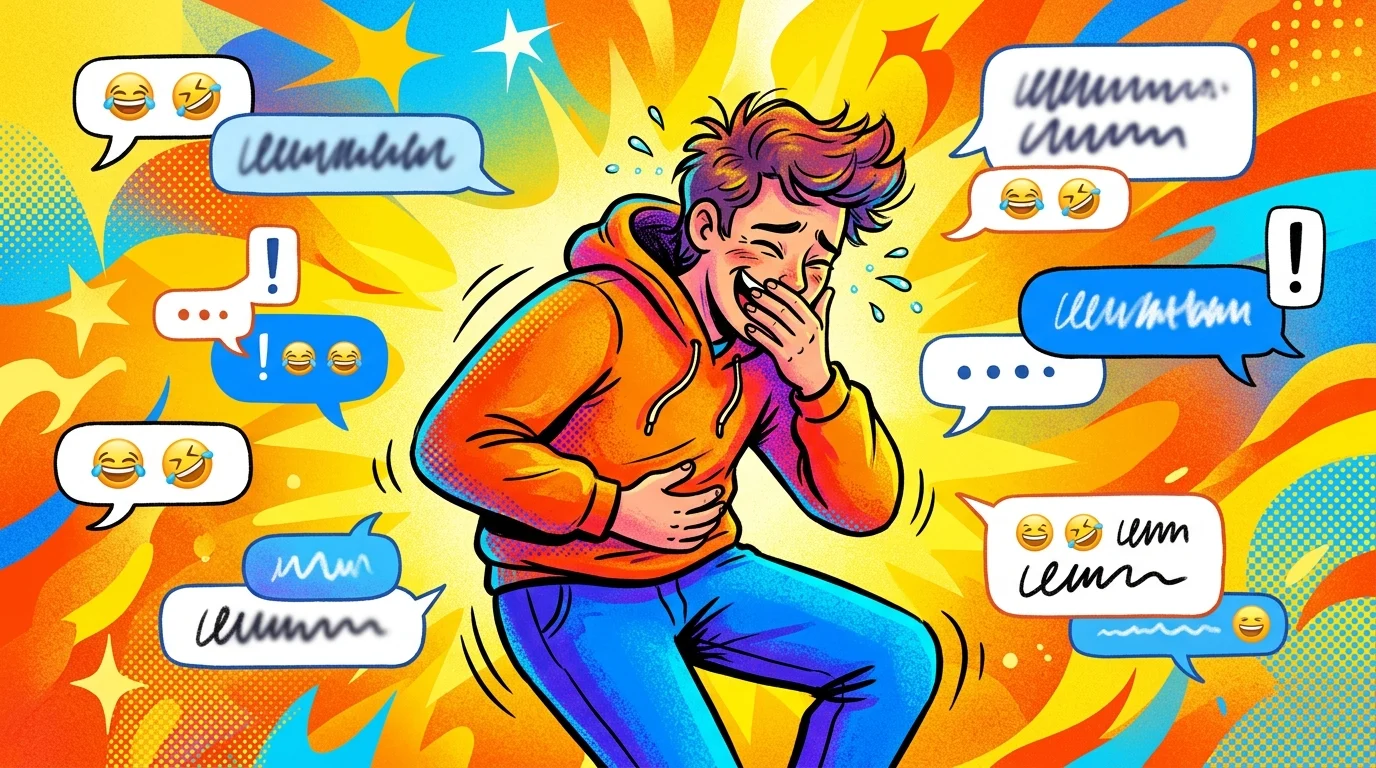
Quick Ans: ROFL meaning is one of the most searched questions about classic internet slang. In texts, chats, and social media, ROFL stands for “Rolling On the Floor Laughing.” This four-letter abbreviation is used to express extreme amusement. It appears in messages, comments, and memes across every major platform.
Understanding internet acronyms helps you follow conversations online. New abbreviations appear constantly, and some become cultural touchstones. ROFL is a perfect example. It has moved from early chat rooms into mainstream vocabulary. Knowing how to use it correctly helps you express laughter and connect with others online.
What Does ROFL Mean?
ROFL is an acronym for “Rolling On the Floor Laughing.” People use it to show that something is extremely funny. The term is playful, expressive, and universally understood.
The phrase belongs to casual and friendly communication. It fits perfectly in texts, chats, comments, and social media replies. It does not belong in formal writing, business emails, or academic papers. The tone is light and humorous.
Sometimes people write it in all uppercase as ROFL. Other times they type it in lowercase as rofl. Both versions mean the same thing. The choice usually depends on the person’s typing style or the platform’s conventions.
The acronym contains no profanity, which makes it safe for almost any casual setting. It is one of the most family-friendly internet slang terms.
Where Did ROFL Come From?
The rofl origin traces back to the early days of the internet. The acronym emerged in the late 1980s and early 1990s in chat rooms and bulletin board systems (BBS).
At that time, internet users needed quick ways to express emotions in text. Acronyms like LOL (Laughing Out Loud) and ROFL became standard. They saved keystrokes and added personality to online conversations.
The term spread through early messaging platforms like AOL Instant Messenger (AIM), ICQ, and IRC. It became a staple of internet culture before most people had ever heard of the internet.
Social media completed the journey. Platforms like Facebook, Twitter, and TikTok adopted the acronym. Today it appears in memes, comments, and everyday conversation around the world.
How ROFL Is Used in Conversations
ROFL works in several different situations. Its flexibility is one reason it became so popular.
The most common usage is reacting to something funny. A message like “That joke was hilarious, ROFL” shows strong amusement. The tone is enthusiastic and friendly.
Another common usage is responding to a meme or video. A comment like “ROFL this is too good” signals that the content made the person laugh hard.
ROFL also appears in group chats. Friends use it to react to each other’s messages. A simple “ROFL” can keep a conversation light and fun.
The acronym can also appear sarcastically. A message like “ROFL that was so not funny” uses the term ironically. The tone is dry and humorous.
ROFL on Social Media
ROFL is everywhere on social media. It appears in TikTok comments, Instagram replies, X posts, and Facebook updates. The acronym fits the playful nature of these platforms because it is short and expressive.
On TikTok, ROFL appears in comments under funny videos. A comment like “ROFL I can’t breathe” is a common reaction.
On Instagram, ROFL shows up in replies to funny posts and story reactions. It serves the same amused function.
On X, ROFL is used in replies to jokes and witty posts. A tweet like “ROFL” in response to a funny take is a quick way to show appreciation.
On Facebook, ROFL appears in comments and messenger chats. It remains a standard way to react to humor.
ROFL vs Similar Acronyms
Several other acronyms overlap with ROFL in meaning. Understanding the differences helps you choose the right one.
LOL stands for “Laughing Out Loud.” It is the most common laughter acronym. ROFL is stronger and more intense.
LMAO stands for “Laughing My Ass Off.” It is more informal and expressive than LOL. ROFL is similar in intensity but cleaner.
LMFAO stands for “Laughing My Fucking Ass Off.” It is the most intense of the common laughter acronyms. ROFL is milder.
ROFLMAO combines ROFL and LMAO. It stands for “Rolling On the Floor Laughing My Ass Off.” It is extremely intense and often used humorously.
KEK is a variant of LOL from gaming culture. It is used similarly to ROFL but has a different origin.
When Not to Use ROFL
ROFL does not belong in every conversation. Its casual nature makes it less appropriate for some formal settings.
Avoid using ROFL in professional emails, formal documents, or academic papers. The acronym is too casual for these contexts. A simple “that is funny” or “I enjoyed that” is safer.
Be careful when using ROFL around people who may not know internet slang. Older generations or those less familiar with online culture may not understand the term. A brief explanation can help.
In mixed company, consider whether the term will land as intended. ROFL is playful when used with friends. It can feel dismissive when used in serious conversations.
Alternative Meanings of ROFL
While “Rolling On the Floor Laughing” is the dominant meaning, ROFL carries other definitions in specific contexts. Knowing these alternatives helps avoid misunderstandings.
In gaming, ROFL is sometimes used as a taunt after defeating an opponent. It carries the same amused meaning but with a competitive edge.
In some communities, ROFL is spelled as “ROTFL” (Rolling On The Floor Laughing). The extra T adds emphasis but means the same thing.
In rare contexts, ROFL is used as a standalone word rather than an acronym. People might say “that was rofl” to mean something was funny.
Why ROFL Became So Popular
ROFL grew alongside the rise of internet culture. As more people communicated online, they needed quick ways to express emotions. ROFL provided a strong, recognizable way to show laughter.
The acronym also rewards nostalgia. For early internet users, ROFL is a reminder of chat rooms and instant messaging. It carries a sense of history and belonging.
Social media completed the journey. Short comments and reactions spread the acronym to millions. Today it appears in memes, merchandise, and everyday conversation. The phrase has become a symbol of internet humor.
FAQs
What does ROFL mean?
ROFL stands for “Rolling On the Floor Laughing.” It is used to express extreme amusement or laughter.
Where did ROFL come from?
ROFL emerged in the late 1980s and early 1990s in chat rooms and bulletin board systems. It became a staple of early internet culture.
Is ROFL still used today?
Yes. ROFL remains common in texts, social media comments, and online chats. It is especially popular among millennials and older Gen Z users.
What is the difference between ROFL and LOL?
LOL means “Laughing Out Loud.” ROFL is stronger and suggests more intense laughter. Both are used to express amusement.
Can I use ROFL in professional emails?
No. ROFL is too casual for professional settings. Use “that is funny” or “I enjoyed that” instead.
Conclusion
The rofl meaning is clear and playful. It stands for “Rolling On the Floor Laughing” and serves as a bold way to express amusement. You can use it in texts, chats, comments, and social media replies. It is a friendly term that fits the humorous spirit of internet culture. When you see ROFL in a message or post, you now know exactly what it means. Use it naturally, and your digital conversations will feel more fun and connected.
Discover More:-
- HBCU Meaning: What Does HBCU Stand For? 2026
- Poison Tree Tattoo Meaning: Symbolism & Hidden Messages 2026











2 thoughts on “ROFL Meaning: The Complete Guide to This Classic Internet Acronym 2026”