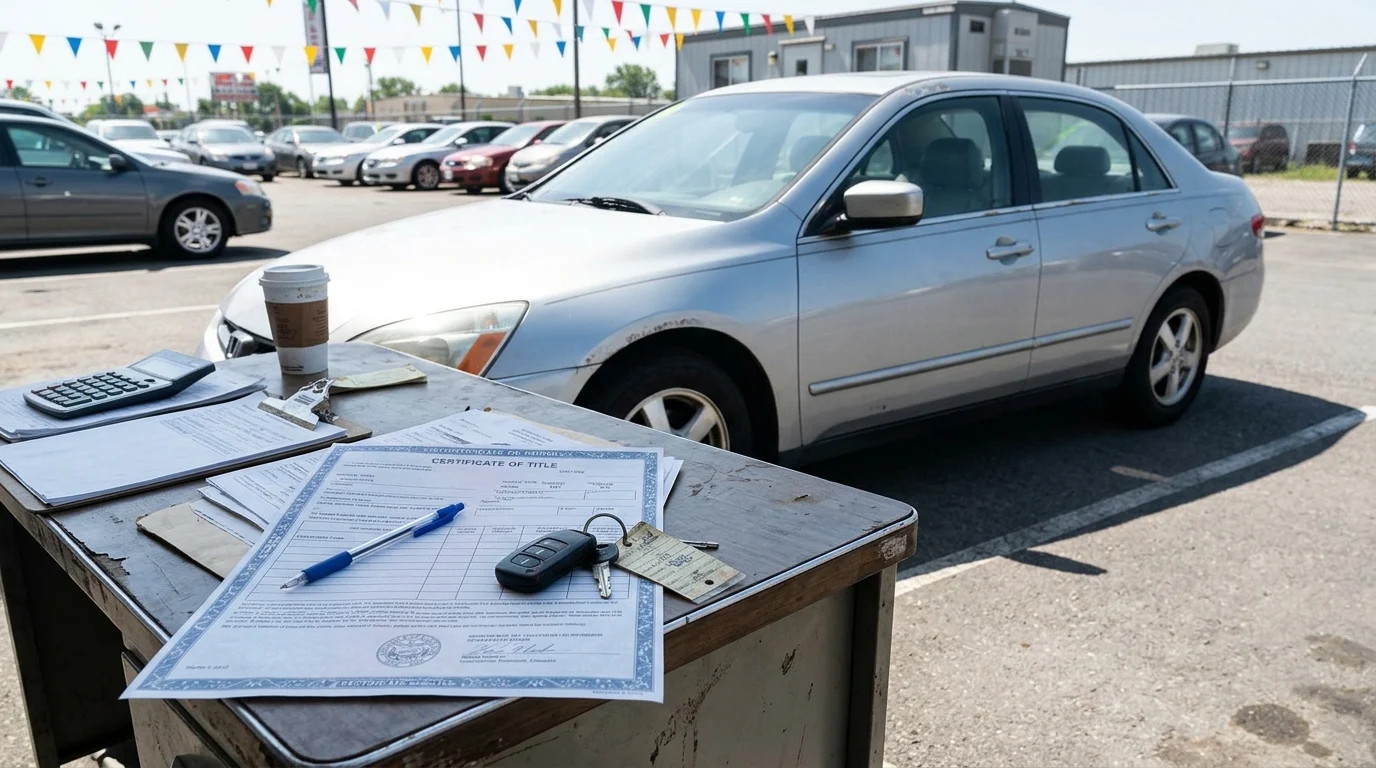
Quick Answer: A branded title means a vehicle’s official title record carries a permanent label, or “brand,” showing that something significant happened in its past: a total loss, flood damage, a lemon law buyback, or odometer fraud. The brand stays with the car for life and lowers its value.
If you have ever browsed used cars, you may have spotted a suspiciously cheap deal. The listing may have mentioned a branded title in the small print. That phrase is one of the most important warnings in used car buying. Ignoring it can cost far more than the discount appears to save. Yet many buyers are unsure what it actually means. They also wonder how it differs from a salvage or rebuilt title.
This guide explains what does branded title mean in plain language. It covers how brands are applied, the main types you will meet, and their effects on price, insurance, and financing. Also, you will find the checks to run before buying. The guide gives general information about how title branding works. Coverage focuses mainly on the United States, where the system is most formalised. Rules vary by state, so local records always matter most.
What Is a Vehicle Title, and What Is a Brand?
A state motor vehicle agency issues a vehicle title as the official ownership document for a car. It records who owns the vehicle and, crucially, its history status. Officials add a “brand” as a permanent notation to that record when something significant happens to the vehicle.
Think of a brand as a stamp on the car’s permanent record. Once officials apply it, it follows the vehicle identification number (VIN) for the rest of the car’s life. It stays with the car no matter how many times owners sell it. It also stays with the car when it moves between states. Even a perfect repair job does not remove the brand. That permanence is deliberate. It stops sellers misleading future buyers about a car’s past.
A car without any brand has a “clean” or “clear” title. That does not guarantee a problem-free car. Unreported damage can escape the record. It does mean officials have recorded no major branded event.
The Main Types of Title Brands
“Branded title” is an umbrella term. The specific brand is what tells you the real story, and the common ones are:
- Salvage: An insurer declared the vehicle a total loss. Repair costs usually approached or exceeded its market value after a crash, flood, or theft recovery. You generally cannot legally drive or register a salvage-titled vehicle. Owners must repair it and officials must reclassify it first.
- Rebuilt (or rebuilt salvage): A formerly salvaged vehicle returns to the road after owners repair it and it passes a state inspection. It is drivable and sellable, but the rebuilt brand never disappears.
- Flood: The vehicle sustained significant water damage. Flood damage is especially risky. Corrosion and electrical faults can appear months or years later, long after the car looks fine.
- Lemon law buyback: The manufacturer repurchased the vehicle under a lemon law. A persistent defect caused the buyback. Repairers could not fix it after repeated attempts. Repairers may or may not have fully fixed the defect.
- Odometer rollback / not actual mileage: People know or suspect the mileage reading is inaccurate. Tampering or a broken odometer may have caused the error. This brand warns you that you cannot know the car’s true wear.
- Junk or parts only: The vehicle is fit only for dismantling and can never legally return to the road.
States use their own wording and thresholds, so the same history can produce slightly different labels in different states. That inconsistency is one reason buyers should always check the actual title document, not just a listing’s summary.
Branded Title vs Salvage vs Rebuilt: Clearing Up the Confusion
People often use these three terms as if they were the same, but they are not. “Branded title” is the broad category covering every kind of brand. “Salvage title” is one specific brand within it. It marks a vehicle that an insurer currently calls a total loss. “Rebuilt title” is another specific brand. It marks a salvaged vehicle that now meets roadworthy status after repair and inspection.
The practical difference matters. You usually cannot drive a salvage vehicle at all. You can drive, insure, and sell a rebuilt vehicle, though often with difficulty. A branded title in general could mean either of those. It could also mean a flood car or a lemon buyback. The label alone is never enough information. Always ask which brand applies.
How a Branded Title Affects Price, Insurance, and Financing
The financial impact of a brand is substantial. As a rough guide, branded vehicles commonly sell well below equivalent clean-title cars. In addition, sellers often discount salvage vehicles by a fifth to two fifths. However, the discount reflects the real risk of hidden damage. It also reflects the difficulty of reselling later. Even if you drive a branded car happily for years, you will face the same discount when you sell it.
Insurance is the second hurdle. Some insurers will only offer liability coverage on branded vehicles. They will not offer full comprehensive and collision cover. Some will not insure certain brands at all. Financing is the third hurdle. Many lenders refuse loans on branded titles. Others offer them only on stricter terms. The car’s collateral value is lower and harder to predict.
None of this means a branded car is always a bad buy. A well-repaired rebuilt vehicle can be a sensible purchase. Buy it at the right price with full knowledge of its history. The danger lies in buying one without knowing, or paying a clean-title price for a branded car.
How to Check a Car’s Title Brand Before Buying
Before paying for any used car, run these checks:
- Read the actual title document: Look for brand words on the title itself, not just in the seller’s description.
- Run the VIN through a history report: For instance, services use the National Motor Vehicle Title Information System (NMVTIS) and insurer records. They can reveal brands, total loss events, and flood claims.
- Ask the seller directly: Ask “has this car ever had a branded, salvage, or rebuilt title?” and get the answer in writing if possible.
- Get an independent inspection: A mechanic can spot crash damage, flood residue, and shoddy work that paperwork alone may miss.
- Call your insurer and lender first: Confirm before purchase that you can insure and, if needed, finance that specific brand.
Be especially cautious with cars that have recently moved between states. Title washing is illegal but still happens. In title washing, owners re-register a branded car in a state with looser rules. They do this to obscure its brand. A national VIN check is the best defence against it.
Should You Buy a Car with a Branded Title?
The honest answer is: sometimes, with eyes open. For example, a branded car can make sense if the price reflects the brand. The seller should document and inspect the specific history. You should confirm insurance and financing in advance. You should also plan to keep the car for a long time rather than resell quickly. It makes less sense if you need easy resale. Full insurance cover or a loan can also weaken the case. So can a seller who is vague about the car’s past.
For most first-time buyers, a clean-title car with a full inspection is the simpler and safer choice. A branded car rewards careful buyers and punishes rushed ones.
Frequently Asked Questions
What does branded title mean on a car listing?
It means the vehicle’s title record carries a permanent brand. The brand shows a significant past event. Examples include a total loss, flood damage, a lemon buyback, or odometer fraud. The listing phrase alone does not say which brand applies.
Is a branded title the same as a salvage title?
No. Branded title is the umbrella term for all title brands. Salvage is one specific brand. It covers a vehicle that an insurer declared a total loss. Repairers have not yet repaired and reinspected it.
Can a branded title ever be removed?
Generally no. A brand is permanent and follows the VIN for the life of the vehicle. It stays even after repairs and resales. A salvage brand can change to a rebuilt brand after repair and inspection, but the record of its history remains.
Can you insure a car with a branded title?
Often yes for liability cover. Comprehensive and collision cover can be harder to obtain. Some insurers decline certain brands entirely. Therefore, check before buying.
Is a rebuilt title car safe to drive?
It can be, if repairers did the repairs properly and the car passed inspection. Quality varies widely. An independent pre-purchase inspection is essential.
Conclusion
So, what does branded title mean? It means a car’s official record carries a permanent warning about its past. That warning shapes everything from its price to its insurability. The label itself is only the beginning of the story. The specific brand, the documentation, and an independent inspection tell you the rest.
Armed with that knowledge, you can spot a genuine bargain. Walking away from a hidden problem becomes easier. Buying with confidence also becomes possible. A title brand exists to let you do exactly that.


