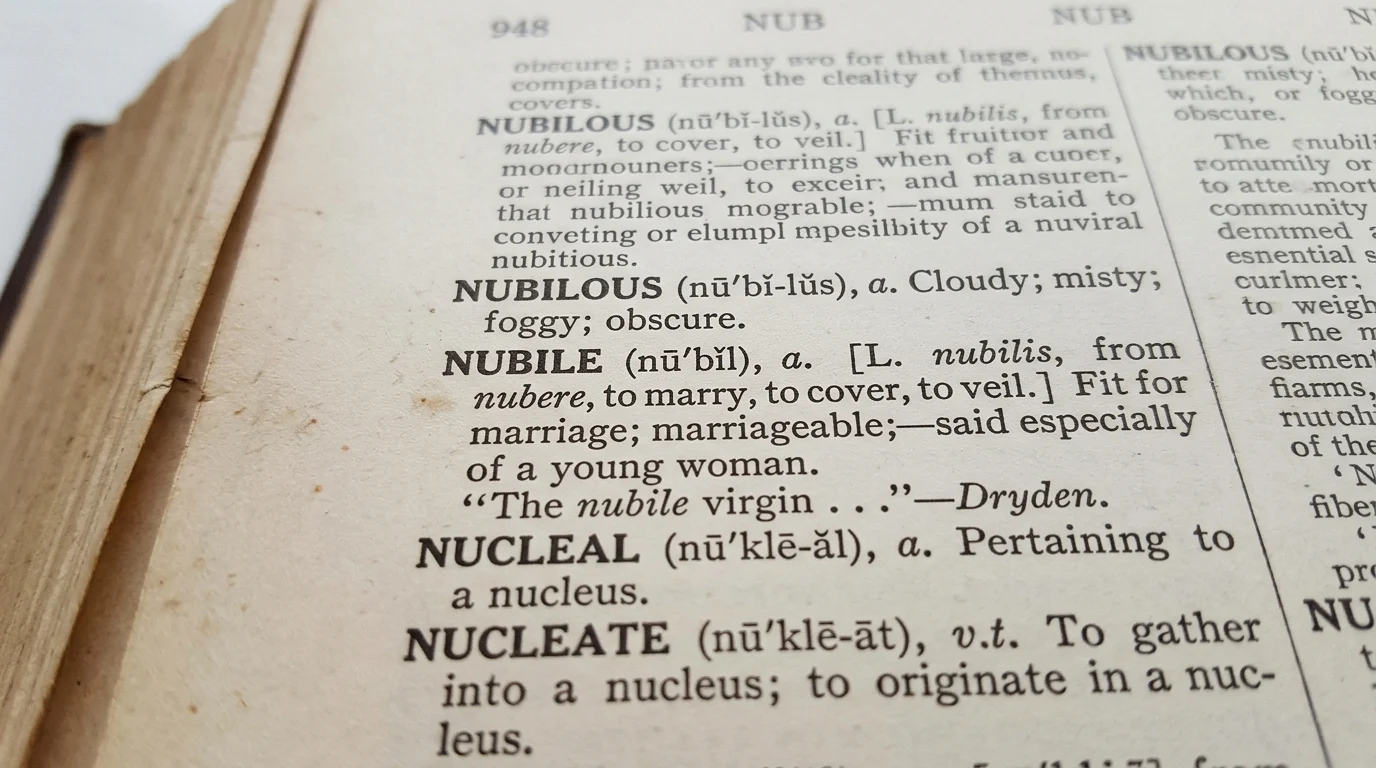
Quick Answer: The nubile meaning is an adjective meaning of marriageable age or condition; writers use it almost always of a young woman. In older writing it meant ready for marriage; in modern use it usually describes a young woman as physically mature and attractive, and many readers now feel it is dated or objectifying.
The nubile meaning is something most people meet in books rather than in conversation. It sounds formal and old-fashioned, and it carries a history that makes modern readers pause. Understanding it means understanding both what dictionaries say and why the word feels uncomfortable to many people today.
This guide explains the nubile meaning in plain, factual language: its dictionary definition, its Latin origin, how writers have used it in literature, and why careful writers now avoid it or use it only with clear intent. No graphic detail is needed to explain the word, and none is included here.
What Does Nubile Mean?
According to standard dictionaries, nubile has two closely linked senses. The first, and historically the main one, is “of marriageable condition or age.” The second is “sexually attractive,” for a young woman. Both senses apply, in dictionary definitions, to young women specifically, not to people in general.
The related noun is nubility, meaning the state of being nubile. The word is an adjective and almost always appears directly before a noun, as in “a nubile young woman.” Writers rarely use it of men; for a young man of marriageable age, English traditionally uses “eligible,” as in “eligible bachelor.”
Where Does Nubile Come From?
Nubile entered English in the seventeenth century from the Latin word nūbilis, meaning marriageable, which comes from the verb nūbere, to marry. That verb is also the root of “nuptial,” relating to weddings, and of “connubial,” relating to marriage.
The original sense was social and legal rather than physical: a person was nubile when they had reached the age and standing at which marriage was appropriate. Over time, the emphasis shifted. In modern usage, the word is more often about youth and physical attractiveness than about readiness for marriage in any legal sense, which is part of why it now reads differently.
Nubile in Literature and Media
Nubile appears regularly in older novels and in literary criticism, where it was once a neutral descriptive term. A nineteenth- or early twentieth-century novelist might describe a character as nubile to signal that she was of an age to marry and to be courted, within the social rules of that period.
In modern film and media writing, the word still appears, often in reviews and commentary. Its effect there is usually deliberate: it signals youth and attractiveness in a single formal word. Readers, however, increasingly notice that the word reduces a character to age and appearance, and that writers apply it to women far more than to men.
Why Nubile Sounds Dated Today
Three reasons explain why nubile feels dated or uncomfortable in modern writing. First, its core idea, judging a young woman by marriageability, belongs to a social world where marriage was a woman’s main expected path, and that framing now sounds narrow. Second, the word applies unevenly by gender: there is no equally common male equivalent, which makes its use feel uneven. Third, its modern sense ties worth to youth and looks, which many readers experience as objectifying even when the writer intended a compliment.
None of this means writers have banned the word or should censor older texts using it. It means a modern writer should choose it knowingly. In historical discussion, in quoting older literature, or in analysing how language has changed, nubile is the precise word. In describing a real person today, plainer language, such as “young adult” or simply describing what is relevant, usually serves better and avoids an unintended tone.
Frequently Asked Questions
What is the nubile meaning in simple words?
In simple words, nubile means of an age suitable for marriage, used of a young woman. In modern use it usually also suggests youth and physical attractiveness.
Is nubile only used for women?
Yes, in practice. Dictionaries define it for young women, and the corresponding term for a young man is usually “eligible.”
Where does the word nubile come from?
It comes from the Latin nūbilis, meaning marriageable, from the verb nūbere, to marry. It entered English in the seventeenth century.
Is nubile offensive?
It is not a swear word, but many modern readers find it dated or objectifying because it judges a young woman by marriageability and appearance. Careful writers use it only when they intend that tone.
What is a neutral alternative to nubile?
It depends on what you mean. To describe age and life stage, “young adult” works. “Marriageable” or “eligible” is plainer for readiness to marry. Ordinary words like “attractive” avoid the word’s historical baggage for attractiveness.
Conclusion
So, what is the nubile meaning? In the dictionary, it means of marriageable age or condition, applied to a young woman, with a modern overtone of youth and attractiveness. Its Latin root explains its history, and its modern reception explains its decline: a word once used as a neutral social description now sounds dated because the social world it described has changed. Knowing both halves of that story lets you read older books accurately and write modern ones more carefully.


