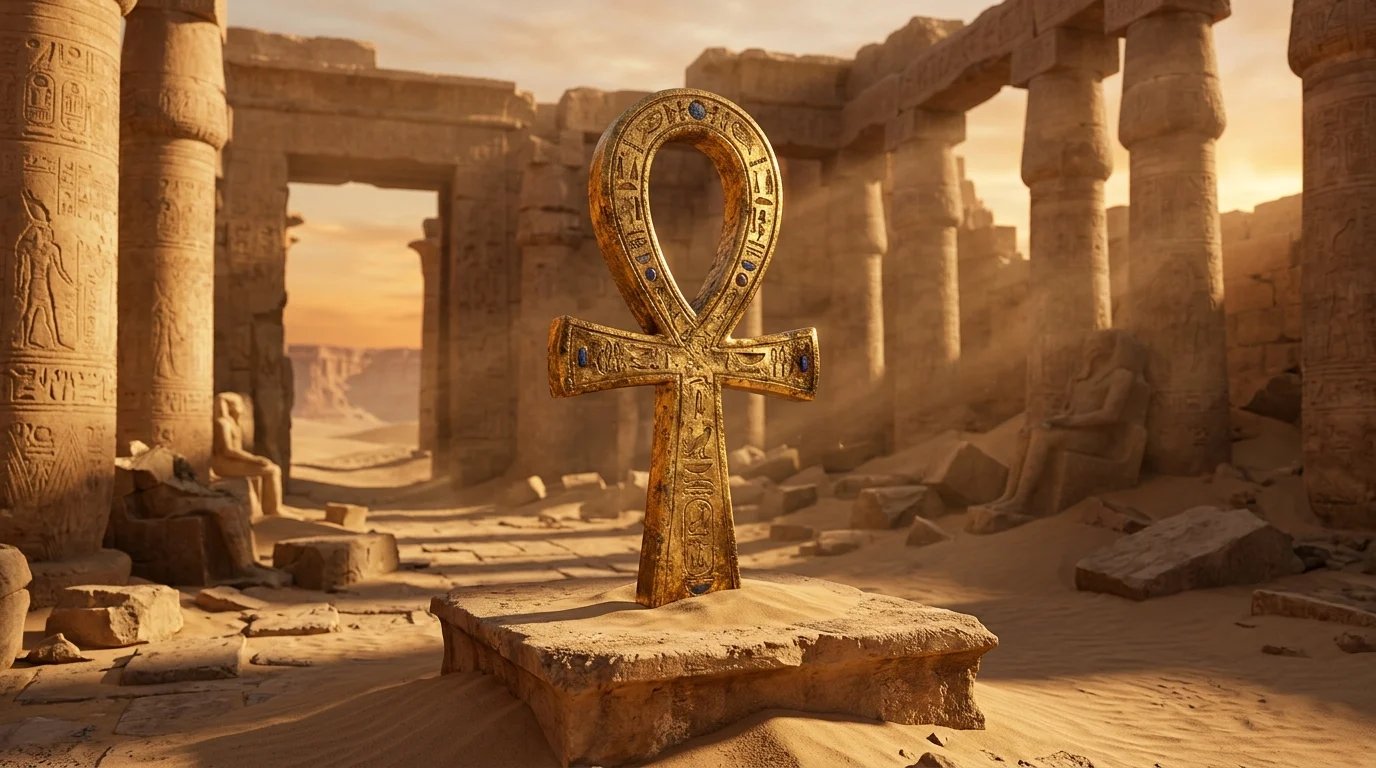
Quick Answer: The ankh is an ancient Egyptian symbol meaning life. In addition, scribes shaped it like a cross with a loop at the top. They used it in hieroglyphs to write the word for “life.” Egyptian gods and pharaohs often hold it as a sign of life and vitality.
Of all the symbols to survive from ancient Egypt, the ankh is one of the most recognised. You have probably seen it on jewellery and in museum displays. You may also have seen it in films about Egypt, even if you never knew its name. Its shape is simple, but its meaning runs deep into Egyptian ideas about life, death, and rebirth.
This guide explains what the ankh means in plain language. It draws on what Egyptologists agree about its shape and its use in writing. It also covers its role in art and its modern life as a cultural symbol. Where scholars debate the origin of the shape, this guide states that debate honestly. It does not dress it up as fact.
What Does Ankh Mean?
The Egyptian word ankh means “life.” In hieroglyphic writing, the ankh sign wrote that word, along with related words such as “to live” and “to nourish.” People often call it the “key of life.” In fact, that nickname captures its meaning rather than its literal translation.
Visually, a loop tops the ankh cross. A vertical line crosses a horizontal bar, and an oval or teardrop loop sits above the bar. That loop is what sets it apart from an ordinary cross, and it is the feature people notice first.
In Egyptian art, gods frequently hold an ankh. Sometimes they offer it to a pharaoh. Sometimes they hold it to the nose of the deceased, as if breathing life into them. Pharaohs themselves also hold ankhs, often one in each hand. The message is consistent: life is a divine gift, and the ankh is its visible sign.
What Is the Ankh Made Of, and Where Does It Appear?
Ankhs survive in many materials. Craftspeople made small faience amulets for jewellery. They also made large ceremonial objects for temple processions. For example, gold ankhs signalled divinity. Blue ones evoked the sky and the Nile. Red carnelian suggested vitality. Ordinary people wore ankh amulets for protection and good fortune, while temples used larger versions in ritual.
The sign also appears in royal names and blessing formulas. One famous example is the name of Tutankhamun’s wife, Ankhesenamun. That name contains the ankh sign and relates to living for the god Amun. A standard blessing formula begins with the ankh. People often translate it as “life, prosperity, health.” Scribes used it as an honour for the pharaoh in writing.
Where Did the Ankh Shape Come From?
The honest answer is that scholars are not certain. Scholars have proposed several explanations, and none has proof. One long-standing idea is that the shape comes from a sandal strap, with the loop as the ankle strap. Others have compared it to a knot of similar shape, or suggested it combines different symbolic forms.
Some popular modern explanations claim the loop and the cross represent a union of feminine and masculine principles. People widely repeat that idea online, but Egyptologists note there is no solid evidence for it in ancient sources. The safest account is the one the evidence supports. In fact, the ankh first served as a written sign for “life.” Its use as a symbol grew out of that meaning, whatever inspired its shape.
The Ankh After Ancient Egypt
The ankh did not disappear with the pharaohs. The Coptic Church of Egypt developed its Christian cross from the ankh shape. Early forms kept the loop before it simplified. Much later, in the twentieth century, the ankh became a symbol of African cultural identity. It later appeared in Neopagan belief systems and in goth subculture as a sign of life, eternity, and spiritual identity.
That long afterlife is part of why the ankh still feels familiar today. It has travelled from temple walls to jewellery shops. It still keeps its core association: life, and life that continues beyond death.
Ankh vs Cross: What Is the Difference?
People sometimes confuse the ankh with the Christian cross. Its difference lies in the loop at the top, and in the meaning behind it. The Christian cross primarily recalls a specific event and belief. The ankh, in its original context, served as a hieroglyph for life itself. Scribes also used it in writing and in art. Coptic Christianity historically connects the two shapes, but they are not the same symbol.
Frequently Asked Questions
What does ankh mean?
Ankh means “life” in ancient Egyptian. The symbol, a cross with a loop at the top, served as the hieroglyph for the word for life.
What is the ankh also called?
People often call it the “key of life.” That nickname reflects its meaning and its use as a symbol of life and vitality.
Why do Egyptian gods hold ankhs?
For example, gods hold ankhs to show that they give and sustain life. Offering an ankh to a pharaoh or to the deceased pictured the gift of life passing from god to person.
What does the loop on the ankh represent?
The ancient sources do not give a certain answer. Popular ideas link the loop to eternity or the rising sun. Scholars still debate its origin, but the sign as a whole certainly meant life.
Is the ankh still used today?
Yes. It appears in jewellery, tattoos, and cultural and spiritual contexts. There, it usually keeps its association with life, heritage, and protection.
Conclusion
So, what does ankh mean? It means life: the word and the written sign. It is also the symbol that Egyptian gods held out to kings and to the dead. Its exact shape may remain a mystery. Its message has survived for thousands of years, from temple walls to the necklace counter. When you see a cross with a loop at the top, you see one of history’s oldest pictures of life. It is also one of the clearest.


