Quick Answer: Hosanna originally meant “save us, we pray,” a Hebrew plea for God’s help. Over time it became a shout of joyful praise, most famously cried by crowds welcoming Jesus into Jerusalem, and today it is used in worship as an exclamation of praise and honour to the one who saves.
If you have attended a church service, sung a hymn, or read the story of Palm Sunday, you have almost certainly heard the word Hosanna. It sounds ancient and triumphant. Yet many people who sing it every year are unsure what it actually means. Is it a name? A greeting? A prayer? The answer is that it began as one thing and became another. That journey is part of what makes it so rich.
This guide explains what does hosanna mean in clear, factual terms. It covers its Hebrew roots, its place in Jewish and Christian worship, the famous scene in which crowds shouted it, and how people use it today. Curious readers of any background can use it to understand the word properly.
What Does Hosanna Mean Literally?
Hosanna comes from the Hebrew phrase “hoshi’a na.” People usually translate this as “save, please” or “save us, we pray.” It combines a verb meaning to save or rescue with a small particle. That particle adds urgency and pleading, like adding “please” or “we beg you” to a request.
The word travelled through Greek, where it appears as “hosanna.” It then entered Latin and English in much the same form. That is why the word sounds similar in many languages. People carried it along, not translated, as the scriptures and liturgies that contain it spread.
Its only appearance in the Hebrew Bible in this form is in Psalm 118, verse 25. There the psalmist cries out for deliverance. In that original setting, Hosanna is unmistakably a prayer. A person in need asks God to act and save.
From Plea to Praise: How the Meaning Changed
Words used again and again in worship often shift their meaning. Hosanna is a classic example. By the time of Jesus, the word still carried its original plea. It had also picked up a second life as a shout of celebration.
The reason is the festival calendar. Worshippers sang Psalm 118 during joyful feasts, including the Feast of Tabernacles. They processed with branches and sang its verses with great enthusiasm. Repeated in a festival atmosphere year after year, a cry for help gradually became a cry of joy. It became praise offered in confidence that God does save. By the first century, shouting Hosanna could mean both “save us” and “praise to the Saviour.” The two meanings overlapped rather than cancelling each other out.
That double sense is still present today. When people sing Hosanna in church, it carries both notes at once. It is a confident plea and a triumphant praise.
Hosanna in the Story of Palm Sunday
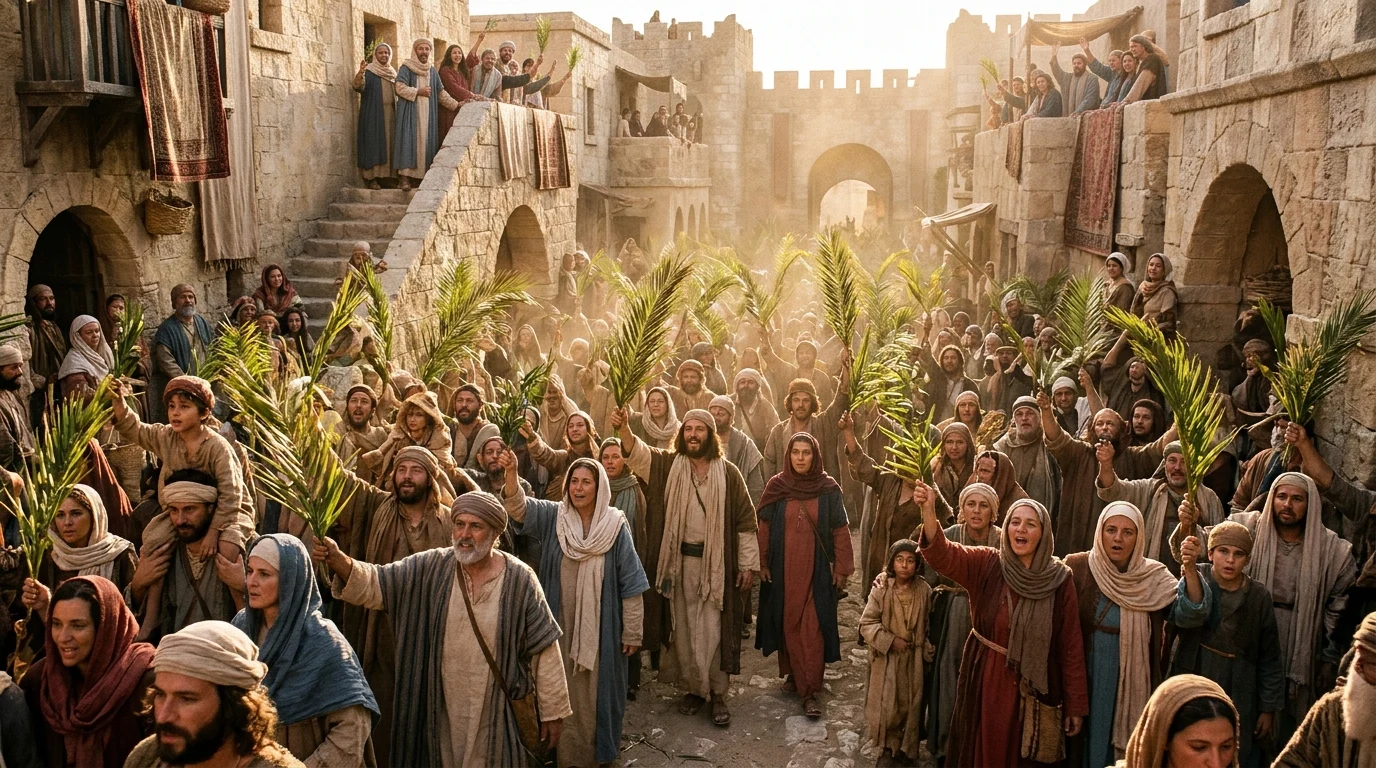
The most famous use of Hosanna comes in the Gospel accounts of Jesus entering Jerusalem shortly before his crucifixion. Christians remember this event each year on Palm Sunday. According to the Gospels, crowds spread cloaks and palm branches on the road. They shouted Hosanna, together with words from Psalm 118 blessing the one who comes in the name of the Lord.
In that scene, the crowd welcomed Jesus as a hoped-for deliverer. They saw him as a descendant of King David who would bring God’s salvation. Their shout was therefore both a welcome and a confession of hope. They asked for salvation and celebrated the one they believed brings it, in the same breath.
The phrase “Hosanna in the highest” adds another layer. “In the highest” points to heaven. So people can understand the full cry as praise rising to the highest heaven. Or they can understand it as a prayer that heaven itself join in the saving work. Either way, it lifts the shout beyond the street in Jerusalem to a cosmic scale.
Hosanna in Jewish Worship
Hosanna has a distinct and ancient place in Jewish liturgy as well. During Sukkot, the Feast of Tabernacles, worshippers recite a cycle of prayers known as the Hoshanot each morning. They sing the full cycle on the seventh day of the festival. People call that day Hoshana Rabbah, meaning “Great Hosanna.”
In this setting, the word keeps its original Hebrew form and its original character as a plea. Worshippers ask God for help, blessing, and a good year ahead. They process with branches in a ceremony that is both solemn and joyful. The Jewish use of the word is therefore a reminder that Hosanna began as prayer before it became praise.
Hosanna in Christian Worship Today
In Christian worship, Hosanna appears most prominently in the Sanctus. This hymn comes near the start of the Eucharistic prayer and includes the words “Hosanna in the highest.” People also sing it every Palm Sunday. Then congregations often process with palm branches in imitation of the Jerusalem crowd. It also appears in countless hymns and worship songs.
Modern worship songs have given the word fresh life. Some use it as a pure shout of praise. Others recover its pleading edge, singing it as a cry for God to act in the present. Both uses are faithful to the word’s history, because both meanings have always lived inside it.
Beyond formal worship, some parents sometimes choose Hosanna as a given name, especially in Christian communities. There it carries the sense of praise and deliverance. People also occasionally use it in everyday speech as an exclamation of triumph. This is much rarer than its liturgical use.
Hosanna vs Hallelujah: What Is the Difference?
People often pair Hosanna with Hallelujah, but the two words are not synonyms. Hallelujah means “praise the Lord” and is a straightforward call to praise. Hosanna began as a plea for salvation and only later became a praise word. So it carries a note of need and hope that Hallelujah does not.
A simple way to remember the difference follows. Hallelujah looks up in pure praise. Hosanna reaches out in praise that still remembers it needs saving. That is why the two words feel different when sung, even when they appear in the same hymn.
Frequently Asked Questions
What does hosanna mean?
Hosanna originally meant “save us, we pray” in Hebrew. Over time it also became a shout of joyful praise, especially in Christian worship, where it honours the one who saves.
What does “hosanna in the highest” mean?
It is a cry of praise directed to heaven. Or it is a prayer that heaven join in God’s saving work. It appears in the Gospel accounts of Jesus entering Jerusalem and in the Sanctus of Christian liturgy.
Is Hosanna a Hebrew or Greek word?
It is Hebrew in origin, from “hoshi’a na.” It entered English through Greek and Latin transliteration. That is why its spelling has stayed so stable.
Why do crowds shout Hosanna on Palm Sunday?
On Palm Sunday, Christians remember the crowds who welcomed Jesus into Jerusalem. They carried palm branches and shouted Hosanna, hailing him as the hoped-for deliverer.
Is Hosanna used in Jewish worship?
Yes. In Jewish liturgy, people recite the Hoshanot prayers during Sukkot, the Feast of Tabernacles. They sing the full cycle on Hoshana Rabbah, the “Great Hosanna.”
Conclusion
So, what does hosanna mean? It began as a heartfelt plea, “save us, we pray.” It grew into a shout of praise. That shout has echoed through synagogues and churches for thousands of years. It travelled from a psalm of deliverance to a festival procession to a crowd welcoming a king. Through it all, the word has carried both need and joy in a single breath.
The next time you hear people sing Hosanna, listen for both halves of its meaning. Hear the honest cry for help. Hear the confident praise of the one who saves. That is what has kept this ancient word alive for so long.


