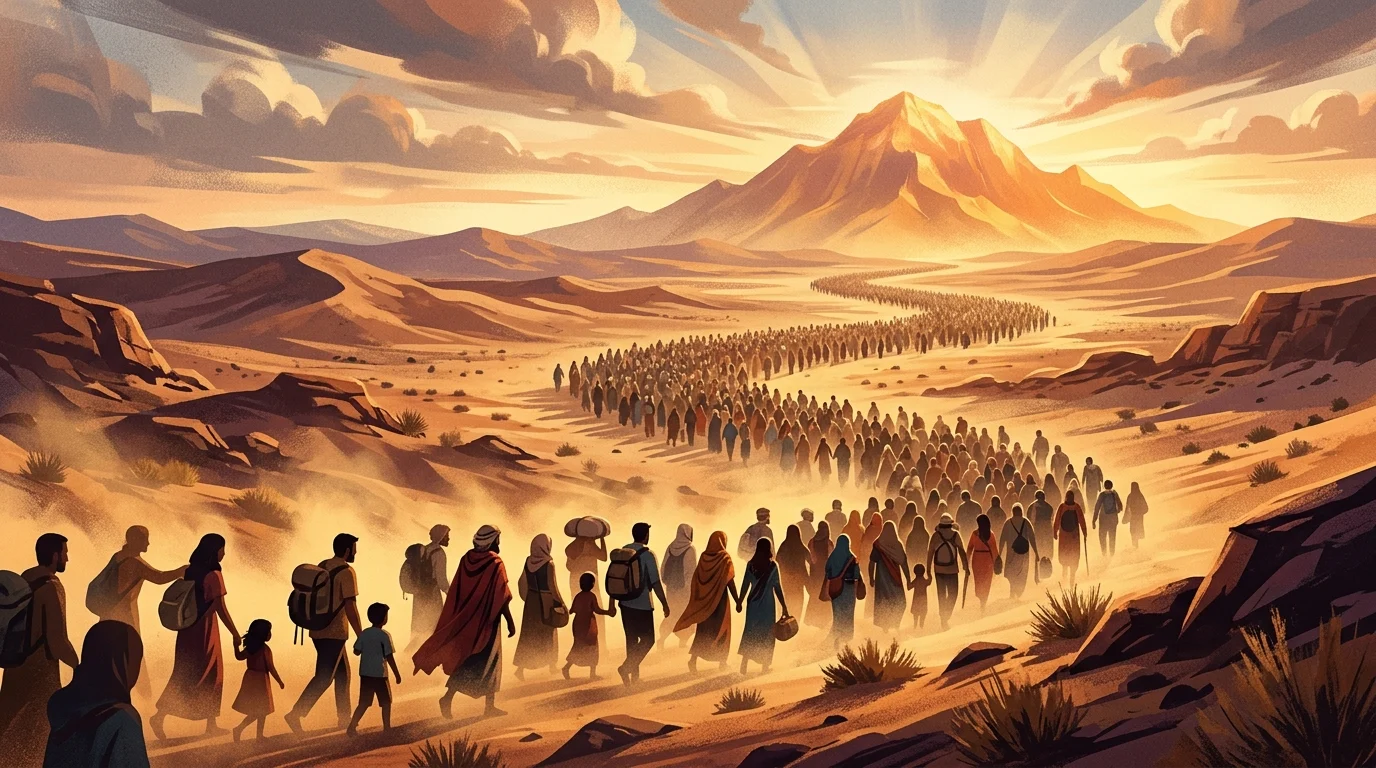
Quick Ans: Exodus meaning is one of the most searched questions about biblical terminology and mass migration. In both religious and everyday contexts, exodus means “a mass departure” or “a way out.” This ancient Greek word describes everything from the Israelites leaving Egypt to refugees fleeing war zones. It appears in Bible studies, news headlines, and historical discussions across every language.
Understanding this term helps you follow conversations about faith, migration, and social change. Some words stay confined to academic circles, while others become cultural touchstones. Exodus is a perfect example. It has moved from ancient scripture into modern vocabulary. Knowing how to use it correctly helps you understand both the Bible and the world around you.
What Does Exodus Mean?
Exodus is a noun that means “a mass departure” or “a journey by a large group to escape a hostile environment” . It describes the act of many people leaving a place at the same time.
The term belongs to both formal and casual communication. It fits perfectly in Bible studies, news reports, and historical discussions. It also works in everyday conversation when describing crowds leaving an event. The tone is neutral and descriptive.
Sometimes people write it with a capital E as Exodus when referring to the biblical book. Other times they write it in lowercase as exodus when describing a general departure. Both versions mean the same thing. The choice depends on whether the context is religious or secular.
The word carries no profanity, which makes it safe for any setting. It is a neutral term that describes movement and departure.
Where Did Exodus Come From?
The exodus origin traces back to ancient Greek. The word comes from exodos, which literally means “the road out” . It is formed by combining the prefix “ex-” (out) and “hodos” (road or way).
The Greek word was adopted into Latin as exodus and then into English. The biblical book of Exodus received its name from this Greek term because its central event is the departure of the Israelites from Egypt .
The Hebrew title for the book is different. It is called Shemoth (שְׁמוֹת), which means “Names,” taken from the opening phrase of the book: “These are the names…” . This follows the ancient practice of naming a book by its first words.
The English name “Exodus” focuses attention on the narrative in the first fourteen chapters, which tell the story of the Israelites leaving Egypt. The remaining chapters cover the journey to Mount Sinai and the receiving of the covenant and law .
Exodus in the Bible
The Book of Exodus is the second book of the Pentateuch (the first five books of the Bible). It continues the story from Genesis, where Jacob’s descendants settled in Egypt .
The book recounts the Egyptian oppression of the Israelites and their miraculous deliverance by God through Moses. Moses led the people across the Red Sea to Mount Sinai, where they entered into a covenant with the Lord .
The principal divisions of Exodus include the oppression of the Israelites, the call of Moses, the contest with Pharaoh, the deliverance and victory at the sea, the journey to Sinai, the covenant and legislation at Sinai, Israel’s rebellion and God’s renewal of the covenant, and the building of the tabernacle .
These events made Israel a nation and confirmed their unique relationship with God. The law given at Sinai constituted the moral, civil, and ritual legislation by which they were to become a holy people .
How Exodus Is Used in Everyday Language
The term has moved far beyond its biblical roots. Today it describes any mass departure or migration.
In news reporting. Headlines frequently use exodus to describe people fleeing natural disasters, wars, or economic collapse. A report might say “The war caused a mass exodus of refugees” . The term captures the scale and urgency of the movement.
In business and economics. Commentators use exodus to describe talent leaving a company or industry. A headline might read “The Great Resignation: A mass exodus from traditional jobs.” The tone is analytical.
In social and political commentary. The term appears in discussions about urban flight, migration patterns, and demographic shifts. A report might describe “an exodus from major cities” during the pandemic.
In everyday conversation. People use it casually to describe crowds leaving events. A person might say “There was a mass exodus after the concert ended.” The tone is descriptive and slightly dramatic.
Exodus vs Similar Terms
Several other terms overlap with exodus in meaning. Understanding the differences helps you choose the right one.
Migration describes movement from one place to another, often seasonally or regularly. It is neutral and scientific. Exodus implies urgency and escape from a hostile situation.
Emigration specifically means leaving one’s country to settle elsewhere. It is a formal demographic term. Exodus is broader and more dramatic.
Departure is the simplest equivalent. It means leaving a place. Exodus adds the element of mass movement and often crisis.
Flight describes running away from danger. It is more personal and immediate. Exodus emphasizes the collective nature of the departure.
When Not to Use Exodus
Exodus does not belong in every conversation. Its dramatic nature makes it less appropriate for some settings.
Avoid using exodus to describe small or routine departures. A few people leaving a meeting is not an exodus. The term implies scale and significance.
Be careful when using exodus in casual contexts where it might sound overly dramatic. Saying “the exodus from the party” when three people left is humorous but inaccurate.
In formal writing, ensure the term is appropriate for the scale of the movement. A mass exodus of millions is different from a small group leaving a room.
Why Exodus Became Popular
Exodus grew through its dual life in scripture and news media. Each context spread the word to new audiences.
The biblical book gave the term its weight and historical depth. For centuries, Exodus referred primarily to the Israelites’ deliverance from Egypt. The story of liberation and covenant shaped Western religious and political thought.
News media adopted the term for modern migrations. When journalists needed a dramatic word for mass departures, exodus was ready. Its biblical echoes added gravity to reports of refugees and displaced peoples.
The term’s Greek roots made it accessible across languages. From Latin to English to modern European languages, exodus retained its meaning of “way out.” This linguistic stability ensured its survival.
FAQs
What does exodus mean?
Exodus means “a mass departure” or “a way out.” It describes a large group of people leaving a place, often to escape a hostile environment .
Where did the word exodus come from?
It comes from the Greek word exodos, meaning “the road out.” It was adopted into English through Latin .
What is the Book of Exodus about?
The Book of Exodus tells the story of the Israelites’ deliverance from slavery in Egypt, their journey to Mount Sinai, and the receiving of God’s law through Moses .
Is exodus only a religious term?
No. While it originated in the Bible, it is now used in news, business, and everyday language to describe any mass departure .
What is the difference between exodus and migration?
Migration is a general term for movement. Exodus implies a mass departure, often to escape a hostile situation.
Conclusion
The exodus meaning is clear and powerful. It stands for “a mass departure” and serves as the name of the second book of the Bible. You can use it in Bible studies, news discussions, and everyday conversation. It is a dramatic term that captures the scale and urgency of people on the move. When you see exodus in a headline or hear it in a sermon, you now know exactly what it means. Use it with awareness, and your understanding of both scripture and the world will deepen.
Discover More:
- What Does “Selah” Mean in the Bible: What It Really Means 2026
- Ash Wednesday Meaning: What It Is and Why It Matters 2026


2 thoughts on “Exodus Meaning: The Complete Guide to This Biblical and Everyday Term 2026”