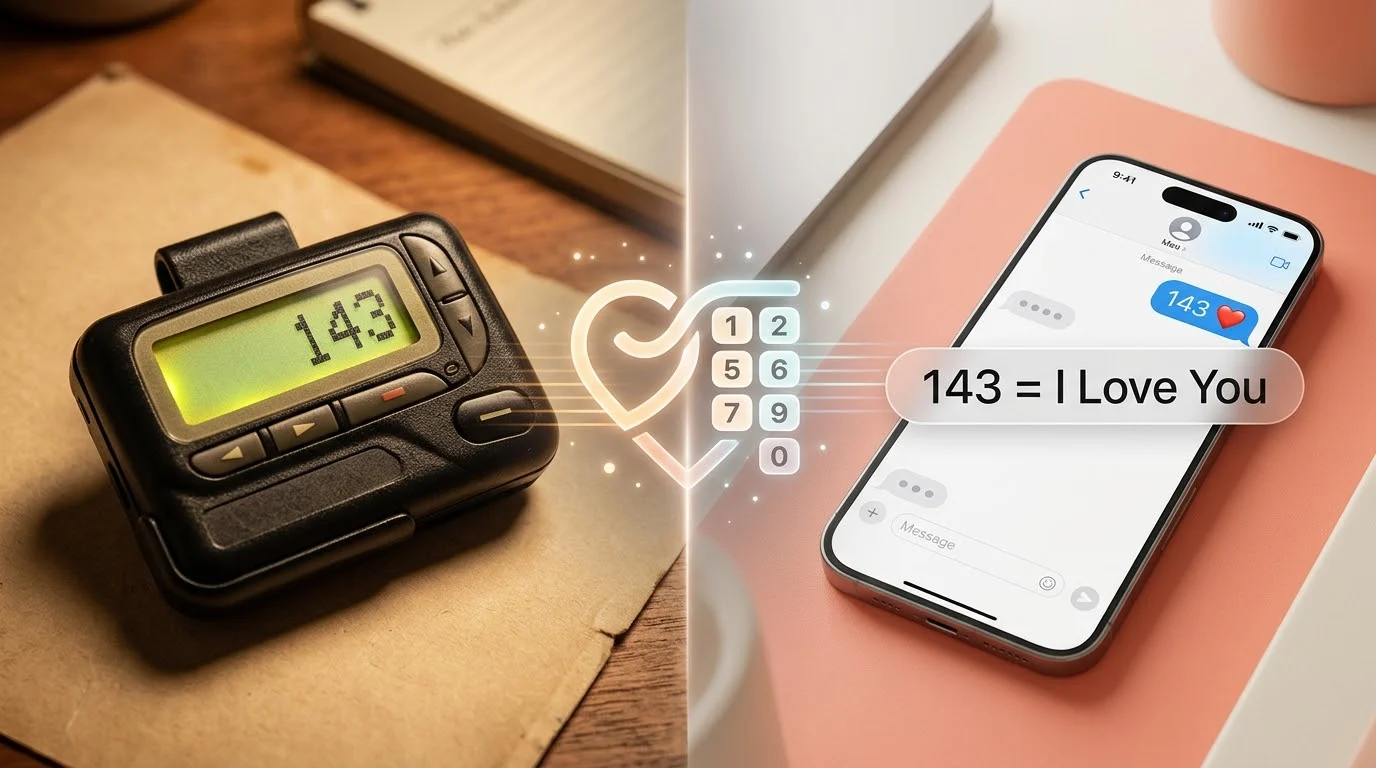
Quick Ans: The meaning of 143 is one of the most searched questions about modern digital shorthand, especially in texting and online communication. In contemporary contexts, “143” is a numeric code that stands for “I love you,” derived from the number of letters in each word: I (1), love (4), you (3). This code has become a standard expression of affection in pager messages, text messages, social media captions, and even music. Understanding this term helps you decode digital affection, recognize nostalgic communication patterns, and grasp why precise language matters when discussing symbols that exist at the intersection of brevity and emotional expression.
Understanding modern terminology helps you navigate complex social landscapes and interpret digital conversations. New questions about shorthand meanings appear constantly, and some become cultural touchstones. “143” is a perfect example. It has moved from specialized pager code into broader texting conversations, social media memes, and even general usage. Knowing how to use it correctly helps you understand references in romantic messages, pop culture, and digital communication commentary.
What Does 143 Mean?
143 is a numeric code representing the phrase “I love you.” In general communication, it functions as a shorthand expression of affection, used primarily in texting, social media, and informal digital exchanges. The usage evolved from early pager culture to become a recognizable symbol of love and care.
The term belongs to both technical and general communication. It fits in discussions about texting slang, relationship communication, digital culture, and technological change. It also appears in media reports when describing romantic gestures, nostalgic communication methods, or the evolution of digital tools.
Sometimes people confuse it with emergency codes or other numeric shorthand. Other times they use it correctly to express affection in a compact form. All versions relate to the same general concept. The distinction usually depends on the specific context and the exact phrasing.
The concept carries significant cultural weight. It connects to modern understanding of digital intimacy, communication efficiency, and emotional expression. Understanding the meaning helps you follow social discussions and interpret affectionate messages.
Where Did the Term Come From?
The origin of 143 traces back to the early 1900s, specifically to Minot’s Ledge lighthouse off the coast of Cohasset, Massachusetts. The lighthouse changed its flash pattern in 1895 to one quick flash, four flashes, then three flashes. In 1915, assistant lighthouse keeper Winfield Scott Thompson arrived, and his family lived on a neighboring island where they could see the light at night. According to legend, his wife Mary told their children that the flash pattern was the “I Love You” flash from their father, with each flash corresponding to the number of letters in each word of the phrase.
The concept itself is older than its modern digital usage. The general sense of expressing love through coded signals dates back over a century. As communication technology matured, practitioners transformed the pattern into something new: a numeric shorthand that could fit into limited message spaces. Pagers in the late 1980s and early 1990s had limited space for messages and not all supported text. As a workaround, people used codes like 411 for information or 911 for emergency. They also used 143 for “I love you”.
The concept spread through pager culture, early internet chatrooms, and text messaging. Fields like mobile communication, youth culture, and digital relationships incorporated 143 into their frameworks. The term became a symbol of concise affection, nostalgic technology, and emotional efficiency.
143 in Technical Contexts and Media
The term has appeared in countless text messages, social media posts, and cultural discussions across every digital medium. Understanding these appearances helps you see how the concept evolved.
Technical literature discussing 143 often focuses on pager history, texting abbreviations, and digital communication evolution. The field has seen significant discussions in recent years, including the revival of numeric codes in nostalgic contexts and clearer communication standards for digital affection. The term became a reference point for discussions about brevity and emotional expression.
Educational institutions increasingly reference 143 in digital literacy and communication courses. Schools distinguish numeric codes from standard language and teach specific procedures for understanding slang, interpreting context, and recognizing cultural references.
Creative professionals use 143 in official discussions about music, film, and popular culture. R&B artist Musiq Soulchild released a song called “143” in 2000, singing “from my heart to you—143.” Hip-hop artist Bobby Brackins recorded a song with the same title in 2010. The number also appeared in a 2011 Indian film called “143 – I Love You”. The term serves practical purposes in cultural communication, providing a standardized reference to affectionate shorthand that should be recognized in new contexts.
The Science Behind 143
Modern communication studies and information technology offer explanations for why numeric shorthand exists and how it functions. Understanding these theories helps separate logical concepts from emotional reactions.
Cognitive efficiency and emotional expression. Researchers emphasize that numeric codes like 143 exist because humans seek efficient ways to convey complex emotions. The brain processes numeric patterns quickly, and the code creates a memorable association between numbers and feelings. This framework protects emotional expression even in constrained mediums.
Cultural transmission and nostalgia. Engineers note that 143 becomes actionable through shared cultural knowledge. Older generations remember pager codes, younger generations encounter them through memes and music, and documentation highlights the origin stories. This creates a feedback loop that guides new users toward understanding without forcing immediate adoption.
Lifecycle management. Many slang terms include potential for revival or reinterpretation. Practitioners often recommend monitoring usage patterns, adjusting explanations, and providing context when necessary. This recognizes that language evolves and that community memory matters.
Regional and organizational variation. Different cultures have varying approaches to numeric codes. Culture can shape practice by clearly defining local meanings for numbers, context requirements, and emotional weight. Over time, these factors can become internalized and change communication standards.

143 vs Obsolete vs Depreciated
These terms are often confused in technical contexts, though they belong to different domains. Understanding the differences helps you use them correctly.
Obsolete literally means “no longer in use” or “outmoded in design.” The term is used when describing features or systems that are no longer supported or functional. Obsolete is a stronger statement than deprecated; something obsolete may have already been removed or may no longer work at all.
Deprecated describes something still functional but discouraged from use. The term belongs to software lifecycle discussions, not numeric affection codes.
143, by contrast, is an active expression of love. It is neither obsolete nor deprecated. It remains in use, though its popularity has fluctuated. Dictionary.com notes that “143 has largely dropped out of popular slang use, though some texters or internet users may drop a 143 for nostalgic or old-school charm”.
In casual conversation, people sometimes use these terms interchangeably across domains. This is common but technically imprecise. The distinction usually depends on the specific context and technical knowledge.
143 in Modern Culture
The concept has moved beyond specialized pager communities. Today it appears in social media captions, music lyrics, and everyday digital language.
143 in the news. Technology and culture news reports frequently mention 143 in relation to texting history and digital communication evolution. The term has become shorthand for nostalgic affection in tech coverage.
143 in product design. Companies use the number in marketing and user communications when explaining features related to messaging and relationships. The goal is to connect with users while managing expectations about digital expression.
In relationships and organizations. Affection dynamics can affect how teams manage communication, emotional expression, and institutional culture. The term appears in discussions about digital intimacy and technological adaptation.
When to Use the Term 143
The term works in several different situations. Its precision makes it valuable in informal and cultural contexts.
The most common usage is in text messages and social media captions. A romantic partner, friend, or family member might reference 143 to express love. The tone is affectionate and concise.
The term also appears in educational discussions. A speaker might discuss “numeric codes” or “pager slang.” The tone is educational and technical.
The word can also be used in casual conversation. Someone might say “He texted me 143” when discussing a romantic gesture. The tone is conversational and sentimental.
How to Use 143 in a Sentence
Using the term correctly helps you communicate clearly. Here are some examples.
As a standalone message: “143.” This is the most common usage. It conveys affection compactly.
In media reporting: “The couple exchanged 143 messages throughout the day.” This is a journalistic usage.
In education: “The course explores how numeric codes like 143 evolved alongside communication technology.” This is an educational usage.
Attributive form: “The 143 code requires shared cultural knowledge to interpret correctly.” The numeric form is common, and the term is widely used in both standalone and descriptive positions.
FAQs
What does 143 mean?
143 is a numeric code that stands for “I love you,” derived from the number of letters in each word: I (1), love (4), you (3). It is a term referring to a specific expression of affection that typically implies emotional warmth without lengthy phrasing.
Is 143 the same as obsolete?
143 and obsolete are unrelated. 143 expresses love while obsolete describes something no longer in use or supported at all. The exact definitions and usage vary by context and domain.
What happens when someone sends 143?
Receiving 143 experiences vary by context. It can include romantic affection, friendly warmth, nostalgic communication, or playful testing of cultural knowledge. The practice typically requires shared understanding, emotional context, and attention to relationship dynamics.
Can 143 still be used?
Validation varies by situation. 143 continues to function as an expression of love and is typically understood by many people, though its popularity has declined. The evidence depends on the specific platform, the age group, and the cultural context.
Is 143 dangerous?
Like any emotional expression, 143 carries risks if misinterpreted. However, with proper education, clear communication, and attention to relationship context, people can use 143 safely. Shared cultural knowledge and mutual understanding are foundational to responsible usage.
Conclusion
The meaning of 143 is clear and culturally significant. It refers to “I love you” expressed as numeric shorthand, often associated with pager nostalgia and digital affection. You can use it in text messages, social media analysis, and educational conversations. It is a term that connects modern understanding to evolving communication practices. When you see 143 in a message or hear the term in conversation, you now know exactly what it means. Use it with precision, and your understanding of this compact concept will deepen.
Discover More:
- Exodus Meaning: The Complete Guide to This Biblical and Everyday Term 2026
- Canon Event Meaning: The Complete Guide to This Viral Slang Term 2026
- What Does IMY Mean in Texting? I Miss You Explained With Examples
- What Does BTW Mean: What It Really Means & Examples 2026


