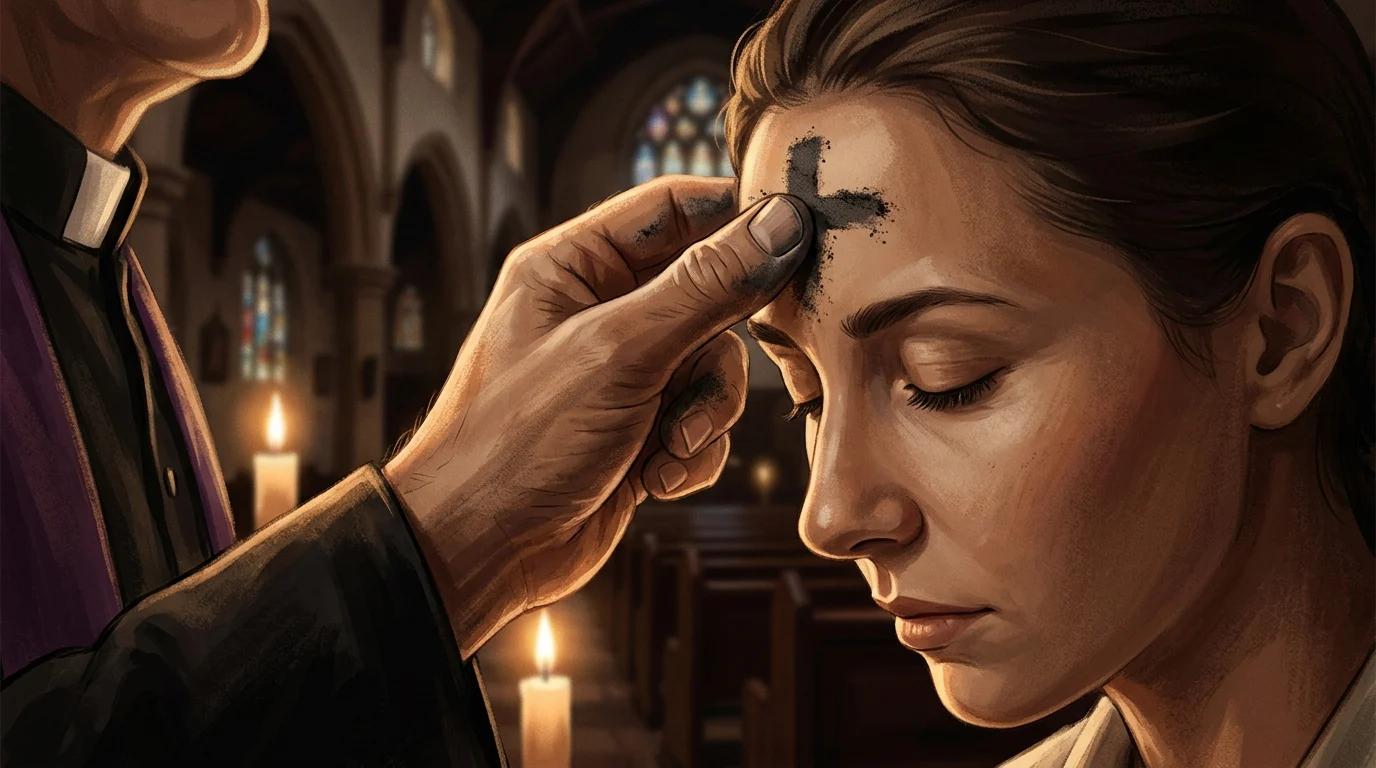
Quick Ans: Ash Wednesday meaning is one of the most searched questions about Christian traditions and the Lenten season. In Western Christianity, Ash Wednesday marks the first day of Lent, a 40-day period of fasting, prayer, and repentance leading up to Easter. The name comes from the practice of placing ashes on the foreheads of believers as a sign of humility and mortality. It appears in church calendars, religious discussions, and cultural conversations around the world.
Understanding religious traditions helps you follow conversations about faith and culture. Some observances fade over time, while others remain central to millions of believers. Ash Wednesday is a perfect example. It has moved from purely church settings into mainstream cultural awareness. Knowing how to use it correctly helps you understand the season of Lent and the practices that accompany it.
What Does Ash Wednesday Mean?
Ash Wednesday is the first day of Lent in the Western Christian calendar. It is a day of repentance, fasting, and reflection. The name comes from the imposition of ashes, a ritual where a priest or minister marks the forehead with ashes in the shape of a cross.
The day belongs to both religious and cultural communication. It fits perfectly in church services, Bible studies, and discussions about Christian traditions. It also works in everyday conversation when discussing religious holidays. The tone is reverent and reflective.
Sometimes people refer to it simply as “Ash Wednesday.” Other times they describe it as the “start of Lent” or the “day of ashes.” All versions refer to the same observance.
The day carries deep spiritual significance. It reminds believers of their mortality and their need for repentance. Understanding the meaning helps Christians appreciate the richness of their faith.
Where Did Ash Wednesday Come From?
The Ash Wednesday origin traces back to ancient Jewish practices. In the Old Testament, people expressed sorrow for sin by wearing sackcloth and ashes. This practice appears throughout the Bible, including in the books of Job, Esther, and Jonah.
The early Church adopted this tradition. Christians who had committed serious sins were instructed to do public penance wearing sackcloth and ashes. This custom was introduced by Pope Gregory I (served 590–604) and became a universal practice in Western Christendom through the Synod of Benevento in 1091 AD .
Since the 11th century, receiving ashes on the first day of Lent has been a universal Christian practice. The ashes are traditionally made from the burnt palm branches of the previous year’s Palm Sunday service .
The name “Ash Wednesday” comes directly from this practice. The day is also called dies cinerum (Day of Ashes) in Latin. It serves as the Church’s “Day of Atonement,” similar to Yom Kippur in Judaism .
What Happens on Ash Wednesday?
Ash Wednesday is marked by several distinctive practices. Understanding these helps you follow the observance.
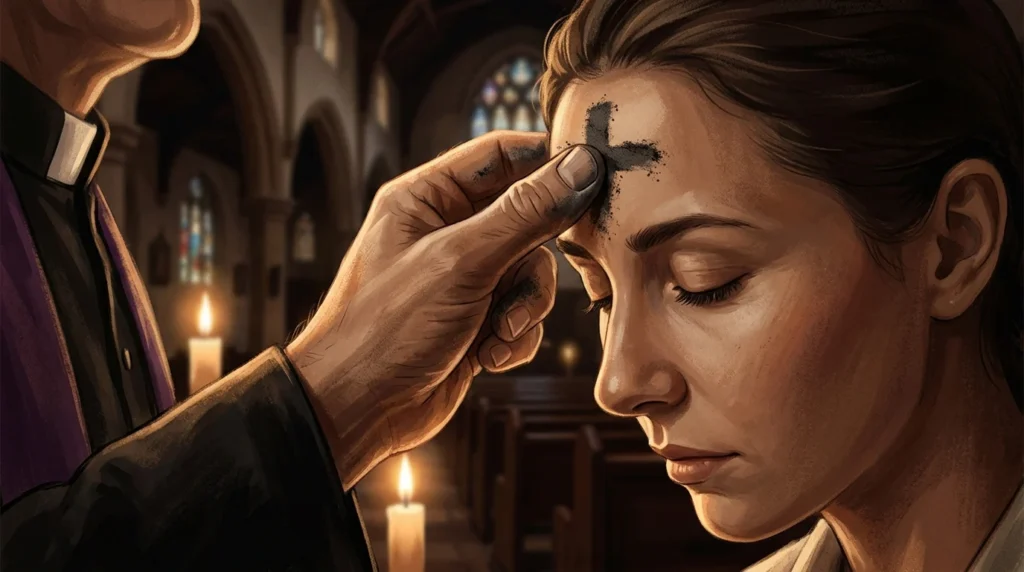
The imposition of ashes. The most recognizable ritual involves the priest dipping his thumb into ashes and marking the forehead of each believer with the sign of the cross. As he does this, he says one of two phrases: “Remember that you are dust, and to dust you shall return” or “Repent and believe in the Gospel” .
Fasting and abstinence. Ash Wednesday and Good Friday are days of full fast and abstinence in the Catholic tradition. Fasting means eating only one full meal and two smaller meals that together do not equal a full meal. Abstinence means avoiding meat. These practices are prescribed to reinforce penitential prayer during Lent .
Prayer and repentance. The day is dedicated to self-examination and reconciliation with God. The readings at Mass emphasize conversion of heart, not just external observance. The prophet Joel calls for a complete return to God, and Saint Paul urges believers to “be reconciled to God” .
The Symbolism of Ashes
The ashes carry deep symbolic meaning. Understanding this symbolism helps you appreciate the ritual.
Mortality and humility. The words “Remember that you are dust” come from Genesis 3:19, when God tells Adam that he will return to the ground from which he was taken. The ashes remind believers that human life is brief and fragile .
Repentance and sorrow for sin. In ancient times, people used ashes to express grief and repentance. The ashes on the forehead signal that the person is acknowledging their sins and seeking God’s mercy .
The cross. The ashes are imposed in the shape of a cross. This symbolizes that believers are followers of Christ and are called to carry their crosses. It also connects the ashes of Ash Wednesday to the hope of Easter .
Ash Wednesday in Popular Culture
Ash Wednesday has appeared in numerous cultural contexts beyond the church. Its reach extends into public life and media.
Public witness. Many Christians wear their ashes in public after church services. This visible sign often sparks conversations about faith. Some people choose to keep the ashes on all day as a witness to their beliefs.
National No Smoking Day. In the Republic of Ireland, Ash Wednesday is also National No Smoking Day. The date was chosen because quitting smoking ties in with giving up a luxury for Lent, and because of the link between ash and smoking .
Media coverage. News outlets regularly cover Ash Wednesday, especially when it falls on Valentine’s Day or other notable dates. The visible ashes on foreheads have become a recognizable cultural image.
Ash Wednesday vs Similar Observances
Several other observances overlap with Ash Wednesday in purpose. Understanding the differences helps you choose the right one.
Good Friday is another day of fasting and abstinence. It commemorates the crucifixion of Jesus. Ash Wednesday begins Lent; Good Friday is near its end.
Clean Monday is the first day of Lent in Eastern Orthodox Christianity. It serves the same purpose as Ash Wednesday but falls on a different date and has different customs .
Yom Kippur is the Jewish Day of Atonement. It involves fasting and repentance. Ash Wednesday shares this theme of atonement but is specifically Christian.
Mardi Gras (Fat Tuesday) is the day before Ash Wednesday. It is a day of feasting and celebration before the fasting of Lent begins .
When Not to Use Ash Wednesday
Ash Wednesday does not belong in every conversation. Its religious nature makes it sensitive in some settings.
Avoid using Ash Wednesday in professional emails or business documents. The term is religious and may not be appropriate for workplace communication. A simple “holiday” or “observance” is safer if you must reference it.
Be careful when discussing Ash Wednesday around people of other faiths. While the day is important to Christians, it carries no significance for others. Read the room before bringing it up.
In interfaith settings, consider whether the term will land as intended. Ash Wednesday is a meaningful observance for millions of believers. It can feel exclusionary when presented as a universal practice.
Why Ash Wednesday Matters
Ash Wednesday remains important for several reasons. Understanding these helps you appreciate its significance.
It begins a sacred season. Lent is a 40-day period of preparation for Easter. Ash Wednesday sets the tone for the weeks that follow. It calls believers to focus on prayer, fasting, and repentance.
It connects believers to ancient tradition. The practice of using ashes for repentance goes back thousands of years. Christians who observe Ash Wednesday join a long line of faithful people who have sought God’s mercy.
It offers a moment of honesty. The words “Remember that you are dust” are stark and unavoidable. In a culture that often denies death and avoids discomfort, Ash Wednesday invites believers to face their mortality and their need for grace.
FAQs
What does Ash Wednesday mean?
Ash Wednesday marks the first day of Lent in Western Christianity. It is a day of fasting, prayer, and repentance, named for the ashes placed on believers’ foreheads as a sign of mortality and sorrow for sin.
Where did Ash Wednesday come from?
It comes from ancient Jewish practices of wearing sackcloth and ashes to express repentance. The early Church adopted the tradition, and it became a universal Christian practice in 1091 AD.
Why do Christians get ashes on their foreheads?
The ashes symbolize mortality, repentance, and the cross. The words “Remember that you are dust” remind believers of their human frailty and need for God.
What are the ashes made of?
The ashes are traditionally made from the burnt palm branches of the previous year’s Palm Sunday service.
Is Ash Wednesday a holy day of obligation?
In the Catholic Church, Ash Wednesday is not a holy day of obligation, but it is a day of fasting and abstinence. Many Christians attend services voluntarily.
Conclusion
The Ash Wednesday meaning is clear and profound. It marks the beginning of Lent and calls believers to repentance, fasting, and prayer. You can use it in religious discussions, cultural conversations, and personal reflection. It is a meaningful observance that connects Christians to ancient traditions and to the hope of Easter. When you see ashes on a forehead or hear the words “Remember that you are dust,” you now know exactly what it means. Use it with reverence, and your understanding of the Lenten season will deepen.
Discover More:
- What Does “Selah” Mean in the Bible: What It Really Means 2026
- Exodus Meaning: The Complete Guide to This Biblical and Everyday Term 2026


1 thought on “Ash Wednesday Meaning: What It Is and Why It Matters 2026”