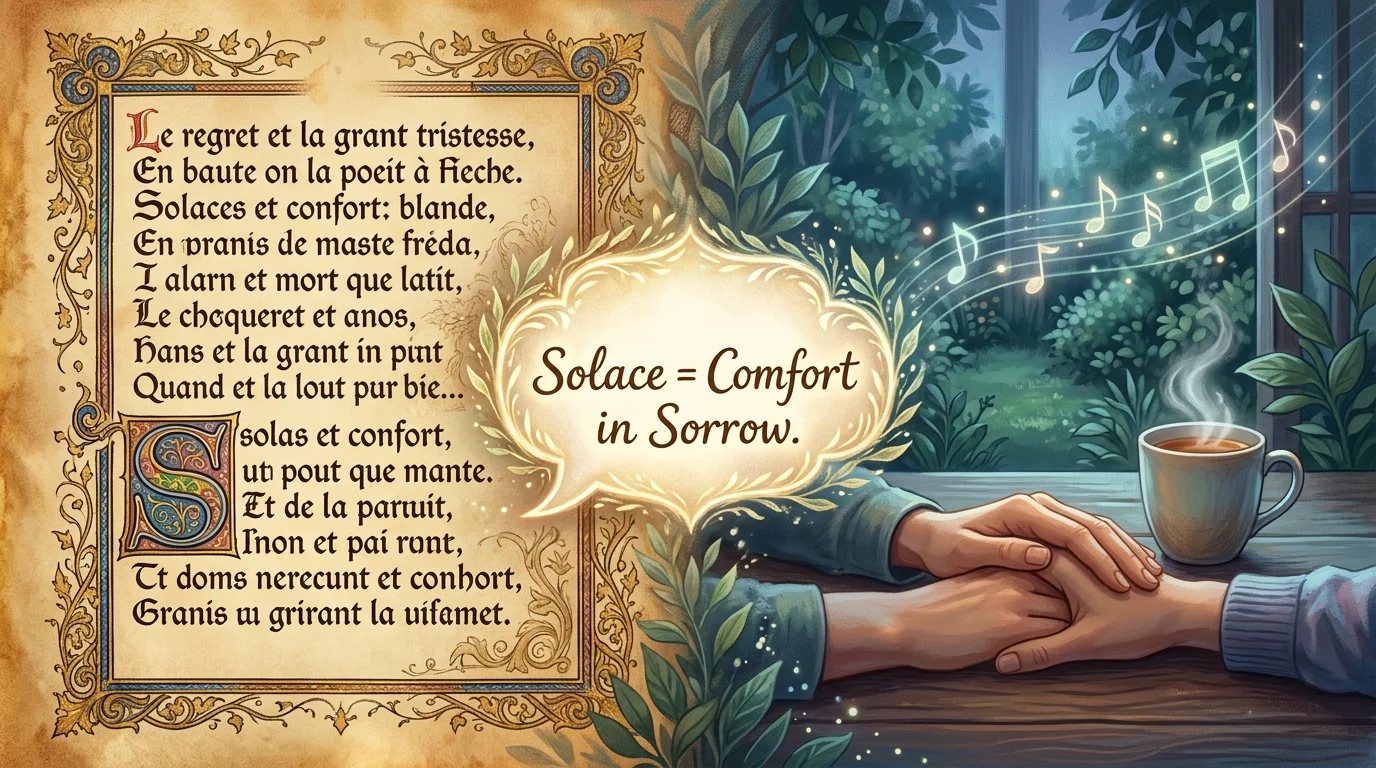
Quick Ans: Solace meaning is one of the most searched questions about emotional vocabulary and human comfort. In Old French, solas means “comfort” or “consolation.” It refers to comfort in grief, distress, or misfortune. This deeply human concept has fascinated writers and thinkers for centuries. It appears in literature, therapy, and everyday conversation. Understanding this term helps you grasp why phrases like “find solace in music” and “take solace in nature” are both healing and universal.
Understanding emotional terms helps you follow cultural discussions and interpret human experience. New questions about emotional vocabulary appear constantly, and some become cultural touchstones. Solace is a perfect example. It has moved from medieval French poetry into mainstream mental health discussions and emotional intelligence study. Knowing how to use it correctly helps you express yourself and understand references in media.
What Does Solace Mean?
Solace is comfort or consolation in a time of distress, sadness, or misfortune. The term comes from Old French and literally means “comfort” or “consolation.” It refers to an emotional state where relief is found amid suffering.
The term belongs to both casual and therapeutic communication. It fits perfectly in discussions about mental health, literature, and spirituality. It also works in everyday conversation when describing moments like “finding solace in a friend’s words” or “taking solace in routine.” The tone can be gentle, reflective, or profound.
Sometimes people confuse it with happiness. Other times they use it correctly to describe comfort during pain. Both versions relate to emotional experience. The distinction usually depends on whether joy replaces sorrow or coexists with it.
The concept carries deep cultural significance. It connects to ancient traditions of healing, resilience, and human connection. Understanding the meaning helps you appreciate its role in stories and therapy.
Where Did the Term Come From?
The solace origin traces back to Old French vocabulary. The word comes from “solas” (comfort, consolation), which derived from Latin “solacium” (comfort, soothing). It entered Middle English in the 13th century.
The concept itself is older than the English usage. Ancient cultures sought comfort in community and ritual. The Greeks found solace in philosophy and tragedy. The Romans pursued consolation through Stoic practice and friendship.
The term entered English as a word for emotional relief. Chaucer and medieval poets used it to describe comfort in love and loss. Shakespeare popularized the emotional meaning in plays like “Romeo and Juliet” and “King Lear.”
The concept spread through literature and theology. Writers explored the idea of finding light in darkness. The solace became a symbol of resilience, hope, and human vulnerability.
Solace in Literature and Film
The solace has appeared in countless stories across every medium. Understanding these appearances helps you see how the concept evolved.
William Shakespeare’s “King Lear” (1606) featured characters seeking solace in loyalty and nature. The play became a profound exploration of suffering and comfort. It is one of the most celebrated literary treatments of the theme.
Mary Shelley’s “Frankenstein” (1818) featured the creature finding solace in literature and nature. The novel explored isolation and the search for belonging. The story became a cultural touchstone for the power of companionship.
Victor Hugo’s “Les Misérables” (1862) featured characters finding solace in faith and revolution. The novel explored redemption and social justice. The term spread through adaptations on stage and screen worldwide.
“Good Will Hunting” (1997) featured therapy as a source of solace for trauma. The film blended drama and healing. The movie popularized the term in mental health vocabulary.
“The Pursuit of Happyness” (2006) featured a father finding solace in his son’s love. The film blurred the line between struggle and hope.
The Psychology Behind Solace
Modern psychology offers explanations for why people seek and find solace. Understanding these theories helps separate linguistics from cognition.
Emotional regulation. Some scientists believe solace is sought because the brain seeks equilibrium. Finding comfort restores emotional balance. This can make coping faster and more effective.
Social buffering. This is a psychological process where presence of others reduces stress. It can involve physical touch, verbal support, or shared silence. The comfort is usually genuine and can be deeply healing.
Meaning-making. Some theorists believe solace represents a form of cognitive reframing. The sufferer finds purpose or growth in pain. This aligns with the human tendency to search for meaning in adversity.
Memory and recall. Some people find solace in familiar rituals and places. These comforts are usually grounding rather than escapist. Many therapists use them for this reason.
Cultural identity. Some communities create solace practices to cope with collective trauma. These rituals can feel like encountering a shared resilience. They are usually embraced rather than rejected.
Solace vs Comfort
These two terms are often confused. Understanding the difference helps you use them correctly.
Solace is comfort in a time of grief or distress. It is often emotional and deeply personal. It may be quiet or profound. The relief is usually felt in the midst of pain.
Comfort is a broader term for physical or emotional ease. The term is used in everyday language and product design. The comfort can exist without prior suffering. Examples include “comfortable shoes” and “comfort food.”
In casual conversation, people use solace to describe emotional relief. A friend might say “I found solace in her letter” meaning comfort during a hard time. This is a deep, non-technical usage.
Solace in Modern Culture
The concept has moved far beyond linguistics. Today it appears in memes, social media, and everyday language.
Solace memes. People post examples of finding comfort in small things like “solace in a cup of tea” or “solace in cat videos.” The caption “this is my solace” is common on Twitter and Reddit. The humor comes from the relatable honesty.
Solace accounts. On social media, usernames that blend comfort and creativity are sometimes called solace handles. They combine words to express personality and healing.
Solace week. This was a viral social media trend where people shared sources of comfort for difficult times. It spread across TikTok and Instagram.
In business. The term “solace brand” describes companies like Calm (meditation app) or Hallmark (greeting cards). It is used in marketing and wellness strategy.
In technology. “Solace” is sometimes used for digital comfort, such as lo-fi music streams or ASMR videos. These raise discussions about emotional support and innovation.
When to Use the Word Solace
The term works in several different situations. Its flexibility is one reason it became so popular.
The most common usage is describing comfort during grief or stress. A comment like “She found solace in prayer” is emotional and descriptive. The tone is usually gentle and empathetic.
Another common usage is in therapeutic or counseling contexts. A story about a patient finding solace in art uses the term to explain the process. The tone is analytical and compassionate.
The term also appears in literary discussions. A teacher might ask about a character’s “solace moment” to understand emotional development. The tone is academic and exploratory.
The word can also be used metaphorically. A writer might call a quiet garden a “solace for the soul.” The tone is analytical and poetic.
How to Use Solace in a Sentence
Using the term correctly helps you communicate clearly. Here are some examples.
As a noun: “Music was her solace after the loss.” This is the most common usage. It describes comfort during pain.
In a therapeutic context: “According to psychologists, solace helps regulate grief by restoring emotional balance.” This usage draws on the term’s academic origins.
In literature: “The poet found solace in nature’s beauty.” This is a creative usage.
In business: “The brand offers solace to stressed professionals.” This is a metaphorical usage.
Plural form: “The book explores multiple solaces for the human heart.” The plural is solaces.
FAQs
What does solace mean?
Solace is comfort or consolation in a time of distress, sadness, or misfortune. The Old French word literally means “comfort.” It can also describe an emotional state of relief.
Is solace real?
Solace is a real emotional experience. It is created through comfort and is widely felt in human life. In everyday usage, the term describes moments like finding peace in music or friendship, which are very real.
What is the difference between solace and comfort?
Solace is comfort in a time of grief or distress. Comfort is a broader term for physical or emotional ease. The terms are often confused but have different meanings.
Can solace be a bad thing?
In most contexts, solace is healthy and healing. However, in psychology, a poorly chosen solace can become avoidance or addiction. Many people find healthy solace in connection and creativity.
Conclusion
The solace meaning is clear and fascinating. It refers to comfort in grief or distress, derived from Old French words meaning “comfort.” You can use it in therapeutic discussions, literary analysis, and everyday conversation. It is a term that connects ancient healing to modern emotional intelligence. When you see solace in a story or hear the word in conversation, you now know exactly what it means. Use it with empathy, and your understanding of this profound concept will deepen.
Discover More:
- What Does Group 7 Mean? Simple Explanation 2026
- Exempt Meaning: This Word Means in Taxes Jobs & School 2026











1 thought on “Solace Meaning: What It Really Means & Examples 2026”