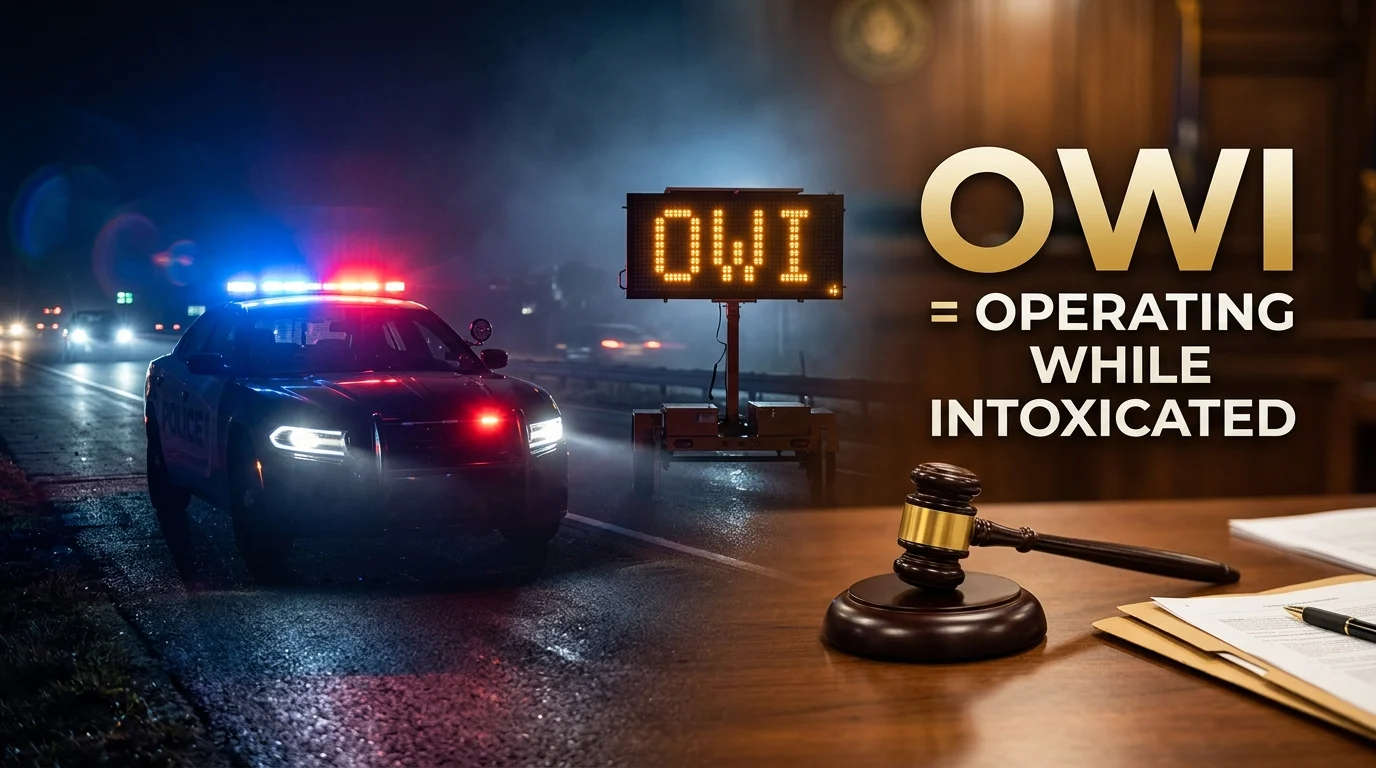
Quick Ans: OWI meaning is one of the most searched questions about legal terminology and modern abbreviations. In legal contexts, OWI stands for “Operating While Intoxicated.” It refers to the criminal offense of operating a vehicle or machinery while under the influence of alcohol or drugs. This abbreviation has become a standard term in law enforcement, court documents, and public safety discussions. Understanding this term helps you grasp why impaired driving laws vary across jurisdictions and why precise language matters in legal matters.
Understanding legal abbreviations helps you follow news reports and interpret official documents. New questions about acronym meanings appear constantly, and some become cultural touchstones. OWI is a perfect example. It has moved from police terminology into mainstream media and everyday conversation. Knowing how to use it correctly helps you understand references in legal discussions and public safety campaigns.
What Does OWI Mean?
OWI is an abbreviation for “Operating While Intoxicated.” The term describes the criminal offense of operating a vehicle or machinery while impaired by alcohol, controlled substances, or other drugs. It is commonly used in certain regions of the United States, particularly in states like Wisconsin and Iowa.
The term belongs to both legal and casual communication. It fits perfectly in discussions about law enforcement, traffic safety, and criminal justice. It also appears in news reports when describing arrests or convictions related to impaired driving. The tone can be serious, educational, or cautionary.
Sometimes people confuse it with DUI or DWI. Other times they use it correctly to describe impaired driving offenses. All versions relate to the same general concept. The distinction usually depends on the specific legal jurisdiction and the exact wording of the statute.
The concept carries significant legal and cultural weight. It connects to public safety efforts, legal consequences, and social responsibility. Understanding the meaning helps you follow legal discussions and interpret news stories about impaired driving.
Where Did the Term Come From?
The OWI origin traces back to American legal vocabulary. The abbreviation combines “Operating” (controlling a vehicle or machinery), “While” (during the time of), and “Intoxicated” (under the influence of alcohol or drugs).
The concept itself is older than the abbreviation. Laws against drunk driving date back to the early 20th century. As automobiles became common, jurisdictions created offenses to address impaired operation. The specific abbreviation OWI emerged as a standardized legal term.
The term gained prominence in the 20th century as states refined their impaired driving statutes . Some jurisdictions adopted OWI instead of DUI because it emphasizes “operating” rather than just “driving.” This distinction matters because someone can technically operate a vehicle without moving it, such as sitting in the driver’s seat with the engine running .
The concept spread through law enforcement and legal systems. States like Wisconsin and Iowa incorporated OWI into their criminal codes . The abbreviation became a symbol of legal precision, public safety enforcement, and standardized terminology.
OWI in Legal Contexts and Media
The term has appeared in countless legal documents and news reports across every medium. Understanding these appearances helps you see how the concept evolved.
Wisconsin’s OWI laws date back decades and have been revised numerous times. The state enacted significant changes in 1997, including updated penalty structures and counting provisions for prior offenses . The term became a standard part of Wisconsin’s legal vocabulary.
Iowa’s OWI statute appears in Chapter 321J of the Iowa Code. The state distinguishes OWI from other impaired driving offenses and maintains specific procedures for prosecution, sentencing, and license sanctions .
News media frequently uses OWI when reporting impaired driving incidents. Headlines like “Driver charged with OWI after traffic stop” are common in local news. The term spread through journalism as a concise way to describe the offense.
Legal professionals use OWI in court documents, police reports, and sentencing hearings. The abbreviation serves practical purposes in legal communication, providing a standardized reference to the offense.
The Psychology Behind OWI Laws
Modern psychology and legal theory offer explanations for why jurisdictions create and enforce OWI offenses. Understanding these theories helps separate legal concepts from public perception.
Deterrence. Legal theorists believe OWI laws are designed to deter impaired driving. The threat of arrest, fines, and jail time discourages people from operating vehicles under the influence. This can make roads safer and reduce fatalities.
Public safety. Some officials emphasize the protective purpose of OWI laws. The goal is not just punishment but prevention of harm to the driver and others. This aligns with the government’s interest in protecting citizens.
Personal responsibility. Some advocates believe OWI laws reinforce accountability. The driver is held responsible for their decision to operate a vehicle while impaired. This reflects societal expectations about responsible behavior.
Rehabilitation. Many OWI statutes include treatment requirements. Courts often order substance abuse evaluations and education programs. This recognizes that impairment can stem from addiction rather than mere negligence.
Cultural norms. Different communities have varying attitudes toward drinking and driving. OWI laws can shape cultural norms by clearly defining unacceptable behavior. Over time, these norms can become internalized and reduce offenses.
OWI vs DUI vs DWI
These terms are often confused. Understanding the differences helps you use them correctly.
OWI stands for “Operating While Intoxicated.” The term is used in certain states and emphasizes “operating” rather than “driving.” This distinction can matter legally because operation may include having control of a vehicle even if it is not moving .
DUI stands for “Driving Under the Influence.” The term is used in many states and focuses on the act of driving. The exact definition varies by jurisdiction.
DWI stands for “Driving While Intoxicated” or “Driving While Impaired.” The term is used in other states. The choice between OWI, DUI, and DWI often reflects regional legal traditions rather than substantive differences.
In casual conversation, people sometimes use these terms interchangeably. A friend might say “He got a DUI” when the actual charge was OWI. This is common but technically imprecise. The distinction usually depends on the specific jurisdiction and statutory language.
OWI in Modern Culture
The concept has moved beyond legal documents. Today it appears in news media, public safety campaigns, and everyday language.
OWI in news. Local news reports frequently mention OWI arrests and convictions. The abbreviation has become shorthand for impaired driving offenses in media coverage.
OWI in public safety campaigns. Organizations use the term in awareness efforts about the dangers of impaired driving. The goal is to educate the public and prevent offenses.
OWI in legal education. Law schools and criminal justice programs teach OWI as part of DUI law courses. The term appears in textbooks, case studies, and legal research.
OWI in online discussions. People discuss OWI laws and consequences on social media and forums. The term appears in conversations about legal rights, police encounters, and court procedures.
In business and employment. OWI convictions can affect employment opportunities, professional licenses, and commercial driving privileges. The term appears in background checks and employment screening.
When to Use the Term OWI
The term works in several different situations. Its precision makes it valuable in legal and official contexts.
The most common usage is in legal settings. A police report, court document, or attorney might reference an OWI charge. The tone is formal and precise.
Another common usage is in news reporting. A journalist might write “The suspect was arrested for OWI” to describe an impaired driving incident. The tone is informative and neutral.
The term also appears in public safety discussions. A speaker might discuss “OWI prevention” or “OWI laws.” The tone is educational and cautionary.
The word can also be used in casual conversation. Someone might say “He got an OWI last year” when discussing a legal matter. The tone is conversational and factual.
How to Use OWI in a Sentence
Using the term correctly helps you communicate clearly. Here are some examples.
As a noun: “He was convicted of OWI after the traffic stop.” This is the most common usage. It describes a specific legal offense.
In a legal context: “The statute defines OWI as operating a vehicle while under the influence.” This usage draws on the term’s legal origins.
In news reporting: “Police arrested the driver for OWI following a collision.” This is a journalistic usage.
In public safety: “The campaign aims to reduce OWI incidents among young drivers.” This is an educational usage.
Plural form: “The state has seen a decline in OWI convictions.” The plural is OWIs, though the abbreviation is often used without change in plural contexts.
FAQs
What does OWI mean?
OWI stands for “Operating While Intoxicated.” It is a legal term referring to the criminal offense of operating a vehicle or machinery while under the influence of alcohol, controlled substances, or other drugs .
Is OWI the same as DUI?
OWI and DUI are similar but not identical. OWI emphasizes “operating” while DUI focuses on “driving.” The exact definitions and usage vary by jurisdiction. Some states use OWI, others use DUI or DWI .
What happens if you get an OWI?
Penalties for OWI vary by state and offense number. They can include fines, jail time, license suspension or revocation, mandatory treatment programs, and ignition interlock devices. Subsequent offenses typically carry harsher penalties .
Can you get an OWI without driving?
In some jurisdictions, yes. Because OWI focuses on “operating” rather than “driving,” someone can potentially be charged for having control of a vehicle while intoxicated even if it is not moving. Examples include sitting in the driver’s seat with the engine running .
Can an OWI be expunged?
Expungement laws vary by jurisdiction. Some states allow expungement of OWI convictions under certain conditions, while others do not. The availability depends on the specific offense, the state’s laws, and the person’s criminal history.
Conclusion
The OWI meaning is clear and legally significant. It refers to “Operating While Intoxicated,” a criminal offense for operating a vehicle under the influence of alcohol or drugs. You can use it in legal discussions, news reporting, and public safety conversations. It is a term that connects law enforcement practices to modern traffic safety efforts. When you see OWI in a news report or hear the term in conversation, you now know exactly what it means. Use it with precision, and your understanding of this important legal concept will deepen.
Discover More:
- Visceral Meaning: Definition, Examples & Simple Explanation 2026
- Yeshua Meaning: The Powerful Name Behind Jesus 2026