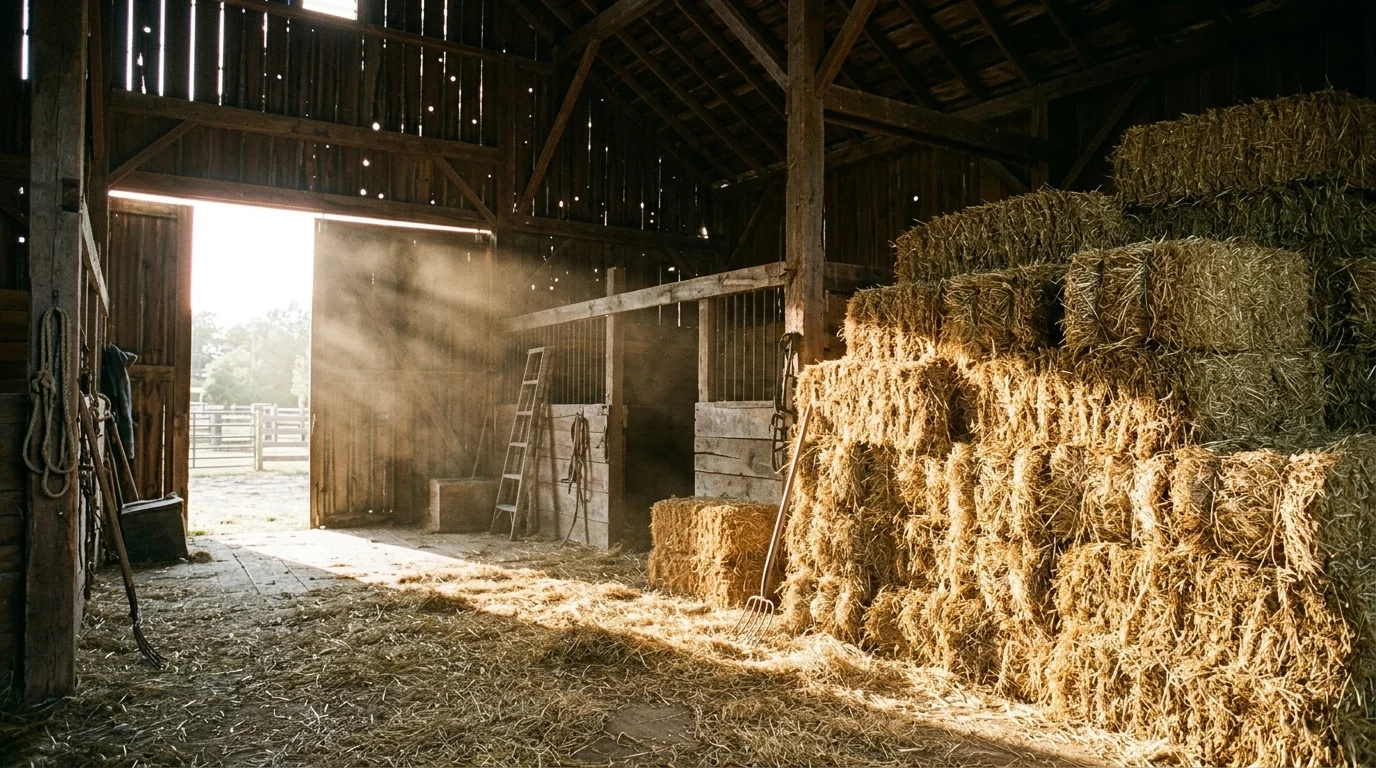
Quick Answer: The fodder meaning is coarse food for farm animals, such as hay, straw, or dried stalks. Figuratively, it means raw material that feeds something else, like a news story becoming “fodder” for gossip, debate, or comedy.
If you have ever read that a celebrity scandal became “tabloid fodder” or that soldiers were treated as “cannon fodder,” you have met the figurative side of this old farming word. It is one of those terms that starts in a barn and ends up in headlines, and both meanings are still very much alive today.
This guide explains what does fodder mean in plain language, from its literal farmyard sense to its sharper figurative uses. The explanations draw on standard dictionary definitions and everyday usage, so you can recognise which meaning is intended every time you meet the word.
What Does Fodder Mean in Its Literal Sense?
In its original and still most concrete sense, fodder is food given to livestock. It usually means coarse plant material rather than rich grain or fresh pasture: hay cut and dried for winter, straw left after a harvest, silage stored in a pit, or stalks and leaves that animals can chew through the colder months.
Farmers talk about fodder because feeding animals through winter is a practical problem. When grass stops growing, stored fodder keeps cattle, sheep, and horses fed. That is why you will see phrases like “fodder crops” for plants grown specifically to be harvested as animal feed, and “fodder shortages” in farming news when a dry summer leaves too little stored for winter.
Note that fodder is an uncountable noun in this sense. People say “a load of fodder” or “tons of fodder,” not “three fodders.” It is a mass of material, measured in bales and loads rather than counted one by one.
Where Does the Word Fodder Come From?
Fodder comes from Old English “fodor,” meaning food or nourishment for animals, and it is closely related to the modern words “food” and “feed.” The family resemblance is no accident: all three words trace back to the same ancient root for nourishment.
The figurative use is not new either. By the 1500s and 1600s, English writers were already using fodder for anything that feeds a process, an argument, or an imagination. The farm image proved flexible: just as hay feeds cattle, a story can feed a newspaper, a rumour can feed a debate, and a life experience can feed a novel.
What Does Fodder Mean Figuratively?
Figuratively, fodder means material that is available to be used up by something else. The tone depends on the context, and that is what makes the word interesting.
In neutral contexts, it simply means raw material. A historian’s diary can be fodder for a novelist. A scientist’s discovery can be fodder for classroom discussion. Nothing negative is implied: the material is useful, and using it is the point.
In more critical contexts, fodder carries a note of disapproval, suggesting something is being consumed cheaply or carelessly. “Tabloid fodder” implies a person’s private life is being chewed over for entertainment. “Political fodder” suggests an issue is being used as ammunition rather than treated seriously. When dictionaries mark this sense as showing disapproval, this is what they mean.
Cannon Fodder: The Darkest Use of the Word
The most famous figurative phrase is “cannon fodder,” meaning soldiers who are regarded as expendable in battle, sent forward with little regard for their survival. The image is brutal on purpose: people treated like material to be used up by guns.
The phrase dates to the nineteenth century, when mass armies and heavy artillery made the comparison painfully vivid. Today it is used well beyond warfare, for any group treated as disposable by those in power: junior employees sent to handle an impossible workload, or inexperienced players thrown into a hopeless match. Whenever you see it, the point is the same: people being treated as consumable material, not as individuals who matter.
Fodder vs Forage, Feed, and Hay
Fodder is often confused with nearby farming words, but each has its own job:
- Fodder vs forage: Forage is what animals graze for themselves in a field, and also the act of searching for food. Fodder is feed that has been harvested, stored, and given to animals, usually indoors or in a yard.
- Fodder vs feed: Feed is the general word for anything animals eat, including grain, pellets, and supplements. Fodder is the coarse, bulky plant part of that diet, like hay and straw.
- Fodder vs hay: Hay is one specific kind of fodder: grass or legumes cut, dried, and stored. All hay used for animals is fodder, but not all fodder is hay, since straw, silage, and stalks count too.
Getting these straight matters if you read farming news or older literature, where the words are used precisely rather than interchangeably.
Fodder in Everyday Sentences
Seeing the word in context is the fastest way to learn it. Here are examples covering both senses:
- The farmer stacked bales of fodder in the barn before the first frost.
- A dry summer left many farms short of winter fodder.
- The leaked emails became instant fodder for the evening news.
- Her childhood in a small town provided rich fodder for her novels.
- Critics said the junior staff were being used as cannon fodder for a failing project.
- Old films are cheap fodder for late-night television schedules.
Notice how the literal examples are about storage and seasons, while the figurative ones are about media, politics, and creativity. The surrounding words almost always tell you which sense is meant.
Is Fodder Also a Verb?
Yes, though the verb is much rarer than the noun. To fodder animals means to supply them with fodder, as in a farmer foddering cattle before dark. You are unlikely to meet this verb outside farming writing or older books, but it is worth knowing so it does not catch you out. In everyday speech, people simply say “feed” instead.
Frequently Asked Questions About Fodder
What does fodder mean in simple terms?
In simple terms, fodder means animal feed, especially coarse plant material like hay and straw. Figuratively, it means raw material that feeds something else, such as news, gossip, or creative work.
What is cannon fodder?
Cannon fodder means soldiers, or by extension any people, who are treated as expendable by those in charge, sent into a hopeless or dangerous situation with little regard for their welfare.
What is the difference between fodder and forage?
Forage is food animals find and graze for themselves, while fodder is food that has been harvested and stored by people and then given to animals.
Can fodder describe people?
Yes, but usually critically. Calling people fodder suggests they are being used up for someone else’s purpose, as in “cannon fodder” or “tabloid fodder.” It is not a compliment.
Is fodder countable?
No, in ordinary use fodder is uncountable. People measure it in bales, loads, or tons rather than counting individual fodders.
Conclusion
So, what does fodder mean? At its root, it is humble farm vocabulary: coarse food that keeps animals fed through winter. Its figurative life is what gives it staying power, letting writers describe anything from a gossip story to an army’s front line as material waiting to be consumed. Once you know both senses, and the disapproving edge the figurative one can carry, you will read the word exactly as its writer intended.
Related: What Does Gist Mean? Simple Definition, Examples and How to Use It and What Does Macabre Mean? Definition, Origin & Examples Explained.


1 thought on “What Does Fodder Mean? Animal Feed, Figurative Uses & Examples Explained”