
Quick Answer: The TFTI meaning is “thanks for the invite.” Most of the time it is sarcastic: someone sends it after discovering they were left out of plans, a party, or a group outing they only heard about afterwards.
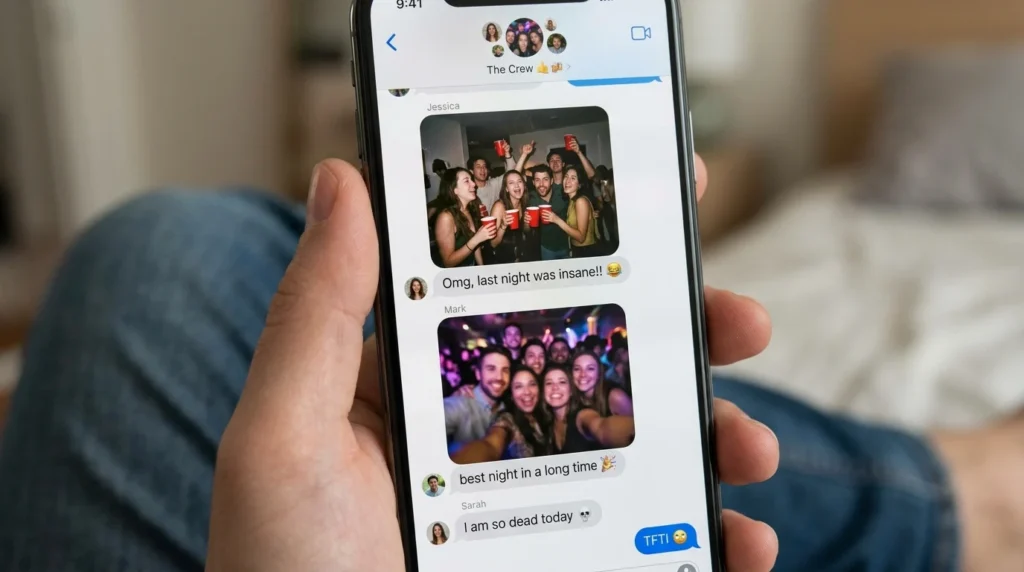
You have probably seen it under a group photo or in a chat the morning after an event: a short, pointed “TFTI” from a friend who was not there. It looks like a thank-you, but the feeling behind it is almost always the opposite, and that gap between the words and the meaning is the whole point.
This guide explains what does TFTI mean in full, when it is sarcastic and when it might be sincere, how it grew out of group-chat culture, and what to say when you receive one. The usage described here follows how the acronym actually appears in everyday messaging.
TFTI Meaning Explained
TFTI is an initialism for “thanks for the invite.” It is written in capitals as TFTI or in lowercase as tfti, and both forms are common. It belongs to the family of texting abbreviations that compress a whole sentence into a few letters, like LOL, BRB, and FOMO.
The key to reading it is context. Taken literally, it is a polite thank-you. In practice, it is almost always sent by someone who was not invited, which flips the meaning into sarcasm. The sender is saying, in effect: “I noticed you went out without me, and I am letting you know I noticed.”
That sarcasm is closely tied to FOMO, the fear of missing out. TFTI is what people type when FOMO meets a group photo. It turns a private sting of exclusion into a public, lightly humorous jab, which is easier to send than a serious complaint.
When Is TFTI Sarcastic, and When Is It Sincere?
The sarcastic use is the default, and it is what you should assume first. The classic triggers are unmistakable: photos from a party you were not at, a group chat buzzing about last night, or a friend mentioning plans you never heard about. In these cases TFTI means “I was left out, and I am not thrilled about it,” softened by humour.
A sincere use does exist, but it is rarer and easy to misread. Someone might send TFTI as a genuine thank-you after actually being invited to something. The problem is that the acronym carries so much sarcastic baggage that even a well-meaning TFTI can land as passive-aggressive. For that reason, most people write out “thanks for the invite!” in full when they mean it sincerely, and save the abbreviation for the joke.
There is also a secondary meaning worth knowing: “thanks for the info.” This appears when someone shares a useful update or an unnecessary piece of news, and the reply is a deadpan TFTI. It is far less common than the invite meaning, and the surrounding conversation usually makes it clear.
Where Did TFTI Come From?
Unlike abbreviations from the early internet era, TFTI rose to prominence in the 2010s, when event planning moved into texts and direct messages. As friend groups began organising outings in group chats and posting the results on social media, the experience of discovering an event after the fact became common, and the language caught up.
The earliest definitions on internet slang databases date to around 2010, describing exactly the situation the acronym still describes: friends go out, one person is not thought of, and that person replies with TFTI. The acronym has stayed close to that original setting ever since, living mainly in direct messages, group threads, and social media comments rather than in formal writing.
How to Use TFTI in a Message
TFTI works best as a short, standalone reaction. It does not need a long explanation, because the situation supplies one. Typical examples include:
- Friend posts a beach photo: “Looks amazing. TFTI.”
- Group chat relives last night: “Oh, so everyone went bowling? TFTI, guys.”
- Someone mentions a dinner you missed: “TFTI, I was literally free.”
- A playful version with an emoji: “TFTI 😭 next time I am coming too.”
Tone markers do a lot of work. “TFTI!” with an exclamation mark and a laughing emoji reads as playful teasing. A bare lowercase “tfti” on its own reads colder, closer to a genuine complaint. Adding a follow-up line, like “next time invite me,” turns the jab into an actual request.
How to Reply When Someone Sends You TFTI
Receiving a TFTI can feel awkward, because it carries a real complaint inside a joke. The best replies acknowledge the feeling without getting defensive:
- Apologise lightly: “You are right, my bad! You are first on the list next time.”
- Explain honestly: “It was last minute, honestly, I did not think to check. Sorry.”
- Make a plan: “Let’s do it again this weekend, you are definitely invited.”
- Match the humour: “TFTI accepted, your invitation is in the post.”
What not to do is ignore it or argue that the person would not have come anyway. The sender is really saying they value being included. A short, warm response costs little and keeps the friendship smooth.
TFTI vs Similar Slang
- TFTI vs FOMO: FOMO is the feeling of missing out. TFTI is the message you send because of that feeling.
- TFTI vs “thanks for the info”: The same letters can mean this in a different context, but the invite meaning is far more common.
- TFTI vs a genuine thank-you: A full “thanks for the invite!” after attending an event is sincere. A bare TFTI after missing one is almost certainly not.
Frequently Asked Questions About TFTI
What does TFTI mean in texting?
TFTI means “thanks for the invite.” It is usually sarcastic, sent by someone who discovered they were left out of plans or an event.
Is TFTI rude?
It can be, but usually it is playful rather than hostile. Among close friends it reads as teasing. Sent coldly, or to someone you do not know well, it can come across as passive-aggressive.
Can TFTI mean thanks for the information?
Yes, as a secondary meaning, especially when replying to a piece of news or an update. The invite meaning is much more common on social media, so check the context.
Should I use TFTI sincerely?
It is safer not to. Because the sarcastic use is so well known, a sincere TFTI is easily misread. Write the full phrase out when you genuinely mean thank you.
What should I reply to TFTI?
Acknowledge it warmly: apologise briefly, explain if there is a simple reason, and invite the person next time. A short, kind reply defuses the joke before it becomes a real grievance.
Conclusion
So, what does TFTI mean? On the surface it is a thank-you, but in practice it is a small social signal: I saw what happened, I was not part of it, and I would like to be next time. Used playfully among friends, it turns a moment of exclusion into a joke. Used coldly, it says the same thing without the humour. Either way, the right response is the same: take the hint, say sorry, and send the next invitation.
In short, the TFTI meaning is clear: it is usually a sarcastic thanks for the invite, not a sincere one. Remembering the TFTI meaning helps you read the tone, reply warmly, and include the person next time. The TFTI meaning therefore matters as much for the reply as for the joke itself.
Related: What Does IMY Mean in Texting? I Miss You Explained With Examples and What Does BTW Mean: What It Really Means & Examples 2026.


1 thought on “What Does TFTI Mean? Thanks for the Invite, Sarcasm & Replies Explained”