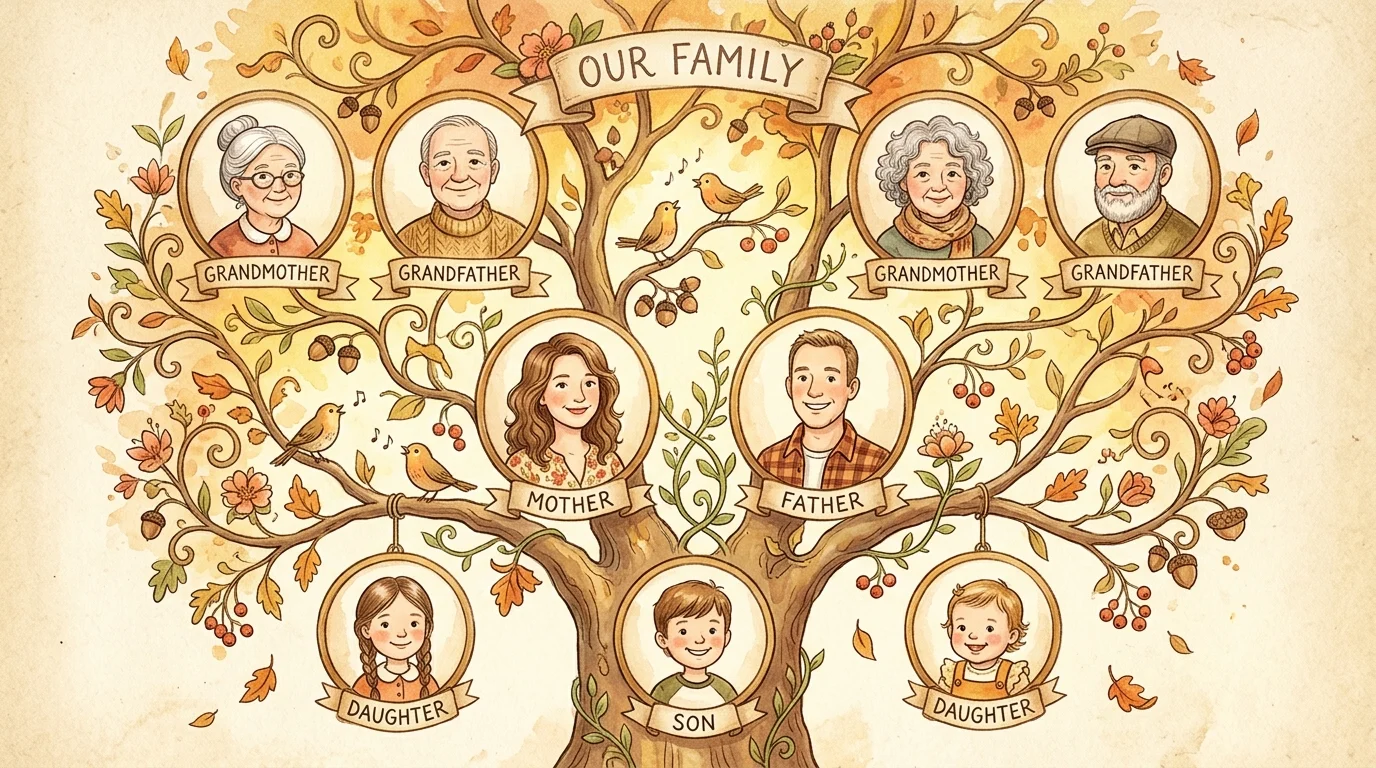
Quick Answer: The hereditary meaning is something passed down from one generation to the next. It usually describes traits or conditions transmitted genetically from parents to children, but it can also describe titles, wealth, customs, or roles passed on by inheritance or family tradition.
We use hereditary meaning every day without thinking much about it: hereditary diseases, hereditary titles, a hereditary talent for music. Yet it covers two quite different kinds of passing down, one biological and one social, and confusing them can lead to real misunderstandings.
This guide explains the hereditary meaning in full, from genes to thrones, and clears up the common mix-ups with similar words like genetic, congenital, and familial.
What Is the Hereditary Meaning?
At its simplest, hereditary describes something that is transmitted from ancestors to descendants. The word comes from the Latin hereditarius, relating to an heir, which itself comes from heres, meaning heir. That origin already hints at the word’s double life: an heir inherits both biology and property.
The most common modern use is biological. A hereditary trait is one passed from parents to children through genes: eye colour, hair texture, height, and many other features. A hereditary condition is a health condition caused by a gene variant passed down in a family. When doctors ask about your family history, they are asking about hereditary risks.
But hereditary is not only about genes. A hereditary title, such as a dukedom or a chieftainship, passes from parent to child by rules of inheritance, not by DNA. Hereditary wealth, hereditary enemies, and hereditary customs all describe things handed down through families and generations by law, tradition, or habit.
Hereditary in Biology: How Traits Pass Down
Biologically, the hereditary meaning is genetically transmitted or transmittable from parent to offspring. Children receive half their genes from each parent, and those genes shape a huge range of features. Some traits are straightforward, shaped mostly by one gene, while most, like height or skin tone, are shaped by many genes working together, plus the environment.
It is important to understand that hereditary does not mean guaranteed. A child who carries a gene variant linked to a condition may never develop that condition, and a child may not inherit a parent’s trait at all. Heredity deals in probabilities, not certainties, because each child receives a different mix of their parents’ genes.
Nor does hereditary mean the same as “caused by one gene.” Many conditions that run in families involve several genes plus lifestyle and environment. A tendency can be hereditary even when no single gene is responsible, which is why family patterns are useful clues for doctors but never the whole story.
Hereditary in Law and Society
Outside biology, the hereditary meaning describes anything received or passing by inheritance, or held by reason of birth. A hereditary monarchy is one in which the crown passes within a family. A hereditary peer holds a title because they inherited it. Hereditary property passes to heirs under the law.
The word also covers traditions that feel inherited even when no law is involved. A family business might be described as hereditary if generation after generation takes it up. A “hereditary feud” is a quarrel passed down between families, kept alive by each new generation. In these uses, hereditary means “established by tradition and carried on by descendants,” rather than anything written in law or genes.
Hereditary vs Genetic vs Congenital vs Familial
These four words overlap, but they are not interchangeable:
- Hereditary: passed, or capable of being passed, from parent to child, usually through genes. A hereditary condition can skip generations if carriers do not show it.
- Genetic: relating to genes. All hereditary conditions are genetic, but not all genetic conditions are hereditary: a gene change can appear for the first time in one person and not be inherited from either parent.
- Congenital: present from birth. A congenital condition may be hereditary, but it may also be caused by something during pregnancy, such as an infection or exposure, with no genetic cause at all.
- Familial: tending to occur in families. A familial pattern may be genetic, but it may also reflect a shared environment, diet, or lifestyle rather than shared genes.
Keeping these apart matters in real conversations. Saying a condition is hereditary implies it can be passed to children. Saying it is congenital only says it was present at birth. The distinction can change what a family expects and what a doctor investigates.
Examples of Hereditary Things
Hereditary traits and conditions are everywhere in daily life. Eye colour and natural hair colour are classic hereditary traits. So are blood type and many aspects of build. On the health side, conditions such as cystic fibrosis and sickle cell disease are well-known hereditary conditions, caused by gene variants passed from parents to children.
In the social world, hereditary examples are just as familiar: a hereditary title in a royal family, a farm passed down through five generations, a family recipe guarded for a century, or a trade, like weaving or fishing, that children learn from parents and then teach their own children. In every case, something valuable, or sometimes troublesome, travels down the generations.
Hereditary in a Sentence
- Eye colour is hereditary, which is why children so often share their parents’ eyes.
- She inherited a hereditary title on her father’s death and took her seat in the upper house.
- The doctors asked whether the condition was hereditary, since several relatives had shown similar symptoms.
- Their rivalry was almost hereditary, passed down from grandfathers who had quarrelled over the same land.
Frequently Asked Questions
What is the hereditary meaning in simple terms?
In simple terms, hereditary means passed down from parents to children, or from one generation to the next, whether by genes, by inheritance, or by family tradition.
Does hereditary always mean genetic?
Almost always in a medical context, yes: a hereditary condition is one passed through genes. But hereditary can also describe non-genetic inheritance, such as titles, property, and customs.
What is the difference between hereditary and congenital?
Hereditary means passed from parent to child, usually genetically. Congenital means present from birth, whatever the cause. A congenital condition is not necessarily hereditary.
Can a hereditary condition skip a generation?
Yes. A person can carry a gene variant without showing the condition and pass it to a child who does show it, which is why hereditary conditions sometimes seem to skip generations.
Does hereditary mean it will definitely happen?
No. Heredity is about increased likelihood, not certainty. Many hereditary traits and conditions depend on which genes a child receives and on other factors besides.
Conclusion
So, what is the hereditary meaning? It means handed down through the generations, whether by the genes parents give their children, by the laws that pass titles and property to heirs, or by the traditions families keep alive. Most of the time you will meet it in a medical setting, where it points to traits and conditions that run in families. But its older, broader sense is still very much alive: anything that travels from ancestors to descendants, and shapes the lives of those who receive it, can fairly be called hereditary.


