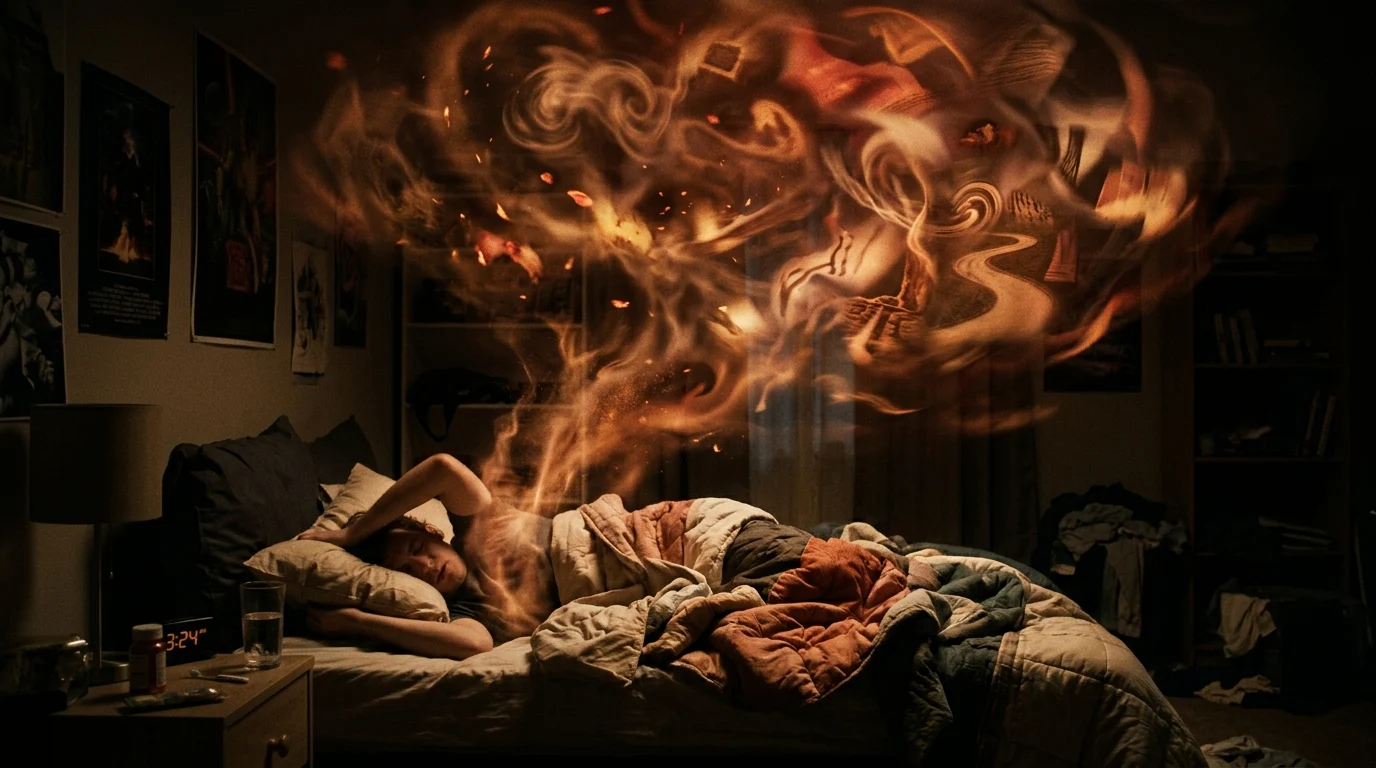
Quick Answer: A fever dream is a vivid, strange, or unsettling dream that happens while someone is ill with a fever. Used figuratively, “fever dream” describes any experience or situation so bizarre that it feels more like a dream than real life.
Almost everyone who has spent a night tossing and turning with a high temperature knows the feeling behind fever dream meaning: sleep comes in fits and starts, and the dreams that arrive with it are far weirder than usual. Rooms stretch and shrink, familiar faces behave oddly, and a vague sense of dread hangs over everything. Waking up brings relief, but also a lingering question about what just happened in your own mind.
This guide explains fever dream meaning in both of its senses, drawing on how dictionaries define the phrase and how doctors and sleep researchers describe these dreams. It also covers why fever dreams feel so different from ordinary dreams. Next, it shows how they differ from nightmares. Finally, it explains when a fever itself deserves medical attention.
What Is a Fever Dream?
In its literal sense, fever dream meaning is a dream that occurs during a fever or febrile illness, when body temperature rises well above its normal range. People know these dreams for their unusually vivid, bizarre, and emotionally intense quality. They can happen at any age. Children often report them, and children tend to run higher fevers and dream vividly.
Researchers do not fully understand the link between fever and strange dreaming yet. They are still studying it. What is clear is that a raised body temperature disrupts normal sleep. Sleep becomes lighter and more broken, which means a person is more likely to wake during or just after a dream and remember it. The brain, meanwhile, works under unusual conditions. It is hot, uncomfortable, and busy fighting an infection. That discomfort often finds its way into the dream itself.
People who have had fever dreams often report the same kinds of features. The dream may feel unusually real, even after waking. Ordinary objects may change size or behave impossibly. Themes of heat, illness, discomfort, or being chased are common. The emotional tone is usually negative: anxious, confused, or frightened rather than pleasant.
Why Do Fever Dreams Feel So Strange?
Several things combine to make fever dreams feel stranger than everyday dreams. First, fever itself changes how the body experiences the night. A high temperature can bring sweating, chills, aches, and a pounding head. Those physical sensations do not switch off during sleep. Instead, the dreaming brain weaves them into the story it tells. A hot, restless body can become a dream about burning rooms or endless corridors.
Second, fever breaks up sleep. Normal sleep moves through cycles. People usually forget dreams most easily when sleep is deep and undisturbed. A feverish night is full of half-wakenings, so people catch dream fragments more often and remember them. Remembered dreams always feel more vivid than forgotten ones.
Third, at very high temperatures, the line between dreaming and waking can blur. Some people report brief hallucinations as they drift in and out of sleep. They may feel that something from the dream is still present for a few moments after waking. This overlap with delirium is one reason fever dreams can feel so unsettling. It is also why you should always take a very high or prolonged fever seriously.
Fever Dream vs Nightmare vs Night Terror
It helps to separate three experiences that people often confuse. A nightmare is a frightening dream that wakes the sleeper, who usually remembers it clearly. Nightmares can happen to anyone, at any temperature. Stress or anxiety often causes them, rather than illness.
Its cause defines a fever dream, not its scariness. It is any dream, frightening or merely odd, that happens during a fever. Some fever dreams are scary. Others are simply surreal: a staircase that never ends, a conversation with someone who keeps changing shape, or a room where the walls slowly move.
A night terror is different again. It usually affects children. It happens during deep sleep rather than dream sleep. The child often screams or thrashes but does not fully wake. The child usually remembers nothing the next morning. By contrast, people remember fever dreams, at least in part. The dreamer wakes more completely.
What Does “Fever Dream” Mean Figuratively?
Beyond sleep, people widely use “fever dream” as a figure of speech. It describes a situation or experience that is so strange it seems unreal. A film critic might call a chaotic movie a fever dream. A traveller might describe a long, jet-lagged journey as a fever dream. Someone looking back on a wild period of their life might say the whole year felt like a fever dream.
In this figurative sense, the phrase usually carries a slightly negative or bewildered tone. It suggests confusion, excess, or events that do not quite add up, rather than something pleasant. A “fever dream” of a party, for example, implies a night that got out of hand, not a perfect evening.
This part of fever dream meaning works because everyone understands the literal one. We all know what it is like to dream while ill. Logic loosens then, and the familiar turns strange. Calling a waking experience a fever dream borrows exactly that feeling.
Common Themes in Fever Dreams
While every fever dream is personal, certain themes come up again and again in people’s accounts:
- Distorted size and space: rooms that grow or shrink, hallways that stretch forever, objects that are far too large or small.
- Heat and discomfort: dreams of fire, deserts, or being trapped somewhere hot and airless.
- Repetition: the same action or scene looping again and again, sometimes with small changes each time.
- Threatening figures: shadowy people, animals, or creatures that feel menacing without doing anything specific.
- Confusion about what is real: a dream that continues to feel true for a few moments after waking.
None of these themes means anything is wrong with the dreamer. They are simply the kinds of images a hot, restless, uncomfortable brain tends to produce.
When Should a Fever Itself Be Checked?
Fever dreams on their own are not usually a cause for alarm. They tend to fade as the fever passes. The fever behind them, however, is worth watching. As a general guide, seek medical advice if a fever is very high or lasts more than a few days. Seek advice too if it comes with worrying symptoms. These include confusion, difficulty breathing, a stiff neck, a rash that does not fade, or a seizure. For babies and young children, parents should seek advice sooner, following local health guidance.
This article is general information, not medical advice. If you are worried about a fever, in yourself or someone else, ask a doctor or local health service.
Fever Dream in a Sentence
- Delirious with flu, she spent the night lost in a fever dream about a house where every door led back to the same room.
- The whole awards ceremony felt like a fever dream, with flashing lights, strange speeches, and nobody quite sure what was happening.
- He woke from a fever dream convinced the walls were moving, then laughed at himself once the feeling passed.
Frequently Asked Questions
What does fever dream mean?
The fever dream meaning is a vivid, strange, or distressing dream experienced during a fever. Figuratively, it means any bizarre experience that feels unreal, like a dream.
Why do fevers cause weird dreams?
A raised temperature disrupts sleep. It makes sleep lighter and more broken, so people remember dreams more often. Physical discomfort such as heat, sweating, and aches also gets woven into the dream. This makes the dream stranger than usual.
Are fever dreams dangerous?
Fever dreams themselves are not usually dangerous. They pass as the fever fades. A very high, prolonged, or worrying fever is a different matter. A medical professional should check it.
Do only children get fever dreams?
No. Children often report fever dreams, but adults get them too. Anyone with a significant fever can experience unusually vivid or bizarre dreams.
What is the difference between a fever dream and a nightmare?
A nightmare is a frightening dream that can happen at any time. When it happens defines a fever dream: during a fever. Some fever dreams are frightening. Others are simply surreal rather than scary.
Conclusion
So, what is fever dream meaning? Literally, it is the strange, vivid dreaming that comes with a fever. A hot and restless body turns ordinary sleep into something surreal. Figuratively, it is a handy phrase for any waking experience so odd that it feels dreamed rather than lived. Both senses share the same core idea: a world where the familiar stops behaving normally. Once you know that, you can recognise the phrase easily. You may meet it in a sickbed story, a film review, or a friend’s account of a truly bizarre week.


