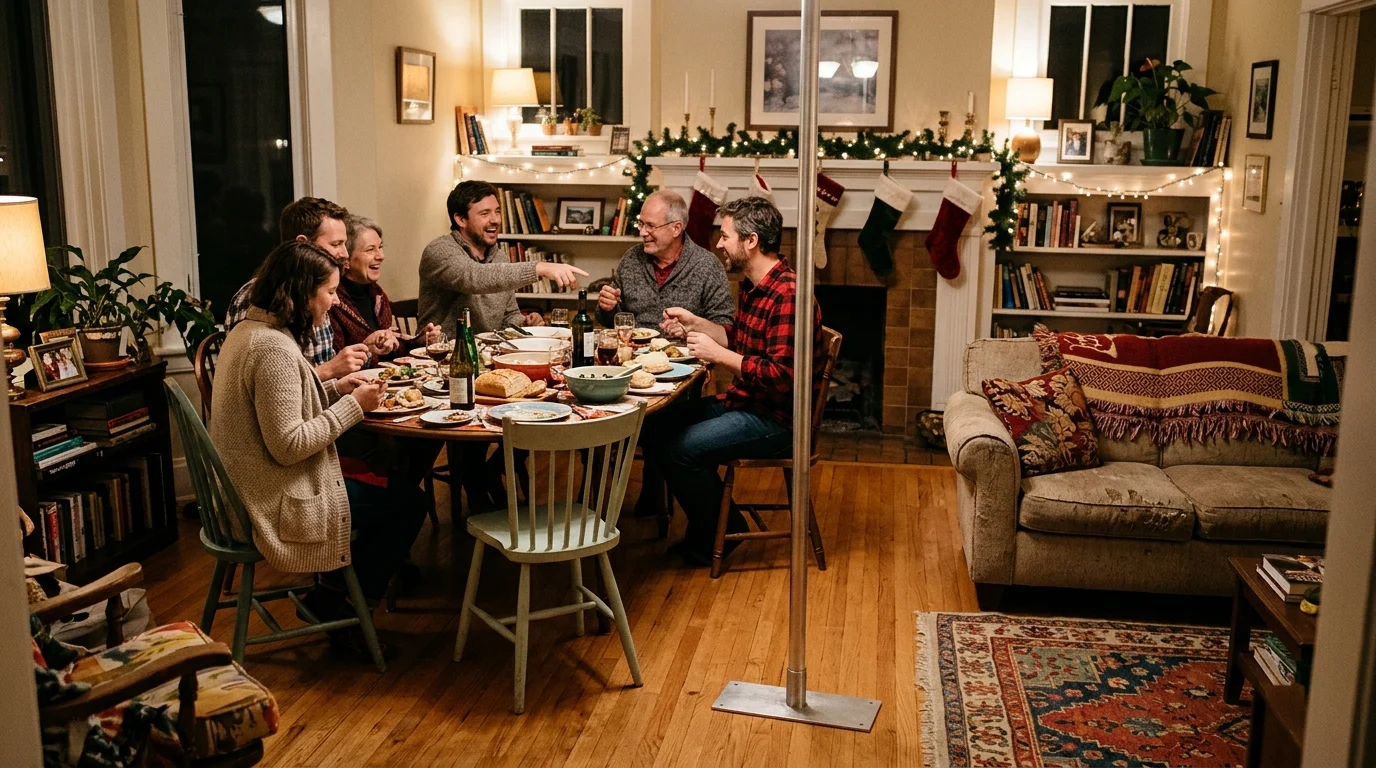
Quick Answer: Festivus is a secular holiday on December 23. The 1997 Seinfeld episode “The Strike” made it famous. It uses a plain aluminium pole, not a decorated tree. Its traditions include the airing of grievances and feats of strength. In addition, people celebrate so-called Festivus miracles. Author Daniel O’Keefe started the real family tradition. His son Dan O’Keefe later brought it to Seinfeld.
Every December, someone may wish you a happy Festivus. For example, the greeting can puzzle you if you have never seen Seinfeld. Fans picture a bare metal pole and a chaotic family dinner. Either way, Festivus has outgrown its sitcom origins. As a result, it now works as a real, if deliberately unserious, seasonal tradition.
This guide explains Festivus meaning, its origins, and its traditions. In addition, it explains how people celebrate Festivus today. It separates the television version from the real family tradition. Finally, you will understand both halves of the story.
What Is Festivus?
People celebrate Festivus on December 23. In fact, it offers an alternative to Christmas pressures and commercialism. Seinfeld presents its best-known form. For example, it suits people who feel fed up with shopping, decorating, and forced cheer. The catchphrase says it well: “a Festivus for the rest of us.” It speaks to people who feel left out of usual festivities. Similarly, it speaks to people who simply feel tired of them.
Festivus has no religious basis. In addition, it has no official body, rules, or required beliefs. As a result, that looseness forms part of its appeal. People keep the traditions they enjoy. However, they skip the traditions they do not enjoy. Some celebrate on December 23. Meanwhile, others choose a nearby date that suits their gathering. Some treat it as a genuine alternative celebration. Others treat it as a themed party. Finally, many treat it as a bit of both.
Over time, Festivus now serves as shorthand for an attitude. That attitude playfully refuses to take December too seriously. For example, people call something “very Festivus” for a reason. It means blunt, uncommercial, and funny. In short, it rejects the polished version of December.
The Real Origin: The O’Keefe Family
Festivus did not start on television. Instead, author Daniel O’Keefe created his own version in 1966. His son Dan O’Keefe, a Seinfeld writer, later described its history. The holiday marked Daniel O’Keefe’s first date with his wife, Deborah. Then it changed and grew as their children arrived.
Dan O’Keefe called the original celebration more peculiar than television. The O’Keefe home had no Festivus pole. For example, family members aired grievances into a tape recorder. Sibling wrestling matches also formed part of the occasion. In addition, the family celebrated at various times of year. As a result, it stayed a private family custom for decades.
Dan O’Keefe grew up with that custom. Later, he co-wrote the Seinfeld episode that introduced Festivus widely. He moved his family tradition to the fictional Costanza family. For comedy, he reshaped it and gave it a fixed date and a pole. Consequently, those features now define the name for most people.
Festivus on Seinfeld: “The Strike”
Festivus entered popular culture through “The Strike”. Seinfeld first broadcast the episode in 1997. In fact, it appeared in the show’s ninth season. George Costanza reveals a family secret in the episode. His father, Frank Costanza, invented Festivus years earlier. Frank had grown disgusted with Christmas commercialisation.
Frank’s story starts during a Christmas shopping trip. He reached for a doll for his son. Then another shopper reached for the same doll. The two shoppers scuffled over it. As a result, Frank decided that December needed another way. A new holiday followed from that frustration. The episode shows the Costanza family celebrating Festivus. In addition, it includes its now-famous rituals. Finally, the holiday soon became one of the show’s most quoted inventions.
The episode works for a simple reason. Festivus feels both absurd and recognisable. Almost everyone knows some version of holiday fatigue. For example, December can feel more about spending than enjoying time together. Festivus names that feeling. It gives the feeling a date and rituals. Then it plays the feeling for laughs.
The Traditions of Festivus
The Seinfeld version has a small set of traditions. Each tradition contrasts sharply with a Christmas custom. Together, they form the celebration most people mean. In short, people mean this version when they say they are having a Festivus.
The Aluminium Pole
Festivus uses an unadorned aluminium pole, not a Christmas tree. It has no decorations, lights, or tinsel. For example, Frank Costanza explains his dislike of tinsel in the episode. He calls the pole’s plainness a virtue. In addition, the pole needs no upkeep. It also has a very high strength-to-weight ratio.
The pole serves as the visual symbol of Festivus. A plain metal pole in a living room corner signals the holiday instantly. Fans recognise it at once. As a result, it has become the most common feature at real Festivus gatherings. Some people buy purpose-made poles. Meanwhile, others improvise with a pipe or curtain rod. That low-effort approach fits the holiday spirit.
The Airing of Grievances
The airing of grievances happens during the Festivus dinner. The head of the household gathers everyone around. Then that person lists how others disappointed them over the past year. Frank Costanza performs this role in the show. Finally, he works through complaints about his family.
Real celebrations usually soften this tradition. They turn it into light-hearted, honest complaints. Guests often write complaints down in advance. Then they read them aloud to laughter. The honesty itself creates the appeal. A conventional dinner might demand polite small talk. Festivus instead invites people to say what annoyed them. As a result, everyone knows the complaints come in good humour.
The Feats of Strength
The feats of strength close the celebration. The head of the household traditionally challenges someone to wrestle. Festivus ends only when someone pins the head of the household. For example, Frank wrestles George in the episode. That contest usually reduces George to tears.
Real-world versions stay far gentler. Friends might stage an arm-wrestling contest. In addition, they might try a playful tug-of-war. They might choose a silly physical challenge. However, nobody needs to take it seriously. Athletic achievement does not form the point. Instead, the comic reversal forms the point. Finally, a holiday ends with a wrestling match, not a toast.
The Festivus Dinner and Festivus Miracles
The episode shows a simple meatloaf dinner. That meal deliberately steps down from a lavish feast. Real celebrations vary widely. For example, some hosts cook a home meal. Others share takeaway among friends. In short, simplicity forms the tradition, not any particular dish.
Festivus miracles form another running joke from the show. People declare ordinary, easily explained events as miracles anyway. For example, two people might bump into each other unexpectedly. A lift might arrive at just the right moment. In addition, a last-minute plan change might work out well. People can label all these events as Festivus miracles. The joke stays affectionate, not cynical. It finds wonder in small coincidences. Finally, it does not pretend that they are supernatural.
Why December 23?
Seinfeld gives December 23 as the date. That date falls immediately before Christmas Eve. As a result, that timing forms part of the joke and appeal. It positions Festivus as the last stop before the main event. In addition, it offers a pressure valve before the bigger holiday. Finally, it offers a celebration instead of the bigger holiday.
Many real celebrations happen on December 23. Plenty happen on nearby dates for convenience. Festivus has no religious authority or fixed calendar. Therefore, moving it a few days causes no offence. The gathering matters more than the date. As a result, that flexibility helps the holiday survive as a real tradition. Finally, it does not remain only a television reference.
How People Celebrate Festivus Today
People celebrate Festivus in many ways today. Some Seinfeld fans hold annual Festivus dinners. Those dinners include a pole, grievances, and feats of strength. Friends treat those dinners as a genuine tradition. In addition, bars and restaurants sometimes host Festivus-themed nights in December. Workplaces sometimes use grievance airing as a light-hearted team activity.
Others mark the day more quietly. They might post a happy Festivus message online. In addition, they might share a joke pole photograph. Also, they might hold a family meal with affectionate grievances. Some people describe the holiday as playful resistance to consumerism. It lets people enjoy December without its most commercial aspects. That reading fits the original Seinfeld premise. Finally, it helps explain why the idea lasted beyond the show.
A modern Festivus celebration tends to keep three qualities. First, it stays secular, so anyone can join regardless of belief. Second, it stays inexpensive, since a pole and simple meal cost little. Third, it stays honest, since it makes room for complaints and jokes. In contrast, a more formal holiday might suppress those complaints and jokes.
Frequently Asked Questions
What does Festivus mean?
Festivus is a secular December holiday on December 23. It offers a humorous, non-commercial alternative to Christmas. Its name has no religious meaning. For example, creator Daniel O’Keefe gave the holiday its name. Seinfeld later popularised that name.
When is Festivus celebrated?
People celebrate Festivus on December 23 in the Seinfeld version. Most real celebrations follow that date. However, many people move it to a nearby convenient day.
What are the traditions of Festivus?
The main traditions include an unadorned aluminium pole. They also include the Festivus dinner and airing of grievances. In addition, they include feats of strength and Festivus miracles.
Is Festivus a real holiday?
It began as a real, private O’Keefe family tradition. Seinfeld then made it a widely recognised cultural celebration. However, it is not a public or religious holiday. Finally, many people still genuinely celebrate it each year.
Do you give gifts at Festivus?
Gift-giving does not form part of traditional Festivus. Its non-commercial spirit defines the celebration. For example, some modern gatherings include small or joke gifts. However, that choice stays personal, not required.
Conclusion
Festivus means, at heart, a holiday for the rest of us. It offers a secular, inexpensive, deliberately plain celebration on December 23. Instead, it swaps a decorated tree for an aluminium pole. Next, it swaps polite dinner talk for the airing of grievances. Finally, it swaps a formal ending for feats of strength. It began as one family’s private custom. Later, it became a beloved Seinfeld joke. Since then, it has grown into a real December tradition. It suits people who want honesty and humour alongside usual festivities. Similarly, it suits people who want honesty and humour instead of them.
You can celebrate with a pole, dinner, and wrestling match. You can also simply wish a friend a happy Festivus. Either way, you join a small piece of television history. That history turned out more durable than anyone expected. If something goes surprisingly right this December, you now know its name. Finally, call it a Festivus miracle.


