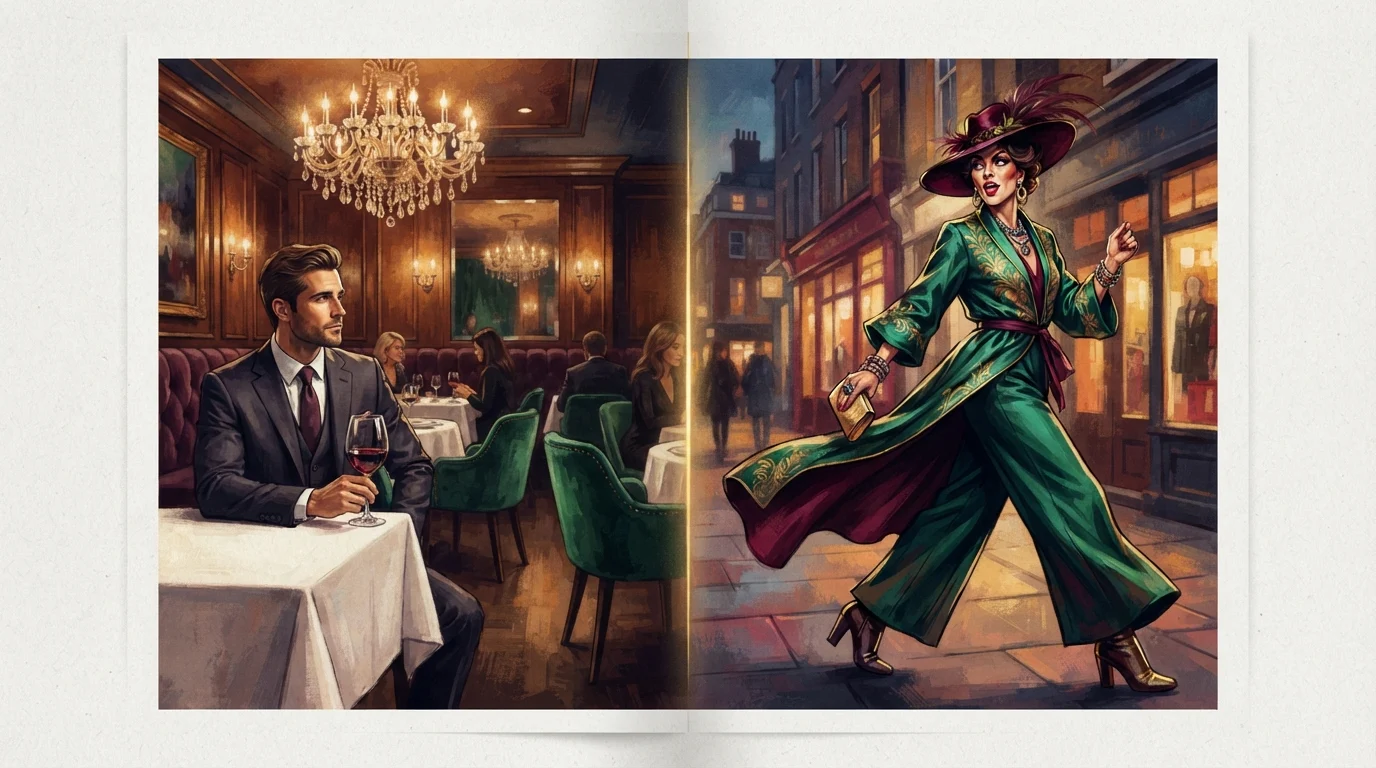
Quick Ans: What does swank mean is one of the most interesting questions about English vocabulary because the word carries multiple meanings and a surprisingly rich history. In everyday conversation, “swank” describes something stylish, elegant, or expensive like a swank hotel or a swank outfit. But it can also mean showing off, boasting, or behaving in an ostentatious way. This three-part word works as an adjective, a noun, and a verb, which makes it both useful and occasionally confusing.
Understanding words like swank helps you navigate both casual conversation and written English with confidence. The word has evolved significantly over centuries, shifting from descriptions of lively horses to swaggering behavior to the fashionable elegance it often conveys today. Knowing how to use it correctly helps you capture exactly the tone you want whether admiring sophistication or gently mocking pretension.
What Does This Word Actually Mean?
Swank functions as three different parts of speech, each with its own shade of meaning.
As an adjective, swank means “imposingly fashionable and elegant” or “characterized by showy display” . A swank restaurant is stylish and upscale. A swank apartment is elegant and impressive. The adjective form is often interchangeable with “swanky,” which is actually the more common variant in modern usage .
As a noun, swank refers to ostentatious behavior, pretension, or elegance by virtue of being fashionable . If someone “cuts a swank,” they are putting on airs or displaying themselves conspicuously.
As a verb, swank means to behave in a way intended to impress people, to show off, or to strut . Someone who “swanks about” is parading around, often in a boastful or attention-seeking manner.
The common thread across all three uses is whether that display is genuinely elegant or merely pretentious depends on context and tone.
Where Did This Word Come From?
The history of swank is more fascinating than most people realize. The word traces back through multiple linguistic pathways, all connected to a Germanic root meaning “to swing, turn, or toss” .
The verb form appeared first in the early 1700s. The word was built on the notion of swinging or swaying the body ostentatiously, which connects naturally to swaggering behavior.
By the mid 1800s, swank had developed into a noun referring to pretension or ostentatious air. A Northamptonshire glossary from 1854 defined it as “an ostentatious air, an affectation of stateliness in the walk” and included the phrase “What a swank he cuts!” .
The adjective swanky appeared around 1842, initially carrying the same sense of swaggering display . Over time, the meaning softened. By the early 1900s, swanky and its clipped form swank began to describe things that were genuinely elegant and fashionable rather than merely ostentatious . English speakers clipped the “y” off swanky around 1913, giving us the adjective swank as it is most commonly used today .
A separate word thread from Old English swancor meaning “pliant” or “bending” also influenced the word’s development, particularly in Scottish English where swank described a lively, supple horse . This thread contributed to the “active” or “lively” sense that occasionally appears in older texts.
How to Use It in Modern Conversation
The versatility of swank makes it useful in several different contexts. The most common usage today is as an adjective describing places, objects, or experiences that are stylish and upscale. A travel writer might describe “a swank island resort” or “a swank Manhattan hotel” . A fashion critic might compliment “a particularly swank outfit” . In these uses, swank is a positive word it signals elegance and good taste.
The verb form carries a more critical edge. To say someone “swanks about” is to suggest they are showing off or behaving in an ostentatious manner . This usage often appears in British English with a disapproving tone. A politician might be criticized for “swanking about in a kilt” or someone might be described as “swanking around in expensive cars” . The verb implies that the display is excessive or in poor taste.
The noun form appears in phrases like “the swank of the fabric” or references to “braggadocio and swank” . It refers to the quality of ostentation itself, the showiness, the pretense, the display.
What Is the Difference Between Swank and Swanky?
Swanky is the more familiar form to most English speakers. It functions primarily as an adjective meaning “impressively fashionable and elegant” or “characterized by showy display” . While swanky can describe something genuinely classy, it often carries a hint of over-the-top display or nouveau riche excess. A “swanky restaurant” might be impressively elegant, but the word sometimes suggests a place that is trying a bit too hard.
Swank, when used as an adjective, is essentially a clipped version of swanky . The two are largely interchangeable in modern usage, though swank may sound slightly more sophisticated or understated. Some style guides treat swank as the more refined choice, reserving swanky for contexts where the showiness is part of the point.
When Not to Use This Word
Swank works best in casual, descriptive, or critical writing. It fits naturally in travel writing, fashion commentary, cultural criticism, and conversational English. It can be positive, neutral, or gently mocking depending on context.
Avoid using swank in formal academic writing or technical documents where precise, unambiguous language is expected. The word’s multiple meanings and its association with ostentation make it too colorful for contexts that demand neutrality. In a business proposal, for instance, describing a venue as “swank” might confuse rather than clarify better to say “upscale,” “elegant,” or “premium.”
Be mindful of tone when using the verb form. “Swanking about” is inherently judgmental. It implies that someone is showing off in a way that invites disapproval. If you want to describe someone’s confident behavior neutrally, “swaggering” or “strutting” might be safer. If you want to be genuinely complimentary, stick to the adjective form describing places and things rather than people’s behavior.
Other Meanings and Contexts
While the core meanings of swank are consistent, the word has accumulated some additional associations over time.
In British English, swank is often used with a tone of disapproval, particularly in its verb form. The Cambridge Dictionary labels the verb as “UK informal disapproving” . This reflects a cultural attitude that visible showing off is somewhat gauche a sentiment that runs through much British usage of the word.
The word has also appeared as a surname and a brand name. The clothing company Swank distributes men’s jewelry and leather goods . This commercial usage has no connection to the word’s meaning, but it occasionally creates confusion in search results.
In some dialects and historical contexts, swank carried a meaning of “lively” or “active,” particularly in Scottish English . This usage is now largely archaic but survives in older literature.
Why This Word Remains Useful
Swank has survived for over three centuries because it fills a specific niche. It captures the intersection of elegance and display the point where style becomes showiness, where sophistication meets ostentation. English speakers need words to describe this gray area between genuine class and mere pretension, and swank does that work efficiently.
The word’s three-part flexibility adds to its value. With a single root, you can describe a place (swank hotel), a quality (the swank of the decor), or a behavior (swanking about). Few words offer that kind of grammatical range.
Finally, swank rewards context awareness. It can be a compliment or a criticism, a neutral descriptor or a pointed judgment. That ambiguity makes it a useful tool for writers and speakers who want to convey subtle attitudes about style, wealth, and display.
FAQs
What does swank mean?
Swank means stylish, elegant, or fashionably impressive when used as an adjective. As a noun, it refers to ostentatious display or elegance. As a verb, it means to show off or behave in a way intended to impress .
Where did the word swank come from?
The word traces to a Germanic root meaning “to swing or sway,” first appearing as a verb in the early 1700s describing swaggering behavior. It evolved through noun and adjective forms, gradually shifting from ostentation toward fashionable elegance by the early 1900s .
Is swank the same as swanky?
Yes, in modern usage they are largely interchangeable as adjectives. Swanky is the older form (dating to about 1842), and swank was created by clipping the “y” off around 1913. Both mean stylish or elegantly showy .
Can swank be an insult?
It can be, particularly in the verb form. To say someone “swanks about” implies they are showing off in an excessive or tasteless way. The adjective form is usually neutral or positive when describing places and things .
Is swank formal or informal?
Swank is informal to semi-formal. It works well in casual conversation, travel writing, and cultural commentary. Avoid it in academic papers, technical documents, or formal business writing where precise, neutral language is needed .
Conclusion
The question of what swank means opens up a word with remarkable depth for its modest length. It can describe a glamorous hotel, a pretentious display, or the act of showing off all from the same three-part root. Its journey from a swaggering verb in 1708 to a clipped adjective for elegance in 1913 shows how language adapts to the ways people actually use it. When you encounter swank in travel writing or conversation, you now know to read the tone carefully: it might be admiring the style, or it might be raising an eyebrow at the showiness. Either way, you will understand exactly what the speaker or writer intends.










4 thoughts on “What Does SWANK Mean? The Complete Guide to Word 2026”