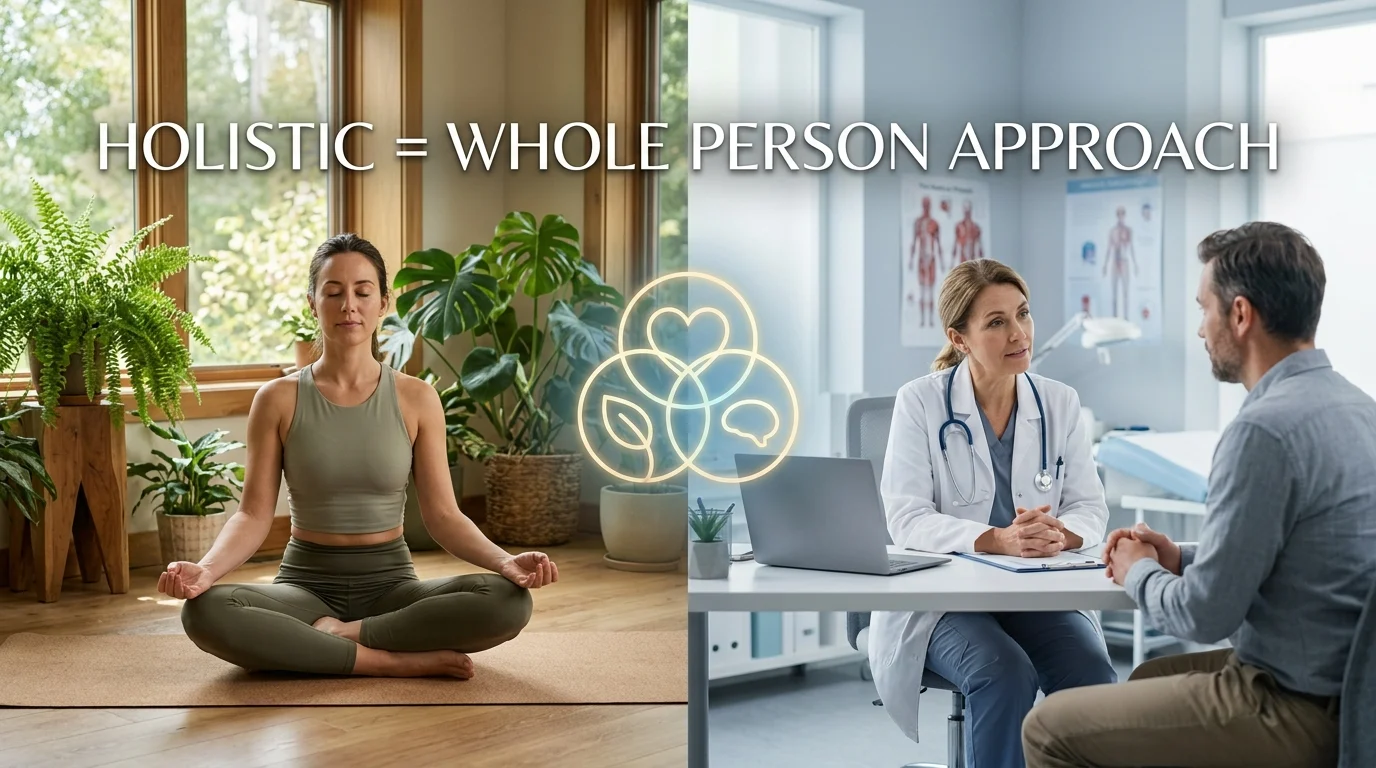
Quick Ans: Holistic meaning is one of the most searched questions about wellness terminology and modern vocabulary. In contemporary contexts, holistic refers to an approach that considers the whole person body, mind, spirit, and emotions rather than just individual parts or symptoms. This term has become a standard concept in healthcare, wellness, education, and personal development discussions. Understanding this term helps you grasp why integrated approaches to health and well being vary across disciplines and why precise language matters in these fields.
Understanding modern terminology helps you follow health trends and interpret wellness discussions. New questions about word meanings appear constantly, and some become cultural touchstones. Holistic is a perfect example. It has moved from philosophical terminology into mainstream media and everyday conversation. Knowing how to use it correctly helps you understand references in healthcare discussions and wellness campaigns.
What Does Holistic Mean?
Holistic is an adjective that describes an approach considering the complete system rather than just its individual components. The term derives from “holism,” the theory that parts of a whole are intimately interconnected and can only be understood by reference to the whole.
The term belongs to both academic and casual communication. It fits perfectly in discussions about healthcare, wellness, education, and personal growth. It also appears in news reports when describing alternative medicine approaches or integrated treatment methods. The tone can be serious, educational, or aspirational.
Sometimes people confuse it with “wholistic” or “alternative.” Other times they use it correctly to describe comprehensive approaches. All versions relate to the same general concept. The distinction usually depends on the specific context and the exact phrasing.
The concept carries significant cultural and philosophical weight. It connects to ancient healing traditions, modern wellness movements, and integrated approaches to life. Understanding the meaning helps you follow health discussions and interpret news stories about well being.
Where Did the Term Come From?
The holistic origin traces back to Greek philosophy. The term combines “holos” (whole) with the suffix ” istic” (relating to). The concept was formally introduced by Jan Smuts in his 1926 book “Holism and Evolution.”
The concept itself is older than the English term. Ancient healing traditions in China, India, and Greece treated patients as complete beings rather than collections of symptoms. As modern medicine became specialized, practitioners created the term to address what they saw as fragmented care.
The term gained prominence in the 20th century as healthcare providers and philosophers refined their understanding of interconnected systems. Some disciplines adopted holistic approaches because they emphasize treating root causes rather than just symptoms. This distinction matters because someone can technically treat a symptom without addressing its underlying source.
The concept spread through healthcare, psychology, and education. Fields like nursing, counseling, and integrative medicine incorporated holistic principles into their frameworks. The term became a symbol of comprehensive care, preventive approaches, and patient centered treatment.
Holistic in Legal Contexts and Media
The term has appeared in countless health documents and news reports across every medium. Understanding these appearances helps you see how the concept evolved.
Medical literature discussing holistic care dates back decades and has been revised numerous times. The field has enacted significant changes in recent years, including updated treatment protocols and integrative care models. The term became a standard part of healthcare vocabulary.
Educational institutions increasingly reference holistic admissions and holistic learning. Schools distinguish holistic approaches from traditional methods and maintain specific procedures for assessment, curriculum design, and student support.
News media frequently uses holistic when reporting wellness trends and healthcare innovations. Headlines like “Holistic approach helps patients recover faster” are common in health news. The term spread through journalism as a concise way to describe comprehensive methods.
Health professionals use holistic in treatment plans, patient consultations, and medical documentation. The term serves practical purposes in healthcare communication, providing a standardized reference to integrated approaches.
The Psychology Behind Holistic Approaches
Modern psychology and wellness theory offer explanations for why practitioners adopt and promote holistic methods. Understanding these theories helps separate scientific concepts from marketing claims.
Deterrence. Health theorists believe holistic approaches are designed to prevent illness rather than just treat symptoms. The emphasis on lifestyle factors, stress management, and emotional well being discourages disease development. This can improve outcomes and reduce healthcare costs.
Public health. Some officials emphasize the protective purpose of holistic health models. The goal is not just treatment but prevention of harm to individuals and communities. This aligns with the government’s interest in protecting citizens.
Personal responsibility. Some advocates believe holistic approaches reinforce accountability. The person is held responsible for their lifestyle choices and self care practices. This reflects societal expectations about responsible behavior.
Rehabilitation. Many holistic health programs include mind body practices. Practitioners often recommend meditation, yoga, and nutrition counseling. This recognizes that health can stem from lifestyle rather than mere genetics.
Cultural norms. Different communities have varying attitudes toward wellness and self care. Holistic approaches can shape cultural norms by clearly defining comprehensive health. Over time, these norms can become internalized and improve public health.
Holistic vs Alternative vs Integrative
These terms are often confused. Understanding the differences helps you use them correctly.
Holistic refers to considering the whole person. The term is used across many disciplines and emphasizes interconnection. This distinction can matter because holistic approaches may include conventional and unconventional methods.
Alternative stands for approaches used instead of conventional medicine. The term is used when describing treatments that replace standard care. The exact definition varies by context.
Integrative stands for combining conventional and complementary approaches. The term is used when describing coordinated care. The choice between holistic, alternative, and integrative often reflects philosophical differences rather than substantive ones.
In casual conversation, people sometimes use these terms interchangeably. A friend might say “I’m trying alternative medicine” when they actually mean holistic or integrative care. This is common but technically imprecise. The distinction usually depends on the specific approach and practitioner philosophy.
Holistic in Modern Culture
The concept has moved beyond academic documents. Today it appears in wellness media, self care campaigns, and everyday language.
Holistic in news. Health news reports frequently mention holistic approaches and integrative medicine. The term has become shorthand for comprehensive wellness in media coverage.
Holistic in wellness campaigns. Organizations use the term in awareness efforts about preventive health and self care. The goal is to educate the public and improve well being.
Holistic in education. Universities and schools teach holistic principles as part of health sciences, psychology, and education courses. The term appears in textbooks, case studies, and research.
Holistic in online discussions. People discuss holistic lifestyles and natural remedies on social media and forums. The term appears in conversations about nutrition, mental health, and fitness.
In business and employment. Holistic approaches can affect workplace wellness programs, leadership development, and corporate culture. The term appears in job descriptions and professional development.
When to Use the Term Holistic
The term works in several different situations. Its precision makes it valuable in health and academic contexts.
The most common usage is in wellness settings. A doctor, therapist, or coach might reference a holistic approach. The tone is formal and precise.
Another common usage is in news reporting. A journalist might write “The clinic offers holistic treatments” to describe an integrated health practice. The tone is informative and neutral.
The term also appears in educational discussions. A speaker might discuss “holistic education” or “holistic development.” The tone is educational and aspirational.
The word can also be used in casual conversation. Someone might say “She takes a holistic approach to life” when discussing a personal philosophy. The tone is conversational and positive.
How to Use Holistic in a Sentence
Using the term correctly helps you communicate clearly. Here are some examples.
As an adjective: “The center provides holistic care for patients.” This is the most common usage. It describes a comprehensive approach.
In a health context: “Holistic medicine considers physical, emotional, and social factors.” This usage draws on the term’s medical origins.
In news reporting: “Experts recommend a holistic approach to stress management.” This is a journalistic usage.
In education: “The school emphasizes holistic development in children.” This is an educational usage.
Plural form: “Therapies described as holistics are increasingly popular.” The plural is uncommon, though the adjective form is widely used.
FAQs
What does holistic mean?
Holistic describes an approach that considers the whole person body, mind, spirit, and emotions rather than just individual parts or symptoms. It is a term referring to comprehensive, interconnected systems.
Is holistic the same as alternative?
Holistic and alternative are similar but not identical. Holistic emphasizes treating the whole person while alternative focuses on replacing conventional methods. The exact definitions and usage vary by context. Some practitioners use holistic, others use alternative or integrative.
What happens in holistic treatment?
Holistic treatment varies by practitioner and condition. It can include nutrition counseling, stress management, meditation, physical therapy, and emotional support. The approach typically addresses lifestyle factors and root causes.
Can you be holistic without being spiritual?
In many contexts, yes. Because holistic focuses on the whole person, someone can address physical, mental, and social factors without spiritual components. Examples include integrative medicine clinics and comprehensive wellness programs.
Can holistic approaches be scientifically validated?
Validation varies by approach. Some holistic methods have strong scientific support, while others do not. The evidence depends on the specific practice, the condition, and the quality of research.
Conclusion
The holistic meaning is clear and culturally significant. It refers to an approach considering the whole person body, mind, spirit, and emotions rather than just individual parts. You can use it in health discussions, news reporting, and wellness conversations. It is a term that connects ancient healing traditions to modern wellness efforts. When you see holistic in a news report or hear the term in conversation, you now know exactly what it means. Use it with precision, and your understanding of this important concept will deepen.
Discover More: