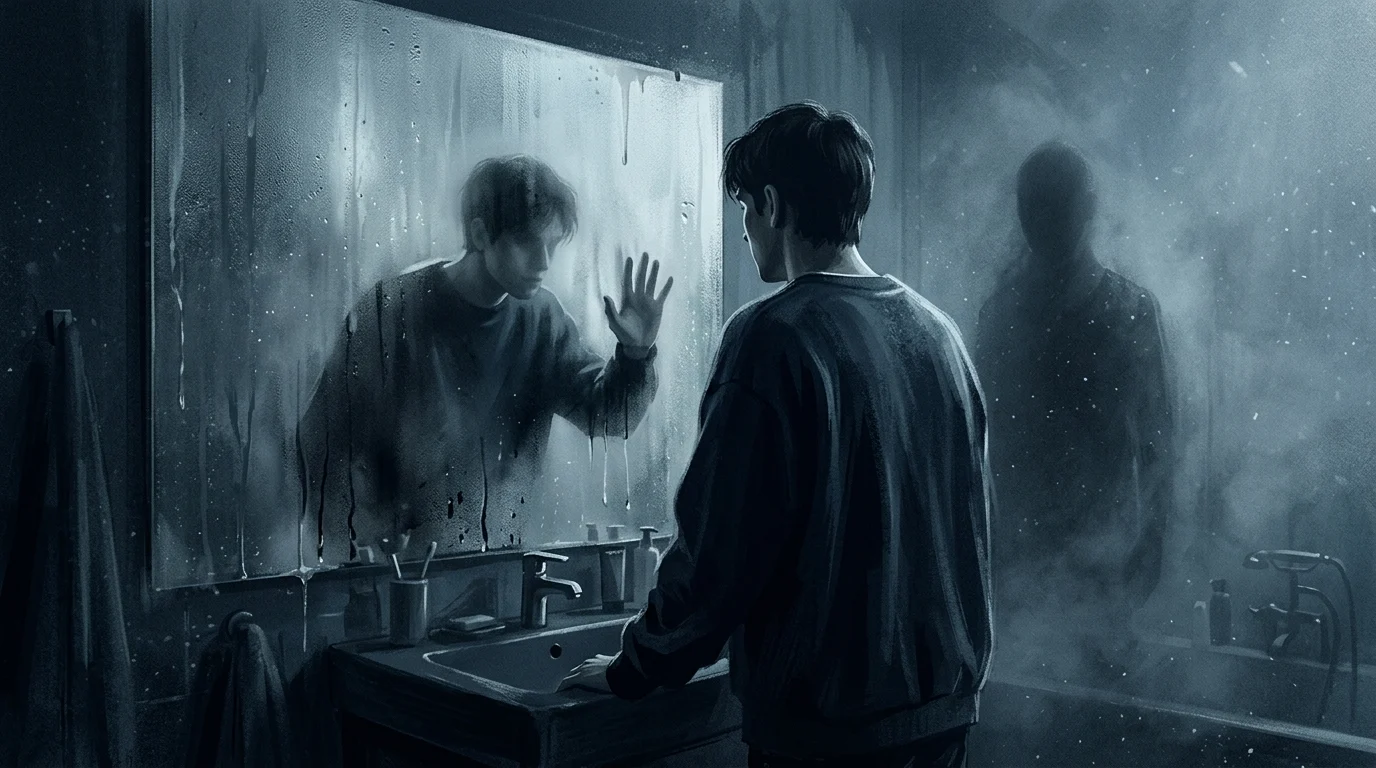
Quick Ans: Doppelganger meaning is one of the most searched questions about supernatural folklore and modern psychology. In German, Doppelganger (Doppelgänger) means “double walker” or “double goer.” It refers to a ghostly double of a living person. This eerie concept has fascinated people for centuries. It appears in literature, film, and everyday conversation. Understanding this term helps you grasp why meeting your exact double is both thrilling and terrifying.
Understanding folklore terms helps you follow cultural discussions and interpret stories. New questions about supernatural concepts appear constantly, and some become cultural touchstones. Doppelganger is a perfect example. It has moved from German folklore into mainstream entertainment and psychological study. Knowing how to use it correctly helps you express yourself and understand references in media.
What Does Doppelganger Mean?
A doppelganger is a ghostly double of a living person. The term comes from German and literally means “double walker.” It refers to a look-alike or alter ego that appears as a shadowy duplicate.
The term belongs to both casual and academic communication. It fits perfectly in discussions about folklore, psychology, and entertainment. It also works in everyday conversation when describing someone who looks exactly like another person. The tone can be eerie, playful, or curious.
Sometimes people write it with the umlaut as Doppelgänger. Other times they write it without as Doppelganger. Both versions mean the same thing. The choice usually depends on the writer’s preference or keyboard availability.
The concept carries deep cultural significance. It connects to ancient beliefs about the soul, death, and identity. Understanding the meaning helps you appreciate its role in stories and psychology.
Where Did the Term Come From?
The doppelganger origin traces back to German folklore. The word is a combination of “doppel” (double) and “gänger” (goer or walker). Together they describe a person’s double that walks alongside them.
The concept itself is older than the word. Ancient cultures believed that seeing your double was an omen of death. The ancient Egyptians believed a person had a ka (spirit double). The Norse believed in fylgja (a supernatural companion). The Greeks and Romans told stories of phantom twins.
The term entered English in the early 19th century. German writers like Jean Paul and E.T.A. Hoffmann popularized the idea in their stories. Hoffmann’s tale “The Devil’s Elixirs” featured a protagonist haunted by his double.
The concept spread through Romantic literature. Writers explored the idea of the divided self. The doppelganger became a symbol of inner conflict, hidden desires, and impending doom.
Doppelgangers in Literature and Film
The doppelganger has appeared in countless stories across every medium. Understanding these appearances helps you see how the concept evolved.
Fyodor Dostoevsky’s “The Double” (1846) tells the story of a government clerk who meets his exact double. The double is more confident and successful, slowly taking over the protagonist’s life. It is one of the most famous literary treatments of the theme.
Robert Louis Stevenson’s “Strange Case of Dr Jekyll and Mr Hyde” (1886) explores the doppelganger as a split personality. Dr. Jekyll’s dark side takes physical form as Mr. Hyde. The story became a cultural touchstone for the duality of human nature.
Fight Club (1999) features a narrator who discovers his best friend is actually his own alter ego. The film explores identity, consumerism, and mental illness through the doppelganger motif.
Black Swan (2010) follows a ballerina who encounters a rival who may be her double. The film blurs the line between reality and delusion.
Us (2019) tells the story of a family confronted by their exact doubles. The film uses the doppelganger concept to explore class, privilege, and identity in America.
The Psychology Behind Doppelgangers
Modern psychology offers explanations for why people see their doubles. Understanding these theories helps separate folklore from reality.
Neurological explanations. Some scientists believe doppelganger experiences are caused by brain malfunctions. Damage to the parietal lobe can disrupt how the brain processes the body’s location. This can create the sensation of an invisible presence or a double.
Autoscopic hallucinations. This is a rare condition where a person sees a phantom copy of themselves in external space. It can be caused by epilepsy, migraines, or brain tumors. The hallucination is usually brief and can be frightening.
Heautoscopy. This is a more intense form of autoscopic hallucination. The person sees their double and may feel they are looking at themselves from outside their body. It can involve seeing, hearing, and feeling the double.
Psychological projection. Some theorists believe doppelgangers represent repressed parts of the self. The double acts out desires or behaviors the person cannot accept. This aligns with the Jekyll and Hyde model of the divided self.
Grief and loss. Some people report seeing deceased loved ones, which can feel like encountering a doppelganger. These experiences are usually comforting rather than frightening.
Doppelganger vs Evil Twin
These two terms are often confused. Understanding the difference helps you use them correctly.
A doppelganger is a supernatural or psychological double. It is often a ghostly apparition or a hallucination. It may be a sign of bad luck or death. The double is usually identical in appearance but may have a different personality.
An evil twin is a biological or literal twin who is evil. The term is used in soap operas, comic books, and conspiracy theories. The evil twin is a separate person, not a supernatural duplicate.
In casual conversation, people use doppelganger to describe anyone who looks exactly like someone else. A friend might say “You have a doppelganger in my class” meaning someone who resembles you. This is a playful, non-supernatural usage.
Doppelgangers in Modern Culture
The concept has moved far beyond folklore. Today it appears in memes, social media, and everyday language.
Doppelganger memes. People post photos of strangers who look exactly like celebrities. The caption “found their doppelganger” is common on Reddit and Instagram. The humor comes from the uncanny resemblance.
Doppelganger accounts. On social media, fake accounts that impersonate celebrities are sometimes called doppelganger accounts. They copy photos and posts to deceive followers.
Doppelganger week. This was a viral social media trend where people changed their profile pictures to photos of celebrities they resemble. It spread across Facebook and Twitter.
In business. The term “doppelganger brand image” describes a rival brand that mimics another’s look and feel. It is used in marketing and brand strategy.
In technology. “Doppelganger” is sometimes used for digital duplicates, such as deepfake videos or AI-generated likenesses. These raise concerns about identity theft and misinformation.
When to Use the Word Doppelganger
The term works in several different situations. Its flexibility is one reason it became so popular.
The most common usage is describing someone who looks exactly like another person. A comment like “She is your doppelganger” is playful and descriptive. The tone is usually light and curious.
Another common usage is in supernatural or horror contexts. A story about a character meeting their double uses the term to create dread. The tone is eerie and ominous.
The term also appears in psychological discussions. A therapist might ask about a patient’s “doppelganger experience” to understand a hallucination. The tone is clinical and exploratory.
The word can also be used metaphorically. A writer might call a rival company a “corporate doppelganger.” The tone is analytical and critical.
How to Use Doppelganger in a Sentence
Using the term correctly helps you communicate clearly. Here are some examples.
As a noun: “I saw your doppelganger at the mall today.” This is the most common usage. It describes a person who looks like someone else.
In a supernatural context: “According to folklore, seeing your doppelganger means impending death.” This usage draws on the term’s eerie origins.
In psychology: “The patient reported an autoscopic hallucination, a type of doppelganger experience.” This is a clinical usage.
In business: “The startup is a doppelganger of the industry leader.” This is a metaphorical usage.
Plural form: “The movie features multiple doppelgangers.” The plural is doppelgangers.
FAQs
What does doppelganger mean?
A doppelganger is a ghostly double of a living person. The German word literally means “double walker.” It can also describe anyone who looks exactly like someone else.
Is a doppelganger real?
Doppelgangers are part of folklore and psychology. Some experiences may be caused by neurological conditions. In everyday usage, the term describes a look-alike, which is very real.
What happens if you see your doppelganger?
In folklore, seeing your double is an omen of death or bad luck. From psychology, it may be a hallucination caused by a brain condition. In everyday life, it usually means you saw someone who looks like you.
What is the difference between a doppelganger and an evil twin?
A doppelganger is a supernatural or psychological double. An evil twin is a literal twin who is evil. The terms are often confused but have different meanings.
Can a doppelganger be a good thing?
In most folklore, doppelgangers are ominous. However, in modern usage, finding your doppelganger can be fun and fascinating. Many people enjoy discovering their look-alikes.
Conclusion
The doppelganger meaning is clear and fascinating. It refers to a ghostly double of a living person, derived from German words meaning “double walker.” You can use it in folklore discussions, psychological analysis, and everyday conversation. It is a term that connects ancient beliefs to modern entertainment. When you see a doppelganger in a story or hear the word in conversation, you now know exactly what it means. Use it with curiosity, and your understanding of this eerie concept will deepen.
Discover More:-
- Pushing P Meaning: What This Viral Slang Phrase Stands For 2026
- What Does GTS Mean? Texting & Slang Explained 2026







2 thoughts on “Doppelganger Meaning: What It Really Means & Examples 2026”