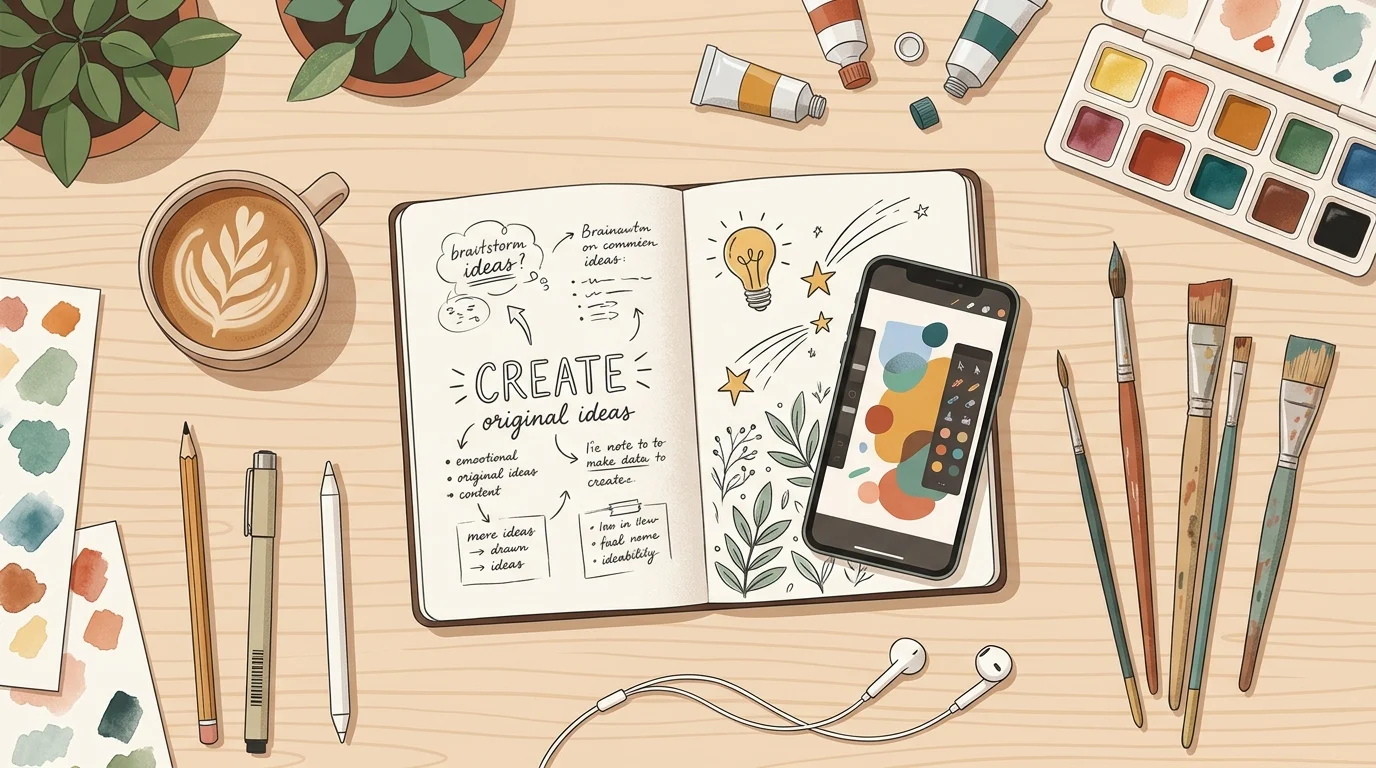
Quick Answer: Most of the time, OC means either “Original Content” or “Original Character.” If it appears next to a post, photo, or video, it usually means the creator made it themselves. If it appears next to a fictional person in art, fanfiction, or roleplay, it usually means a character invented by the creator, not one taken from an existing story.
If you have spent any time on Reddit, TikTok, Discord, or in an art community, you have almost certainly seen the letters OC tucked into a caption, a title, or a comment. It is one of those small abbreviations that looks simple but changes meaning depending on where you see it. That is exactly why so many people search for the meaning of OC, and why the answer is rarely just one definition.
This guide breaks down every common meaning of the abbreviation in plain language, with real examples so you can tell them apart at a glance. It draws on how the term is actually used across social media, fandom, gaming, and texting, rather than on a single dictionary entry, because context is what decides the meaning here.
What Does OC Mean? The Two Main Answers
There are two meanings that cover the vast majority of everyday uses of the abbreviation online. Once you know both, most cases become easy to read.
1. OC Means Original Content
On social media, it stands for Original Content. It is a label creators use to say, “I made this myself.” You will often see it in brackets at the start of a title, such as “[OC] Sunset over the lake I painted last night,” or in a caption like “New drawing, OC.”
The point of the label is credit and honesty. On platforms where reposting is common, marking something as original tells viewers that this is not a repost, a screenshot from somewhere else, or a meme borrowed from another account. It is the poster’s own photo, artwork, video, writing, or idea. Many communities even have rules or flair for OC posts, because original work is valued differently from shared content.
For example, a photographer posting their own street photo might tag it as original to make clear they took it. A meme maker posting a joke they wrote themselves might do the same. In both cases, it is about authorship, not about a character or a story.
2. OC Means Original Character
In art, writing, fandom, and roleplay communities, it stands for Original Character. This is a fictional character that someone invented themselves, rather than a character from an existing book, show, game, or film.
Suppose a fan of a fantasy series draws a brand new wizard who does not appear in the books, gives her a name, a backstory, and a personality, and then shares the drawing online. That wizard is the artist’s creation. She belongs to the creator’s imagination, even if she lives in a world inspired by the series.
This meaning is huge in fanfiction, digital art, animation, and tabletop roleplaying. People develop OCs over years, draw them in different outfits, write stories about them, and roleplay as them with friends. When someone says “meet my OC,” they are introducing a character they created, much like an author introducing a new hero.
How to Tell Which Meaning Is Intended
The quickest way to work out which meaning of the abbreviation you are looking at is to check what the letters are attached to. If it describes a post, image, video, or piece of work, it almost always means Original Content. If it describes a person, a name, a design, or a backstory, it almost always means Original Character.
A few clues help:
- The abbreviation next to a media post: “[OC] My first short film” means Original Content.
- It with a name or description: “My OC, Mara, is a retired sailor turned detective” means Original Character.
- It in an art request: “Commissions open, OCs only” means the artist will draw your original characters, not existing characters.
- It in a fandom discussion: “Do you prefer canon characters or OCs?” is comparing official characters with fan-created ones.
Sometimes both meanings overlap. An artist posting a drawing of their own invented character could fairly call the drawing original content and the character an original character. The sentence around it will usually make the intended sense clear.
OC in Texting, Social Media, and Fandom
On TikTok and Instagram, it in a caption usually means Original Content. Creators add it to signal that a video, photo, or edit is their own work, which can matter for credit and for how the algorithm and audience treat reposts. On Reddit, many subreddits use an [OC] tag in post titles for the same reason, and some require it for original work.
On Tumblr, Twitter/X, and Discord art servers, it more often means Original Character. Artists share character art, writers share character lore, and roleplayers introduce their OCs before a story begins. In gaming communities, a player’s custom hero, avatar, or roleplay persona may also be called their character, especially when the character has a developed personality beyond just a username and skin.
In texting between friends, it is less common, but it still appears. A friend might send a meme they made and write “OC, be nice,” meaning they created it. The meaning is still Original Content in that case, just used casually.
Other Meanings of OC You Might Come Across
Because the abbreviation is just two letters, it has picked up other meanings outside of online creative spaces. These are less common in everyday scrolling, but they are worth knowing so you are not caught out.
- Orange County: In California-related conversations, it often means Orange County, the county south of Los Angeles. A post about county beaches is almost certainly about the place, not about original content.
- Out of Character: In roleplay and fanfiction discussion, it is sometimes used for “out of character,” describing a moment when a character acts in a way that does not fit their established personality. For example, “That scene felt OC for her” means it felt unlike her. Context usually separates this from Original Character, but it can be confusing because both appear in the same communities.
- Of Course: In fast texting, some people shorten “of course” to OC, although “ofc” is the far more common abbreviation for that phrase.
- Only Child: In personal or family discussions, it can occasionally mean only child, as in “I’m an OC, so I grew up without siblings.”
- Officer Commanding: In military contexts, it is a rank-related title meaning Officer Commanding, the officer in charge of a unit.
- Overclocked / Overclocking: In PC hardware talk, it describes a processor or graphics card pushed to run faster than its factory speed.
- Obsessive-Compulsive: In informal medical shorthand, it sometimes appears as part of OCD, but it on its own is rarely used this way in casual conversation.
None of these replaces the two main online meanings. They simply show why reading the surrounding conversation matters more than memorising a single definition.
OC vs Canon: Why the Distinction Matters
In fandom, people often contrast OCs with canon characters. Canon characters are the official ones created by the original author or studio. They appear in the books, films, or games themselves. OCs, by contrast, are invented by fans and other creators.
This distinction matters because it sets expectations. A story featuring only canon characters is working inside the official world as given. A story featuring OCs is adding something new to that world, or building a new world altogether. Neither is better than the other; they are simply different kinds of creativity. Many writers enjoy mixing the two, placing their character alongside canon characters to explore fresh angles on a familiar setting.
The same idea applies to Original Content. Just as a fan-created character is distinct from a canon character, original content is distinct from a repost. In both cases, the abbreviation marks something as newly created rather than borrowed.
Examples of OC in Real Sentences
Seeing the abbreviation in context is the fastest way to learn it. Here are examples covering the most common uses:
- “[OC] I photographed this street market at dawn.” (Original Content: the photo is the poster’s own work.)
- “This is my OC, Juno. She is a mechanic who repairs robots in a desert city.” (Original Character: Juno is invented by the creator.)
- “OC art trade, anyone? I will draw your character if you draw mine.” (Original Character: an exchange of character art.)
- “Please credit the artist when you share OC.” (Original Content: give credit for original work.)
- “We are heading to the OC this weekend for the beach.” (Orange County: a place, not a creative term.)
- “My graphics card is OC, so it runs a bit hotter.” (Overclocked: a hardware term.)
Notice how the sentence around it does almost all the work. You rarely need to guess if you read one line before and one line after it.
FAQs
What does OC stand for in slang?
In slang, it most often means Original Content or Original Character. On social media posts it usually means Original Content, while in art and fandom spaces it usually means Original Character. The surrounding post will show which one fits.
What does OC stand for on TikTok?
On TikTok, it usually means Original Content. A creator writing it in a caption is saying the video is their own creation, not a repost or a copy of someone else’s video.
What does OC stand for in roleplay?
In roleplay, it usually means Original Character, the character a player invented and controls. It can occasionally mean out of character when discussing behaviour, but Original Character is the far more common use.
Is OC the same as O.C.?
Yes, in most online writing OC and O.C. refer to the same abbreviations. The version without periods is much more common in usernames, captions, and tags.
What does OC stand for in art?
In art, it means Original Character. Artists use it for characters they designed themselves, including their appearance, personality, and backstory, as opposed to fan art of existing characters.
Conclusion
So, what does OC stand for? In everyday online life, it means Original Content when it describes a post or piece of work, and Original Character when it describes a fictional person someone invented. Those two meanings explain nearly every use you will meet on social media, in art communities, and in fandom.
The other meanings, from Orange County to overclocking, only appear in their own specific contexts, and the conversation around the abbreviation will almost always point you to the right one. Next time you see it, read the sentence around it, check whether it describes a piece of work or a character, and you will know exactly what it means.