Quick Answer: Bespoke means made specially for one person, rather than mass-produced. It began in tailoring, where a suit was cut to fit a single customer, and today it describes anything created to order, from furniture and jewellery to software and travel plans.
If you have seen the word bespoke on a shop sign, a website, or a menu, you may have wondered whether it is simply a fancy way of saying custom. In many cases it is, but the word carries a particular history that makes it worth understanding properly. Knowing what bespoke really means helps you judge whether a product is genuinely made for you or whether the label is being used mainly as marketing.
This guide explains the meaning of bespoke in plain language, traces where it came from, and shows how it is used today. You will also learn the difference between bespoke, made-to-measure, and ready-made, and what questions to ask before you pay a premium for something described as bespoke.
What Does Bespoke Mean in Simple Terms?
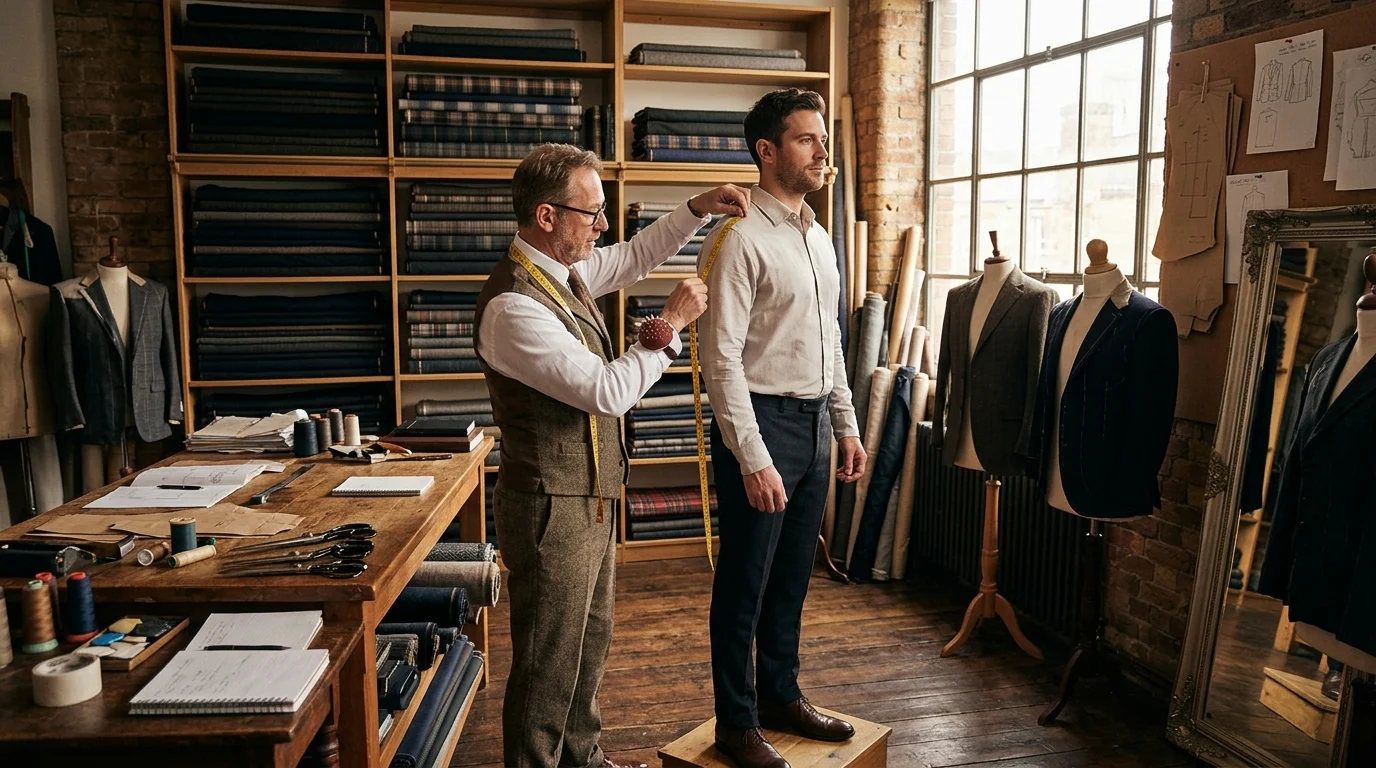
At its simplest, bespoke describes something that is ordered before it is made and shaped around the needs of one buyer. A bespoke suit is not picked off a rail in a standard size. It is planned, measured, cut, and finished for one person. The same idea applies beyond clothing. A bespoke kitchen is designed around the shape of your room and the way you cook. A bespoke holiday is planned around your dates, interests, and budget rather than following a fixed tour.
The key idea is that the customer comes first in the process, not last. In mass production, the product is finished and then the customer chooses from what already exists. In bespoke work, the customer gives instructions first, and the product is built around those instructions. That is why bespoke items often take longer to make and usually cost more. Time, skill, and individual attention are built into the price.
Bespoke is an adjective, so it describes a noun. You can have a bespoke suit, a bespoke website, a bespoke wedding ring, or a bespoke training plan. You will also sometimes hear the maker described in the same way, such as a bespoke tailor or a bespoke furniture maker. In both cases the meaning is the same: the work is personal, not standard.
Where Does the Word Bespoke Come From?
Bespoke comes from the older verb bespeak, which meant to order or arrange something in advance. In tailoring, when a customer chose a length of cloth, that cloth was said to be spoken for. It was set aside for that customer and would not be sold to anyone else. Over time, the form bespoke came to describe the finished item that had been ordered in this way.
The word is closely tied to London tailoring, especially Savile Row, a street famous for traditional suit making. There, the classic bespoke process involved taking detailed measurements, drafting a pattern from scratch for that customer, and holding several fittings while the garment was made. That tradition is still the standard against which other uses of the word are judged.
The word became more common in general English from the mid-1700s onward, and its use has grown sharply in recent years. As shoppers have become more interested in handmade, personal, and small-batch products, businesses in many industries have adopted the word to signal care and individuality. That wider use is part of why the word now sometimes feels vague: it is used for both a painstaking traditional craft and a simple choice of colour or size.
Bespoke vs Made-to-Measure vs Ready-Made
These three terms are often confused, and understanding the difference can save you money and disappointment. Ready-made, also called off-the-peg or off-the-rack, means the item is made in standard sizes and sold finished. You try it, you buy it, and you take it home the same day. It is the fastest and usually the cheapest option, but the fit and features are fixed.
Made-to-measure sits in the middle. The maker starts with an existing pattern or template and adjusts it to your measurements and choices. You may pick the fabric, the lining, or the finish, and the fit will be closer than a standard size. However, the underlying pattern is not created from nothing for you alone. Many shops that advertise bespoke services are in fact offering made-to-measure, which can still be excellent, but it is not the same process.
True bespoke, in the traditional tailoring sense, starts with a blank page. The pattern is drafted from your measurements alone, and the garment is built and adjusted through multiple fittings. Nothing is reused from another customer. Outside tailoring, the same test applies: is the item designed from scratch for you, or is a standard product being adjusted? Asking that question is the quickest way to tell which level of service you are really being offered.
How Bespoke Is Used in Modern Business
Today bespoke appears far beyond the tailor shop. Software companies offer bespoke software, meaning a program built for one business rather than sold to thousands of users. Hotels and travel firms offer bespoke itineraries. Jewellers offer bespoke rings, where the customer chooses the stone, the metal, and the setting. Even food businesses use the word for menus designed for one event or one dietary need.
In business language, bespoke is often used as the opposite of generic or off-the-shelf. A bespoke solution is presented as a better fit because it solves a specific problem rather than forcing the customer to adapt to a standard product. That can be genuinely valuable, especially when standard options do not fit well. A business with unusual workflows, for example, may benefit far more from software built around its own processes than from a general tool.
At the same time, the word has become a popular marketing term, similar to artisanal, curated, or handcrafted. Some sellers use it for any product with a few choices, such as picking a colour or adding a name. That does not automatically make the product bad, but it does mean the word alone tells you very little. The details of the process matter far more than the label on the front.
Examples of Bespoke in Everyday Sentences
Seeing the word in context makes its meaning clearer. Here are some natural examples:
- She ordered a bespoke dress for her wedding, with fittings spread over three months.
- The company built a bespoke booking system because no standard software matched its needs.
- He prefers bespoke shoes because standard sizes never fit his feet comfortably.
- The hotel arranged a bespoke tour of the city, based on the family’s interests.
- They offer bespoke gift boxes, so you can choose every item inside.
Is Bespoke Always Worth the Extra Cost?
Bespoke work is usually more expensive, and whether it is worth it depends on what you need. It tends to be worth it when fit matters a great deal, when standard options genuinely do not work, or when the item is meant to last a long time. A well-made suit, a kitchen, or a piece of jewellery that you will use for years can justify the extra time and cost.
It may not be worth it when the choices are only cosmetic, when you need something quickly, or when a good standard product already does the job. A bespoke label on a simple item with one or two options may add cost without adding real value. Before committing, ask what is actually made from scratch, how many fittings or revisions are included, how long the work will take, and what happens if the result does not fit or suit you.
A trustworthy maker will answer those questions clearly. Vague answers, pressure to pay in full upfront without a clear plan, or a refusal to explain the process are warning signs. Good bespoke work is a collaboration, and the maker should want to understand your needs in detail before starting.
Common Mistakes When Using the Word Bespoke
One common mistake is using bespoke to mean simply expensive or luxurious. Price alone does not make something bespoke. A very expensive ready-made bag is still ready-made, no matter how fine the materials are. Another mistake is using it for anything personalised after the fact, such as engraving a name on a standard product. Personalisation can be a nice touch, but it is not the same as building the product to order.
Frequently Asked Questions
What does bespoke mean in fashion?
In fashion, bespoke means clothing made to order for one person, traditionally cut from a pattern created from that person’s own measurements, with fittings along the way. It is the most personal level of tailoring, above made-to-measure and ready-made.
Is bespoke the same as custom-made?
In everyday use the two terms are very close, and custom-made is a good plain synonym. Strictly, traditional bespoke implies a from-scratch process, while custom-made can include simpler adjustments to a standard product. In casual conversation, most people use them interchangeably.
Why is bespoke more expensive?
Bespoke work takes more time, more skill, and more individual attention. Measurements, design, fittings, and hand finishing all add labour, and materials are often bought for a single order rather than in bulk. That is why the price is higher than a mass-produced equivalent.
Can software or services be bespoke?
Yes. Bespoke software is built for one organisation’s needs, and bespoke services are designed around one client’s requirements. The same principle applies: the work starts with the customer’s needs, not with a finished standard product.
Is bespoke a British word?
Bespoke is more common in British English than in American English, where custom-made or custom-tailored is often preferred. However, it is widely understood in both, and it is now used internationally in fashion, business, and marketing.
Conclusion
Bespoke means made specially for one person, ordered in advance and shaped around that person’s needs. It began with tailors setting cloth aside for a single customer, and it now covers everything from suits and rings to software and holidays. The word is most useful when it describes a real from-scratch process, and least useful when it is used as a vague label for luxury.
When you next see the word bespoke, look past the label and ask how the item is actually made. If the answer shows genuine individual design, careful measurement, and work built around you, then bespoke is exactly the right word, and the result is likely to fit you in every sense.