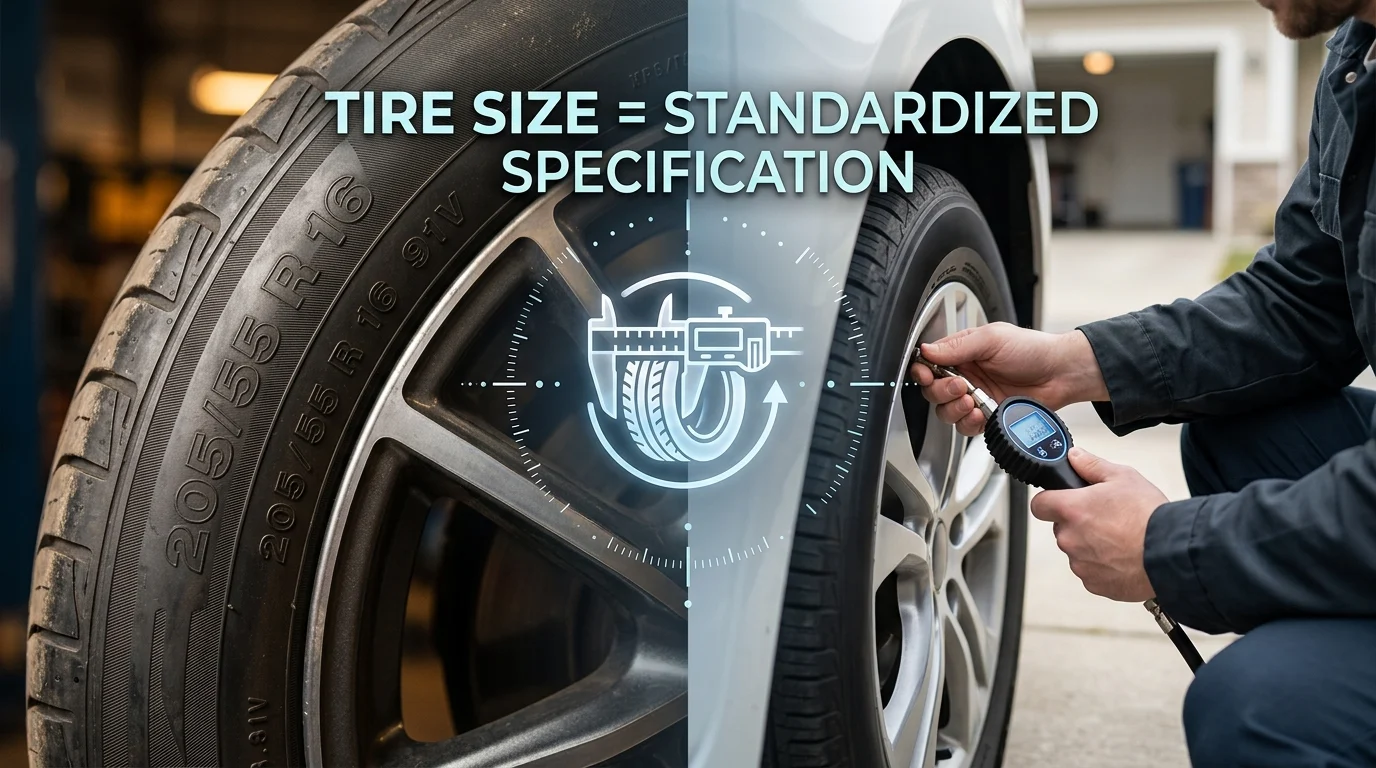
Quick Ans: Tire size meaning is one of the most searched questions about automotive terminology and vehicle maintenance vocabulary. In contemporary contexts, tire size refers to a standardized alphanumeric code printed on a tire’s sidewall that indicates its width, aspect ratio, construction type, rim diameter, load index, and speed rating. This term has become a standard concept in automotive culture, vehicle maintenance discussions, and driving safety conversations. Understanding this term helps you grasp why proper tire selection matters across vehicle types and why precise language matters in modern automotive care.
Understanding modern terminology helps you follow automotive trends and interpret vehicle discussions. New questions about word meanings appear constantly, and some become cultural touchstones. Tire size is a perfect example. It has moved from mechanic shop jargon into mainstream consumer awareness and everyday conversation. Knowing how to use it correctly helps you understand references in vehicle discussions and automotive campaigns.
What Does Tire Size Mean?
Tire size is a noun phrase that describes the standardized dimensions and specifications of a tire, typically expressed as a combination of numbers and letters on the sidewall. The term combines “tire” (a rubber covering around a wheel) with “size” (dimensions or measurements), creating a phrase for the specific measurements that determine a tire’s fit and performance characteristics.
The term belongs to both casual and professional communication. It fits perfectly in discussions about vehicle maintenance, automotive repair, car buying, and driving safety. It also appears in news reports when describing vehicle recalls, safety standards, or automotive innovations. The tone can be technical, informative, or practical.
Sometimes people confuse it with “wheel size” or “rim size.” Other times they use it correctly to describe the complete tire specification. All versions relate to the same general concept. The distinction usually depends on the specific context and the exact phrasing.
The concept carries significant safety and economic weight. It connects to vehicle performance, fuel efficiency, and driving safety. Understanding the meaning helps you follow automotive discussions and interpret news stories about vehicle maintenance.
Where Did the Term Come From?
The tire size origin traces back to the early 20th century as automobiles became mass produced. The term combines “tire” (from “attire,” meaning clothing or covering) with “size” (from Old French “sise,” meaning dimensions). The concept was popularized through automotive manufacturing, standardization efforts, and eventually consumer education.
The concept itself is older than the standardized format. Early tires were sized by simple measurements. As vehicles became more sophisticated, manufacturers created standardized systems to ensure proper fit and safety. The modern P metric system emerged in the 1970s and became the dominant standard in North America.
The term gained prominence as vehicle ownership expanded and consumers became more involved in maintenance decisions. Some manufacturers adopted tire size language because they emphasize the precision required for proper vehicle operation. This distinction matters because someone can technically install any tire that fits while still compromising safety and performance.
The concept spread through automotive manuals, tire retailer signage, and consumer education campaigns. Fields like mechanical engineering, automotive repair, and transportation safety incorporated tire size concepts into their frameworks. The term became a symbol of automotive literacy, vehicle maintenance responsibility, and driving safety awareness.
Tire Size in Legal Contexts and Media
The term has appeared in countless automotive articles and safety reports across every medium. Understanding these appearances helps you see how the concept evolved.
Automotive literature discussing tire sizes dates back to the early 1900s and has been revised numerous times. The field has enacted significant changes in recent years, including updated safety standards and tire labeling requirements. The term became a standard part of vehicle maintenance vocabulary.
Educational institutions increasingly reference tire sizes and automotive safety. Schools distinguish proper tire selection from inadequate maintenance and maintain specific procedures for driver education, automotive training, and safety instruction.
News media frequently uses tire size when reporting vehicle recalls and safety innovations. Headlines like “Wrong Tire Size Blamed for Highway Accidents” are common in automotive news. The term spread through journalism as a concise way to describe tire specification issues.
Automotive professionals use tire size in service consultations, repair documentation, and safety inspections. The term serves practical purposes in vehicle communication, providing a standardized reference to tire specifications.
The Engineering Behind Tire Sizes
Modern automotive engineering and tire science offer explanations for why tire sizes matter and how they affect vehicle performance. Understanding these theories helps separate scientific concepts from marketing claims.
Load capacity. Tire engineers believe tire sizes are designed to support specific vehicle weights rather than just fit wheels. The emphasis on load index, proper inflation, and weight distribution prevents tire failure. This can protect drivers but also prevent accidents.
Speed rating. Some engineers emphasize the performance purpose of speed ratings. The goal is not just legal compliance but prevention of high speed tire failure. This aligns with safety standards and performance expectations.
Fuel efficiency. Some manufacturers believe proper tire sizes reinforce fuel economy. The driver is held responsible for maintaining correct tire pressure and specifications. This reflects societal expectations about environmental responsibility and cost savings.
Handling characteristics. Many tire sizes include performance implications. Engineers often recommend specific sizes for optimal handling, braking, and cornering. This recognizes that vehicle dynamics depend on proper tire selection.
Safety standards. Different countries have varying requirements for tire labeling and specifications. Tire sizes can shape safety norms by clearly defining minimum requirements. Over time, these norms can become internalized and change consumer expectations.
Tire Size vs Wheel Size vs Rim Size
These terms are often confused. Understanding the differences helps you use them correctly.
Tire size refers to the complete specification of the rubber tire including width, aspect ratio, construction, and diameter. The term is used across many contexts and emphasizes the full measurement. This distinction can matter because tire size includes dimensions beyond just diameter.
Wheel size stands for the complete wheel assembly including rim and tire dimensions. The term is used when describing the overall wheel unit. The exact definition varies by context.
Rim size stands for the metal wheel component dimensions, typically the diameter and width. The term is used when describing the metal structure that holds the tire. The choice between tire size, wheel size, and rim size often reflects technical precision rather than substantive differences.
In casual conversation, people sometimes use these terms interchangeably. A driver might say “I need new wheels” when they actually mean tires or rims. This is common but technically imprecise. The distinction usually depends on the specific component being discussed and the communication context.
Tire Size in Modern Culture
The concept has moved beyond mechanic shops. Today it appears in automotive media, consumer awareness campaigns, and everyday language.
Tire size in news. Automotive news reports frequently mention tire sizes and vehicle safety trends. The term has become shorthand for proper vehicle maintenance in media coverage.
Tire size in safety campaigns. Organizations use the term in awareness efforts about driving safety and vehicle maintenance. The goal is to educate the public and improve road safety.
Tire size in education. Driving schools and automotive programs teach tire size concepts as part of vehicle operation and maintenance courses. The term appears in textbooks, case studies, and research.
Tire size in online discussions. People discuss tire size experiences and vehicle advice on social media and forums. The term appears in conversations about car modifications, maintenance, and safety.
In business and employment. Tire size knowledge can affect fleet management, transportation logistics, and automotive service culture. The term appears in discussions about vehicle maintenance and operational efficiency.
When to Use the Term Tire Size
The term works in several different situations. Its precision makes it valuable in automotive and safety contexts.
The most common usage is in vehicle maintenance settings. A mechanic, tire retailer, or car owner might reference tire size. The tone is practical and precise.
Another common usage is in news reporting. A journalist might write “Correct tire size is essential for safety” to describe maintenance requirements. The tone is informative and neutral.
The term also appears in educational discussions. An instructor might discuss “tire size specifications” or “vehicle maintenance standards.” The tone is educational and analytical.
The word can also be used in casual conversation. Someone might say “I need to check my tire size” when discussing their car. The tone is conversational and practical.
How to Use Tire Size in a Sentence
Using the term correctly helps you communicate clearly. Here are some examples.
As a noun phrase: “The tire size is printed on the sidewall.” This is the most common usage. It describes the standardized specification.
In a maintenance context: “Using the wrong tire size can affect speedometer accuracy.” This usage draws on the term’s engineering origins.
In news reporting: “Experts warn that incorrect tire sizes can lead to blowouts.” This is a journalistic usage.
In education: “The course explores how tire size affects vehicle handling.” This is an educational usage.
Plural form: “Tire sizes vary widely across vehicle types.” The plural is common, and the term is widely used in both singular and plural forms.
FAQs
What does tire size mean?
Tire size describes the standardized dimensions and specifications of a tire, including width, aspect ratio, construction type, rim diameter, load index, and speed rating. It is a term referring to the alphanumeric code that determines proper fit and performance.
Is tire size the same as wheel size?
Tire size and wheel size are similar but not identical. Tire size emphasizes the rubber tire dimensions while wheel size encompasses the complete assembly including rim and tire. The exact definitions and usage vary by context. Some people use tire size, others use wheel size or rim size.
What happens if you use the wrong tire size?
Using the wrong tire size can affect speedometer accuracy, fuel efficiency, handling, and safety. It can cause uneven wear, poor braking, and increased risk of blowouts. The arrangement typically requires matching the manufacturer’s specifications.
Can you change tire size from the original?
In many contexts, yes. Because tire size affects vehicle performance, some drivers change sizes for aesthetic or performance reasons when both the vehicle and tire specifications allow. Examples include plus sizing for appearance and off road tires for capability. However, changes should respect load capacity and clearance requirements.
Can different tire sizes be safe?
Validation varies by situation. Some tire size changes work well when properly calculated and installed, while others cause safety issues and mechanical problems. The evidence depends on the specific vehicle, the intended use, and the quality of installation.
Conclusion
The tire size meaning is clear and practically significant. It refers to the standardized alphanumeric code that determines a tire’s dimensions, load capacity, and speed rating. You can use it in vehicle maintenance discussions, news reporting, and automotive conversations. It is a term that connects modern vehicle ownership to evolving safety standards. When you see tire size in a manual or hear the term in conversation, you now know exactly what it means. Use it with precision, and your understanding of this important concept will deepen.
Discover More:
- Holocaust Meaning: What It Really Means & Examples 2026
- Indubitably Meaning: What It Really Means & Examples 2026