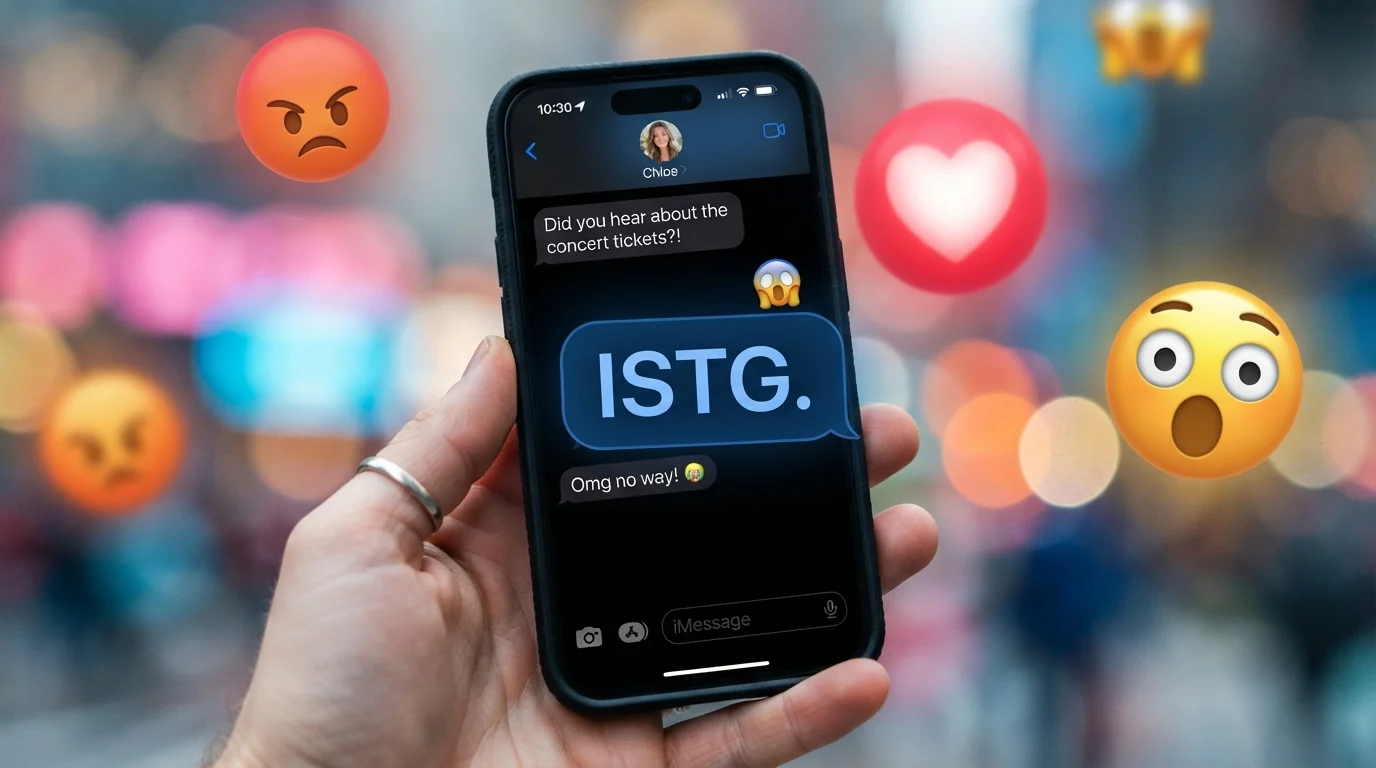
You’re scrolling through a group chat when someone types “ISTG” in all caps after a long message. Or maybe a friend sends you a screenshot with that acronym and you have no idea what emotion you’re supposed to feel. The confusion is real, because “ISTG” shows up everywhere from TikTok comments to text threads, and it carries a lot of weight for just four letters.
This article breaks down what ISTG means, when it’s used, and how you should respond when it lands in your notifications.
Quick Answer
| Aspect | Details |
|---|---|
| Full Form | I Swear To God |
| Tone | Serious, frustrated, or emphatic |
| Platforms | TikTok, X/Twitter, Instagram, Snapchat, text messages |
| Formal or Informal | Strictly informal, never use in professional settings |
ISTG is an acronym for “I Swear To God,” used to emphasize that someone is being serious, telling the truth, or feeling a strong emotion . It’s essentially a way to add weight to whatever comes next, whether that’s a promise, a complaint, or a wild story.
The Main Meaning Behind ISTG
The full form is exactly as serious as it sounds: “I Swear To God.” The phrase carries a religious origin, stemming from the idea of swearing an oath on God to prove honesty . Over time, the religious weight faded for most people, and it became a casual way to say “I’m not joking” or “I really mean this.”
People use ISTG when they want to convince someone of the truth, express frustration, or emphasize how strongly they feel about something . Unlike lighter expressions like “seriously” or “for real,” ISTG carries a sense of urgency and intensity. The speaker wants you to believe them right now.
The tone depends heavily on context. It can be frustrated, excited, annoyed, or completely sincere. In all caps, it often signals stronger emotion, but the lowercase version works just as well in casual conversation .
Example:
Person A: “Did you actually finish the project?”
Person B: “ISTG, I submitted it last night.”
Here, Person B is using ISTG to assure Person A that they’re telling the truth. The tone is sincere and slightly defensive, signaling that the question felt like doubt.
How ISTG Became a Common Slang Term
ISTG didn’t start on TikTok. Its first Urban Dictionary definition dates back to 2007, where it was simply defined as “I swear to God. Promising.” . The acronym grew alongside instant messaging platforms like AOL Instant Messenger and Yahoo Messenger, where shortening phrases saved time and characters .
What made ISTG stick around is its versatility. Unlike newer slang that comes and goes, ISTG fits into almost any emotional context. You can use it to promise, complain, celebrate, or vent. That flexibility kept it alive through every wave of internet slang, from early 2000s chat rooms to modern TikTok comment sections .
By the 2020s, ISTG was appearing everywhere from Snapchat streaks to Instagram captions. It even made headlines when Bridgerton actor Luke Thompson confused the acronym for “Instagram” in a viral interview, proving that not everyone is fluent in internet slang .
How to Use ISTG
ISTG covers a wide range of emotions, which makes it useful in many situations. Here’s how it typically shows up in conversation.
Expressing Frustration: This is one of the most common uses. ISTG often pairs with “ugh” or appears at the start of a complaint.
“ISTG, if this traffic doesn’t move soon, I’m going to lose my mind.”
Assuring Someone You’re Serious: When someone doubts your story or you need to prove you’re not joking, ISTG works as a verbal guarantee.
“ISTG, I’m not lying, the waiter actually said that.”
Emphasizing a Point: You can use ISTG to stress a strong opinion or a promise.
“ISTG, this is the best pizza I’ve ever had.”
Making a Warning: ISTG can also add weight to a threat or ultimatum.
“ISTG, if you don’t stop, I’m leaving.”
How to Reply to ISTG
If someone sends you ISTG, your response depends on what emotion they’re expressing.
When They’re Frustrated:
“Ugh, I feel you”
“That sounds awful”
“Do you want to vent?”
When They’re Trying to Convince You:
“I believe you”
“Okay, okay, I trust you”
“That’s wild, but I believe it”
When They’re Excited or Emphatic:
“Same honestly”
“No way, really?”
“That’s amazing”
The best response matches their energy. If they’re annoyed, sympathize. If they’re serious, acknowledge that you take them seriously. If they’re hyped, match the enthusiasm .
When You Should Avoid Using ISTG
ISTG has a specific lane, and straying outside it can cause problems.
Use it carefully in: Casual texts with friends, social media comments where the tone is already relaxed, group chats where everyone understands the slang, and playful banter.
Avoid it in: Professional emails, work Slack channels, academic writing, messages to authority figures, and any conversation with someone who might find religious references offensive. The phrase “I swear to God” still carries religious weight for some people, and using it casually can come across as disrespectful .
Even online, if you don’t know the person you’re replying to, ISTG can seem overly intense for a first interaction. Save it for people who already speak your slang.
Common Misunderstandings About ISTG
Similar Slang Terms You Might See
These terms often appear together, like “ISTG FR FR,” which means “I swear to God, for real, for real,” doubling down on the sincerity .
FAQs
What does ISTG stand for in text?
It stands for “I Swear To God,” used to emphasize that someone is being serious or truthful .
Is ISTG rude or offensive?
The acronym itself is not considered profanity by most people, but some religious individuals may find casual use of “swear to God” disrespectful .
Why do people say ISTG in all caps?
The all-caps version often signals stronger emotion, like intense frustration or urgency, though lowercase works just as well .
Can you get in trouble for saying ISTG?
Not typically. It’s a common slang term and not generally flagged as harmful, though context matters if used in a threatening way .
How do you respond to ISTG?
Match their energy. Offer sympathy if they’re frustrated, reassurance if they’re seeking belief, or enthusiasm if they’re excited .
Final Thoughts
ISTG means “I Swear To God.” It’s not a new trend, and it’s not a compliment or an insult. It’s a tool for adding weight to your words, whether you’re promising, complaining, or emphasizing something important. The acronym has survived decades of internet slang because it fits almost any emotional context.
Use it in casual conversations where the tone is already relaxed and the people you’re talking to understand the slang. If someone sends it your way, read the room before you reply. Now you know what ISTG means, and more importantly, when it’s appropriate to swear by it.